#openledger
$OPEN
@OpenLedger
I’ve seen this pattern many times in crypto. An infrastructure token gets listed on major exchanges, price rallies hard, and the story always sounds convincing: contributors are rewarded, the network grows, adoption follows, and eventually demand absorbs supply.
But over time, I started noticing something important. One-time incentives create activity, not necessarily retention.
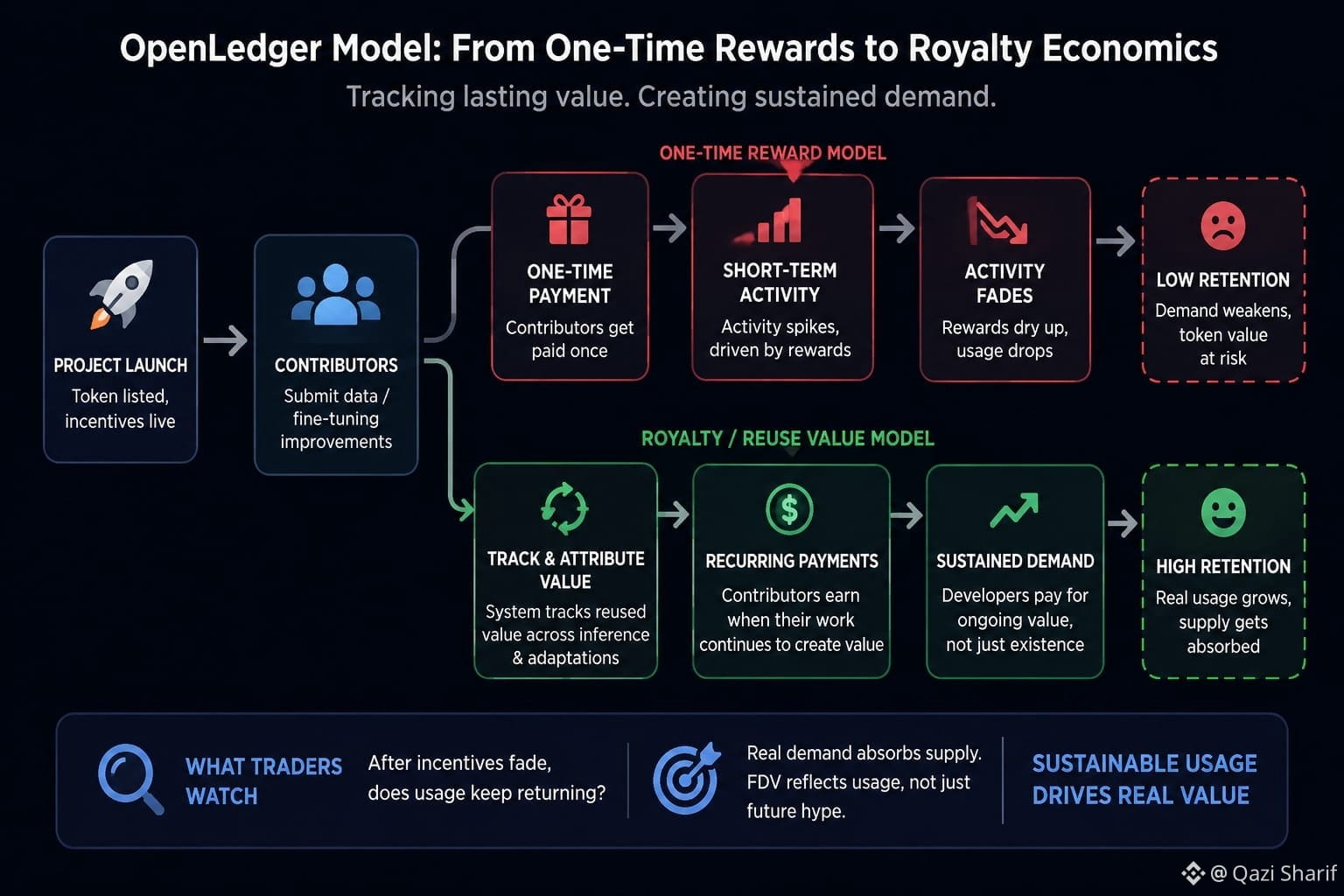
That’s why the OpenLedger model caught my attention. If contributors are only paid once for submitting fine-tuning data or improving a model, then it’s just another incentive economy. Tokens go out, people show up, hype builds, and eventually activity slows when rewards dry up.
But if the system can actually track how valuable those fine-tuned behaviors remain over time, then the economics become much more interesting. It starts looking less like mining rewards and more like royalties.
A developer wouldn’t be paying because a contribution simply existed. They’d be paying because that contribution keeps generating value repeatedly through inference or downstream model usage. That creates a completely different demand loop.
Still, this only works if attribution and verification are reliable. If contributors can spoof quality or game the system cheaply, low-value submissions will flood the network while serious buyers lose trust and leave.
As a trader, that’s the part I watch closely. After incentives fade, does usage continue returning naturally? Is real service demand absorbing supply, or is the FDV still pricing a future nobody is actually paying for?
That usually reveals the difference between temporary hype and a sustainable network.
@OpenLedger
#OpenLedger
$INJ
$ETH