


While buying crypto in Russia poses no problems, converting digital assets into fiat immediately raises challenges.
Moreover, measures against money laundering under Law No. 115 are in effect regarding cryptocurrencies, and soon provisions of Law No. 259, which entails criminal liability, will come into force. Thus, starting from July, Russians will risk not only having their bank accounts blocked due to suspicions related to dirty USDT and other digital assets but also their freedom.
Converting crypto into rubles is becoming a kind of true art. Today, global exchanges do not want to deal with cards from Russian banks. Banking compliance within the country closely monitors all P2P channels. Pressure from Roskomnadzor is squeezing traditional exchanges out of the online environment.
All routes for withdrawing cryptocurrency to RUB discussed in this material are currently relevant. We will talk about the advantages and weaknesses of each, the verification requirements, legal and technical aspects, and provide actual fee sizes. This is important as it is a fundamental aspect of an arbitrage trader's work.
1. BestChange
We are dealing with the oldest and largest aggregator of online exchanges aimed at a Russian-speaking audience. This service has been collecting exchange rates from hundreds of conversion platforms since 2007. It helps users find all the information they need in just a few clicks.
When you visit the Bestchange site, you need to specify which direction you want to convert. For example, you want to exchange USDT for RUB to a Sberbank card. Next, sort the exchanges – read reviews, compare rates and acceptable limits. Then you go to the exchange platform to conduct the transaction.
This method is good if you need to cash out a small amount equivalent to two to five thousand US dollars. Companies in the TOP-10 ranking are the most trustworthy. These sites value their reputation, and their rates are more aligned with current market prices. If you want to avoid unnecessary hassle and conduct a one-time operation, online crypto exchanges are perfect for this.
Advantages:
You instantly compare conditions without manual monitoring and find the optimal option for yourself among a vast array of similar services.
You have a wide range of crypto-fiat pairs, non-standard networks, and rare assets at your disposal.
You easily determine which provider is trustworthy because you see reviews from real clients.
Disadvantages:
The funds you send can unexpectedly disappear, as the online exchange can cease to exist at any moment.
Your cryptocurrency can get frozen when you want to top up your exchange deposit because the verification system detects its dirty origin.
Exchanges operate under their own rules, so there is no guaranteed transaction protection.
Dangers:
If you base your choice solely on the criterion of the best rate, you risk choosing a site that is not in the top, leading to various fraudulent services.
There is a high risk of receiving dirty money that has previously passed through scam schemes, hacks, sanctions, or the Darknet. When the exchange detects such crypto, it immediately blocks it, and you will face serious difficulties proving its legitimate origin. You must check the cleanliness of sender addresses before the transaction. You should see the history and risk level of the wallet. AML verification tools like AMLBot, Crystal, and others will help you.
There have been multiple incidents between bestchange.ru and Roskomnadzor regarding blockages in the past. The last such case was recorded in February of last year. If this happens again, you'll have to work with a VPN or use the English version.
Verification
Each provider treats KYC compliance differently. If you interact with a top platform and convert a small amount, you will need a wallet and an email. If you need to exchange 1-2 thousand USD, in most cases, you will need to scan your passport. Learn about specific conditions in advance!
Commissions:
The exchange center's rate may include a markup of 0.5 to 3 percent. The fee size is higher at rated exchanges, but they ensure reliability. In the TRC-20 network, when exchanging USDT, the fee, which is paid separately, ranges from 1-3 USD.
2. Telegram Chats
This method appeared long before the birth of P2P platforms. It’s a unique version of exchange without intermediaries. Users contact verified crypto traders or private exchange points through private chat in a messenger. When choosing, they rely on recommendations from acquaintances or thematic communities. After agreeing on a rate, the user conducts the operation.
In this algorithm, you can find the most flexible quotes, obscure currencies, and algorithms. You can manipulate rarely encountered altcoins, cash, and bank cards from various countries.
This option is right for you if you have reliable personal connections in the crypto community. You exchange crypto for rubles without paying commissions to intermediaries and can establish mutually beneficial financial ties with specific verified counterparties.
Advantages:
No commissions and spreads. The most favorable rate.
You are not limited by the amount, payment tools, or the assortment of currencies.
Building a bridge of personal relationships with bonuses and other nice little things.
Disadvantages:
Here, personal connections determine everything. To find reliable partners, you will have to spend a lot of time.
All work is based on complete trust. There are no insurances or guarantees.
You have to adapt to the schedule of a specific person, so be prepared for delays.
Dangers:
Screenshots of payments can turn out to be fake. The risk of fraud is extremely high.
You have no protection.
You depend on the human factor.
Verification
You only communicate with the counterparty in Telegram, and payments are confirmed with screenshots. In rare cases, when it comes to a large amount, there is an exchange of passport photos.
Commissions
Minimal or completely absent.
3. P2P
After international exchanges disconnected Russian cards from their P2P services, directly exchanging crypto for rubles became impossible. But there is an option to withdraw through cards from Georgia and Kazakhstan.
Pave the way for your child in IT
Log in
yparah
18 hours ago
Working ways to withdraw cryptocurrency to rubles in 2026
Simple
20 mins
17K
Cryptocurrencies
Cryptography
*
Payment systems
*
Opinion
While buying crypto in Russia poses no problems, converting digital assets into fiat immediately raises challenges.
Moreover, measures against money laundering under Law No. 115 are in effect regarding cryptocurrencies, and soon provisions of Law No. 259, which entails criminal liability, will come into force. Thus, starting from July, Russians will risk not only having their bank accounts blocked due to suspicions related to dirty USDT and other digital assets but also their freedom.
Converting crypto into rubles is becoming a kind of true art. Today, global exchanges do not want to deal with cards from Russian banks. Banking compliance within the country closely monitors all P2P channels. Pressure from Roskomnadzor is squeezing traditional exchanges out of the online environment.
All routes for withdrawing cryptocurrency to RUB discussed in this material are currently relevant. We will talk about the advantages and weaknesses of each, verification requirements, legal and technical aspects, and provide actual fee sizes. This is important as it is a fundamental aspect of an arbitrage trader's work.
1. BestChange
We are dealing with the oldest and largest aggregator of online exchanges aimed at a Russian-speaking audience. This service has been collecting exchange rates from hundreds of conversion platforms since 2007. It helps users find all the information they need in just a few clicks.
When you visit the Bestchange site, you need to specify which direction you want to convert. For example, you want to exchange USDT for RUB to a Sberbank card. Next, sort the exchanges – read reviews, compare rates and acceptable limits. Then you go to the exchange platform to conduct the transaction.
This method is good if you need to cash out a small amount equivalent to two to five thousand US dollars. Companies in the TOP-10 ranking are the most trustworthy. These sites value their reputation, and their rates are more aligned with current market prices. If you want to avoid unnecessary hassle and conduct a one-time operation, online crypto exchanges are perfect for this.
Advantages:
You instantly compare conditions without manual monitoring and find the optimal option for yourself among a vast array of similar services.
You have a wide range of crypto-fiat pairs, non-standard networks, and rare assets at your disposal.
You easily determine which provider is trustworthy because you see reviews from real clients.
Disadvantages:
The funds you send can unexpectedly disappear, as the online exchange can cease to exist at any moment.
Your cryptocurrency can get frozen when you want to top up your exchange deposit because the verification system detects its dirty origin.
Exchanges operate under their own rules, so there is no guaranteed transaction protection.
Dangers:
If you base your choice solely on the criterion of the best rate, you risk choosing a site that is not in the top, leading to various fraudulent services.
There is a high risk of receiving dirty money that has previously passed through scam schemes, hacks, sanctions, or the Darknet. When the exchange detects such crypto, it immediately blocks it, and you will face serious difficulties proving its legitimate origin. You must check the cleanliness of sender addresses before the transaction. You should see the history and risk level of the wallet. AML verification tools like AMLBot, Crystal, and others will help you.
There have been multiple incidents between bestchange.ru and Roskomnadzor regarding blockages in the past. The last such case was recorded in February of last year. If this happens again, you'll have to work with a VPN or use the English version.
Verification
Each provider treats KYC compliance differently. If you interact with a top platform and convert a small amount, you will need a wallet and an email. If you need to exchange 1-2 thousand USD, in most cases, you will need to scan your passport. Learn about specific conditions in advance!
Commissions:
The exchange center's rate may include a markup of 0.5 to 3 percent. The fee size is higher at rated exchanges, but they ensure reliability. In the TRC-20 network, when exchanging USDT, the fee, which is paid separately, ranges from 1-3 USD.
2. Telegram Chats
This method appeared long before the birth of P2P platforms. It’s a unique version of exchange without intermediaries. Users contact verified crypto traders or private exchange points through private chat in a messenger. When choosing, they rely on recommendations from acquaintances or thematic communities. After agreeing on a rate, the user conducts the operation.
In this algorithm, you can find the most flexible quotes, obscure currencies, and algorithms. You can manipulate rarely encountered altcoins, cash, and bank cards from various countries.
This option is right for you if you have reliable personal connections in the crypto community. You exchange crypto for rubles without paying commissions to intermediaries and can establish mutually beneficial financial ties with specific verified counterparties.
Advantages:
No commissions and spreads. The most favorable rate.
You are not limited by the amount, payment tools, or the assortment of currencies.
Building a bridge of personal relationships with bonuses and other nice little things.
Disadvantages:
Here, personal connections determine everything. To find reliable partners, you will have to spend a lot of time.
All work is based on complete trust. There are no insurances or guarantees.
You have to adapt to the schedule of a specific person, so be prepared for delays.
Dangers:
Screenshots of payments can turn out to be fake. The risk of fraud is extremely high.
You have no protection.
You depend on the human factor.
Verification
You only communicate with the counterparty in Telegram, and payments are confirmed with screenshots. In rare cases, when it comes to a large amount, there is an exchange of passport photos.
Commissions
Minimal or completely absent.
3. P2P
After international exchanges disconnected Russian cards from their P2P services, directly exchanging crypto for rubles became impossible. But there is an option to withdraw through cards from Georgia and Kazakhstan.
Considering the cost of intermediary services, opening such a payment tool will cost you between 100 to 300 USD. You will need to link this card to a global platform account, such as MEXC or Bybit. You can sell cryptocurrency directly to other users on the P2P market.
The exchange acts as an escrow guarantor. Until the buyer confirms receipt of payment, the crypto is frozen in a special account on the site. All restrictions regarding Russian cards are bypassed. You gain high liquidity and a broad market of counterparties.
This method is suitable for regular work with large volumes of funds. However, if you want to own a foreign card, you'll have to spend a bit. But you will be able to use a convenient and understandable tool that is protected from fraud.
Advantages:
Until proof of payment is received, funds are frozen in an escrow account.
High liquidity is available around the clock.
The list of counterparties is virtually unlimited.
Foreign accounts allow working with RUB without raising suspicion.
Disadvantages:
You can't avoid obtaining a physical card from a foreign country, which requires either traveling abroad or contacting intermediaries.
Your profile data on the exchange and on the card may not match, and then the site will ban your account.
The counterparty determines how quickly the deal will occur. Sometimes you have to wait a long time for confirmation.
Dangers:
You may encounter fake payment documents, and payments can be recalled. To avoid falling prey to fraudsters, careful selection of counterparties is necessary. Reputation checks are mandatory.
Suspicious activity may lead to card blocks by banks. When you receive regular transfers from different individuals, such suspicions are almost inevitable.
If the passport data and cardholder's details do not match during the KYC procedure, the exchange freezes the client's account.
Verification
All major exchanges around the globe require users to undergo verification. You won’t get access to P2P conversion without completing full identity verification with scanned passports and selfies.
Commissions
P2P transaction fees are zero. However, sellers build in their percentage, which ranges from 1-3% over the market quote. There are also bank fees.
In the Russian space, the danger of blockage and protracted disputes is quite high, so the P2P option looks unappealing. You might find yourself caught in a triangular scheme:
The owner of USDT sells them to a counterparty.
Several different people send rubles to his card.
Authorities don't care who transfers money to you – people scammed by fraudsters, casinos, sellers of prohibited products.
For regulators, you are an accomplice to a crime. An investigation will start, and you will have to prove your innocence.
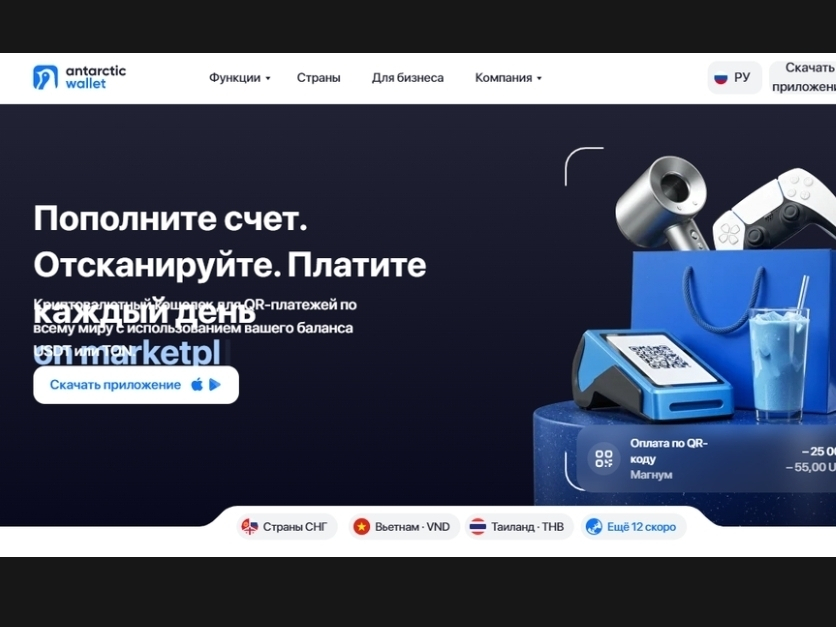
4. Antarctic Wallet
The launch of this new service took place at the end of summer 2025. Its task is to solve a specific problem, which is for Russians to be able to pay with crypto through the Fast Payment System in regular stores in their country using a QR code.
Antarctic Wallet is a crypto wallet available in a mobile app and Telegram bot. It supports cryptocurrencies like TON and USDT in TRC-20 standard.
Pave the way for your child in IT
Log in
yparah
18 hours ago
Working ways to withdraw cryptocurrency to rubles in 2026
Simple
20 mins
17K
Cryptocurrencies
Cryptography
*
Payment systems
*
Opinion
While buying crypto in Russia poses no problems, converting digital assets into fiat immediately raises challenges.
Moreover, measures against money laundering under Law No. 115 are in effect regarding cryptocurrencies, and soon provisions of Law No. 259, which entails criminal liability, will come into force. Thus, starting from July, Russians will risk not only having their bank accounts blocked due to suspicions related to dirty USDT and other digital assets but also their freedom.
Converting crypto into rubles is becoming a kind of true art. Today, global exchanges do not want to deal with cards from Russian banks. Banking compliance within the country closely monitors all P2P channels. Pressure from Roskomnadzor is squeezing traditional exchanges out of the online environment.
All routes for withdrawing cryptocurrency to RUB discussed in this material are currently relevant. We will talk about the advantages and weaknesses of each, verification requirements, legal and technical aspects, and provide actual fee sizes. This is important as it is a fundamental aspect of an arbitrage trader's work.
1. BestChange
We are dealing with the oldest and largest aggregator of online exchanges aimed at a Russian-speaking audience. This service has been collecting exchange rates from hundreds of conversion platforms since 2007. It helps users find all the information they need in just a few clicks.
When you visit the Bestchange site, you need to specify which direction you want to convert. For example, you want to exchange USDT for RUB to a Sberbank card. Next, sort the exchanges – read reviews, compare rates and acceptable limits. Then you go to the exchange platform to conduct the transaction.
This method is good if you need to cash out a small amount equivalent to two to five thousand US dollars. Companies in the TOP-10 ranking are the most trustworthy. These sites value their reputation, and their rates are more aligned with current market prices. If you want to avoid unnecessary hassle and conduct a one-time operation, online crypto exchanges are perfect for this.
Advantages:
You instantly compare conditions without manual monitoring and find the optimal option for yourself among a vast array of similar services.
You have a wide range of crypto-fiat pairs, non-standard networks, and rare assets at your disposal.
You easily determine which provider is trustworthy because you see reviews from real clients.
Disadvantages:
The funds you send can unexpectedly disappear, as the online exchange can cease to exist at any moment.
Your cryptocurrency can get frozen when you want to top up your exchange deposit because the verification system detects its dirty origin.
Exchanges operate under their own rules, so there is no guaranteed transaction protection.
Dangers:
If you base your choice solely on the criterion of the best rate, you risk choosing a site that is not in the top, leading to various fraudulent services.
There is a high risk of receiving dirty money that has previously passed through scam schemes, hacks, sanctions, or the Darknet. When the exchange detects such crypto, it immediately blocks it, and you will face serious difficulties proving its legitimate origin. You must check the cleanliness of sender addresses before the transaction. You should see the history and risk level of the wallet. AML verification tools like AMLBot, Crystal, and others will help you.
There have been multiple incidents between bestchange.ru and Roskomnadzor regarding blockages in the past. The last such case was recorded in February of last year. If this happens again, you'll have to work with a VPN or use the English version.
Verification
Each provider treats KYC compliance differently. If you interact with a top platform and convert a small amount, you will need a wallet and an email. If you need to exchange 1-2 thousand USD, in most cases, you will need to scan your passport. Learn about specific conditions in advance!
Commissions:
The exchange center's rate may include a markup of 0.5 to 3 percent. The fee size is higher at rated exchanges, but they ensure reliability. In the TRC-20 network, when exchanging USDT, the fee, which is paid separately, ranges from 1-3 USD.
2. Telegram Chats
This method appeared long before the birth of P2P platforms. It’s a unique version of exchange without intermediaries. Users contact verified crypto traders or private exchange points through private chat in a messenger. When choosing, they rely on recommendations from acquaintances or thematic communities. After agreeing on a rate, the user conducts the operation.
In this algorithm, you can find the most flexible quotes, obscure currencies, and algorithms. You can manipulate rarely encountered altcoins, cash, and bank cards from various countries.
This option is right for you if you have reliable personal connections in the crypto community. You exchange crypto for rubles without paying commissions to intermediaries and can establish mutually beneficial financial ties with specific verified counterparties.
Advantages:
No commissions and spreads. The most favorable rate.
You are not limited by the amount, payment tools, or the assortment of currencies.
Building a bridge of personal relationships with bonuses and other nice little things.
Disadvantages:
Here, personal connections determine everything. To find reliable partners, you will have to spend a lot of time.
All work is based on complete trust. There are no insurances or guarantees.
You have to adapt to the schedule of a specific person, so be prepared for delays.
Dangers:
Screenshots of payments can turn out to be fake. The risk of fraud is extremely high.
You have no protection.
You depend on the human factor.
Verification
You only communicate with the counterparty in Telegram, and payments are confirmed with screenshots. In rare cases, when it comes to a large amount, there is an exchange of passport photos.
Commissions
Minimal or completely absent.
3. P2P
After international exchanges disconnected Russian cards from their P2P services, directly exchanging crypto for rubles became impossible. But there is an option to withdraw through cards from Georgia and Kazakhstan.
Considering the cost of intermediary services, opening such a payment tool will cost you between 100 to 300 USD. You will need to link this card to a global platform account, such as MEXC or Bybit. You can sell cryptocurrency directly to other users on the P2P market.
The exchange acts as an escrow guarantor. Until the buyer confirms receipt of payment, the crypto is frozen in a special account on the site. All restrictions regarding Russian cards are bypassed. You gain high liquidity and a broad market of counterparties.
This method is suitable for regular work with large volumes of funds. However, if you want to own a foreign card, you'll have to spend a bit. But you will be able to use a convenient and understandable tool that is protected from fraud.
Advantages:
Until proof of payment is received, funds are frozen in an escrow account.
High liquidity is available around the clock.
The list of counterparties is virtually unlimited.
Foreign accounts allow working with RUB without raising suspicion.
Disadvantages:
You can't avoid obtaining a physical card from a foreign country, which requires either traveling abroad or contacting intermediaries.
Your profile data on the exchange and on the card may not match, and then the site will ban your account.
The counterparty determines how quickly the deal will occur. Sometimes you have to wait a long time for confirmation.
Dangers:
You may encounter fake payment documents, and payments can be recalled. To avoid falling prey to fraudsters, careful selection of counterparties is necessary. Reputation checks are mandatory.
Suspicious activity may lead to card blocks by banks. When you receive regular transfers from different individuals, such suspicions are almost inevitable.
If the passport data and cardholder's details do not match during the KYC procedure, the exchange freezes the client's account.
Verification
All major exchanges around the globe require users to undergo verification. You won’t get access to P2P conversion without completing full identity verification with scanned passports and selfies.
Commissions
P2P transaction fees are zero. However, sellers build in their percentage, which ranges from 1-3% over the market quote. There are also bank fees.
In the Russian space, the danger of blockage and protracted disputes is quite high, so the P2P option looks unappealing. You might find yourself caught in a triangular scheme:
The owner of USDT sells them to a counterparty.
Several different people send rubles to his card.
Authorities don't care who transfers money to you – people scammed by fraudsters, casinos, sellers of prohibited products.
For regulators, you are an accomplice to a crime. An investigation will start, and you will have to prove your innocence.
4. Antarctic Wallet
The launch of this new service took place at the end of summer 2025. Its task is to solve a specific problem, which is for Russians to be able to pay with crypto through the Fast Payment System in regular stores in their country using a QR code.
Antarctic Wallet is a crypto wallet available in a mobile app and Telegram bot. It supports cryptocurrencies like TON and USDT in TRC-20 standard.
You can scan the seller's QR code to pay for goods or services. Your digital coins are deducted, and RUB are credited to the seller's balance from a verified service counterparty. The model is P2C. The account is Russian. The cashier records a regular payment from an individual. You can also withdraw funds to a card. You sell stablecoins, and RUB are credited to your card account. However, you can only transfer 4,000 USDT per month to the same details. Since RUB on the seller's balance comes from an external entity, the direct ban currently in force in the Russian Federation on crypto payments is not formally violated.
If you are a resident of the Russian Federation, have capital in TON and USDT, and want to pay for daily purchases without resorting to P2P exchanges, this option is worth your attention. It is suitable for transactions in small and medium amounts.
Advantages:
Payments via QR codes are accepted by almost all stores, food service establishments, and marketplaces.
The transaction goes through in a few seconds.
You register on Telegram in a minute. Verification is done through the provider Sumsub.
Disadvantages:
The exchange rate hides an added fee. The spread to the trading price can reach 5 percent.
Withdrawing RUB to the same details is limited.
The minimum top-up amount is 5 USDT. The cost of AML verification is 0.25 USDT. If you transfer funds to the main wallet via TRX, an additional 2.5 USDT is charged.
Dangers:
Since the operation is conducted through a custodial wallet, private keys are held by the platform, hence there is a security threat to your funds.
Direct cryptocurrency payments in Russia are prohibited under current legislation, hence regulatory risks exist. Although from a formal standpoint, P2C operations do not contradict the law, requirements may tighten, and this channel may also become unavailable.
The platform is currently in testing mode. Amid positive reviews, there are many comments and complaints about freezing payments and template responses from tech support.
When you withdraw funds to the issuing bank card, there is a risk of questions regarding the anti-money laundering law – No. 115.
Verification
To register via Telegram, KYC is not required. But this is only for QR code payments – basic use. If you want to sell USDT and withdraw RUB to a card, client identification via Sumsub is mandatory.
Commissions
As for the commission declared by the service, it's zero for QR code transactions. But you are not insured against losses on the market rate of USDT/RUB, which can actually reach up to 5%. When topping up, you pay 0.25 USDT for AML monitoring. There is also a fee for internal transfers in TRX of 2.5 USDT. This is a fixed amount. Additionally, network fees for TRC-20/TON apply.
If you are focused on small one-time expenses and the rate is not as important to you as convenience, the Antarctic Wallet system can be a fairly profitable solution. However, making large transfers here is not cost-effective. In this regard, P2P crypto exchanges appear to be more attractive.