


Introduction
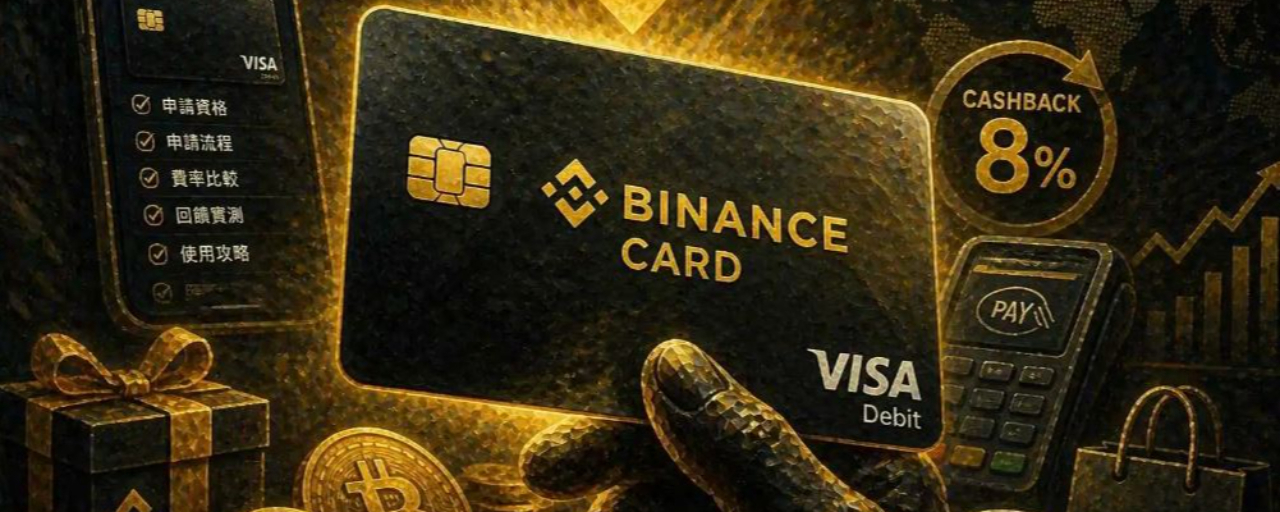
Integrating into everyday life has always been a key goal for cryptocurrencies. Before this, several exchanges and on-chain protocols launched their own debit cards, and Binance jumped on this trend in April 2026, allowing the public to apply for the Asia version of the Binance Card.
Binance Card cashback and hidden costs
The Binance Card Asia-Pacific version is marketing a slogan offering up to 3% USDC cashback, but you don't just get that cashback for signing up; you still need to meet specified criteria.
Tiered cashback mechanism
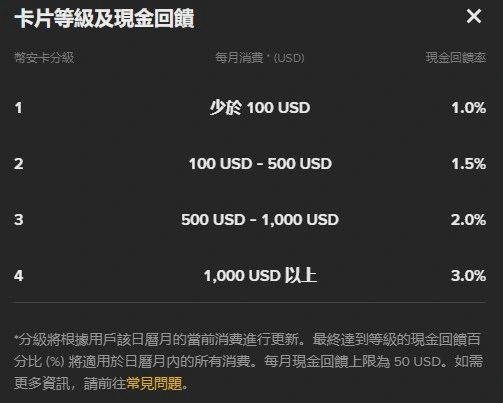
The cashback from the Binance Card operates on an accumulation basis, with rewards issued in USDC to your Binance wallet. What's unique is that the Binance Card has a retroactive mechanism; as long as you reach a higher spending tier by the end of the month, all eligible transactions for that month will receive cashback at the highest percentage.
T1: Spend 0-100 USD to enjoy 1% cashback.
T2: Spend 100-500 USD to enjoy 1.5% cashback.
T3: Spend 500-1,000 USD to enjoy 2% cashback.
T4: Spend over 1,000 USD to enjoy 3% cashback.
Please note that there is a cap on monthly cashback, with a maximum of 50 USDC per month, usually credited before the 10th of the following month.
Cryptocurrency conversion fees
When you swipe your card, Binance must convert the cryptocurrencies in your account into fiat to pay the merchant, and this process will incur different levels of fees depending on the cryptocurrency you use for payment.
Using USDC for payments: only 0.1% fee, highly recommended for users to use USDC for payments.
Using USDT, BTC, ETH, or other cryptocurrencies: a 0.9% transaction fee applies.
Overseas transaction fees
Since the Binance Card APAC is ultimately settled by a New Zealand issuing agency, for us, even spending TWD will be considered an overseas transaction.
The applicable fee rate for overseas transactions is 2%, which means if you are a T1 level user (1% cashback), after deducting the USDC conversion fee of 0.1% and the overseas transaction fee of 2%, you still have to pay a 1.1% fee.
Binance Card application process
Compared to the cumbersome application process of traditional banks, the application process for the Binance Card is very simple. As long as you have previously completed KYC on Binance, you can fill in your information and submit the application for review within three minutes.
Find the entry point
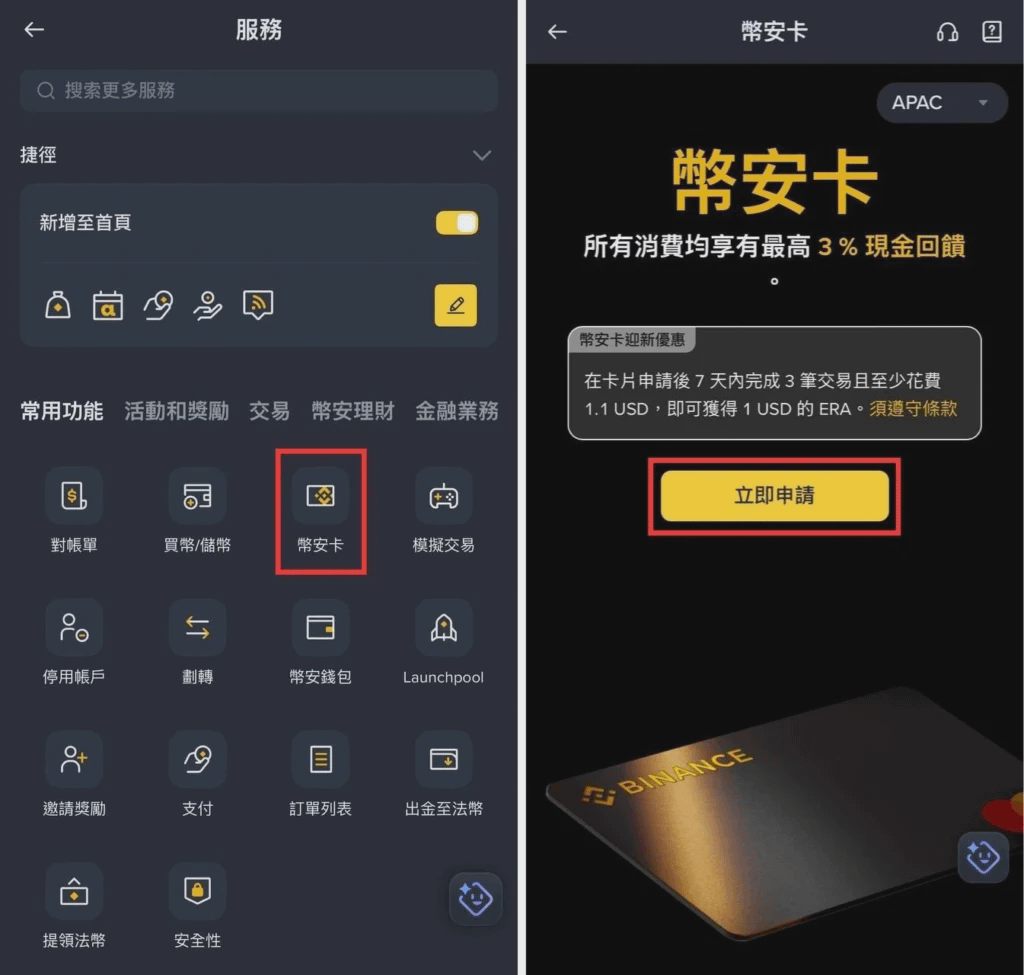
After entering the Binance APP, select more features on the homepage, and you can find the Binance Card option in the common features category. Then, just click 'Apply Now' to enter the card application process.
Fill in information
Entering the card application process, since my Binance account has already completed KYC, I only need to fill in my address, name, etc., and after assessing my personal spending limit, I can smoothly submit for review.
Submit for review and wait for results
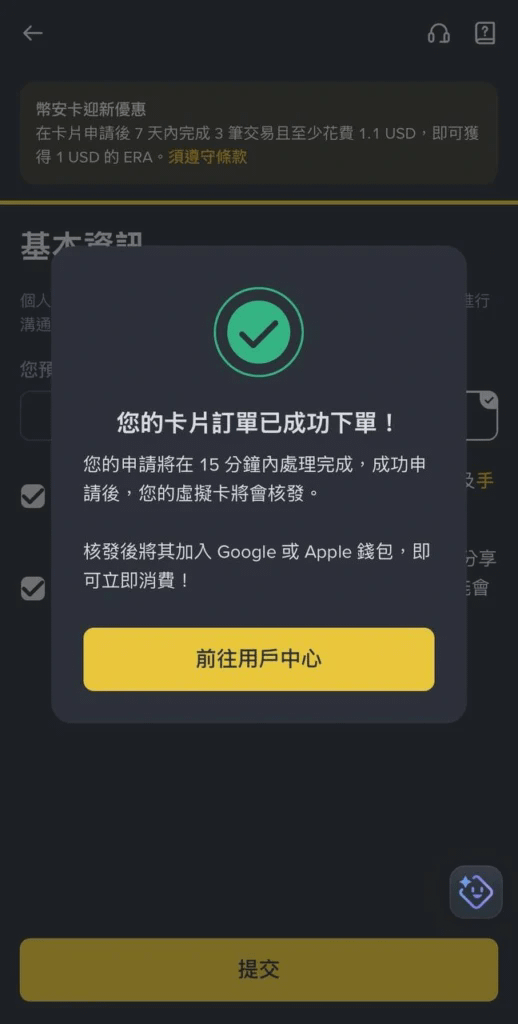
After submitting your information, Binance will notify users via email within 15 minutes if the Binance Card application was successful. Once the card is successfully activated, just set up your payment method to use it in daily life.
Binance Card testing with credit card
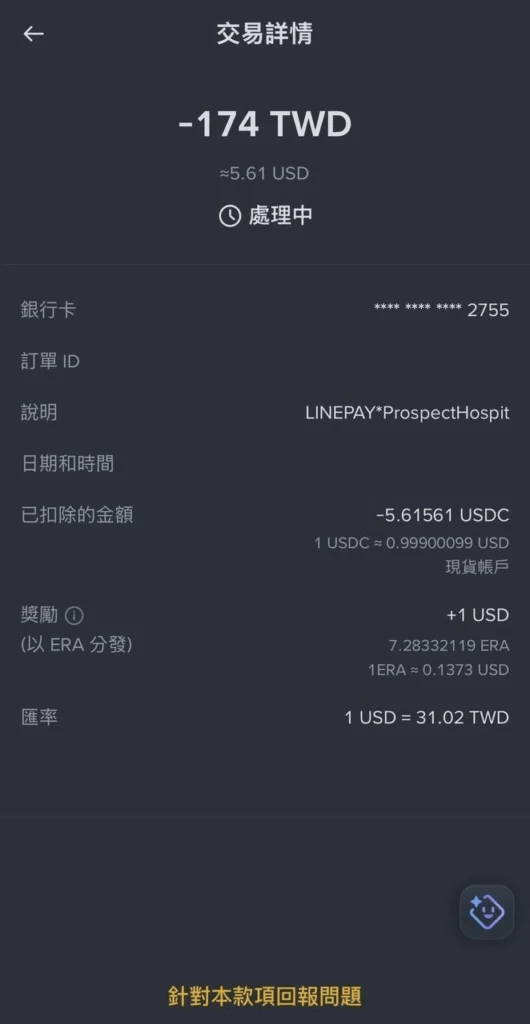
To verify the practicality and exchange rate of the Binance Card, I linked it to Line Pay and conducted actual spending tests.
Testing results
Actual spend of 174 TWD deducted 5.61 USDC, with Binance's exchange rate approximately 1 USD = 31.02 TWD. Compared to the TWD exchange rate, the price of USDC is about 31.7 TWD, showing a gap of around 2.2%.
However, this transaction does not count towards T1 level trading rewards, so the card usage fee will be around 1.2%. Also, at the time of the transaction, there was an ERA distribution activity for the Binance Card, which means if you factor in the activity subsidy, the transaction rewards will be better than other crypto debit cards.
Frequently Asked Questions
Who is suitable for applying for the Binance Card?
First, since this type of debit card requires funds to be stored, if you are a user who pays great attention to fund security, the Binance Card can directly access the funds in your Binance account, providing better security for your assets.
Secondly, if your monthly spending limit exceeds 1,000 USD, you will receive a 3% cashback. After deducting conversion and overseas transaction fees, you can still get some cashback, making the Binance Card suitable for you.
What payment methods can the Binance Card be linked to?
The Binance Card itself is a virtual card that can be linked to payment channels including Apple Pay, Google Pay, and Line Pay. However, since Binance Pay is a card issued overseas, there may be some merchants that do not support payments.
Does the Binance Card have a physical card?
Currently, the Binance Card does not offer physical card application services for the Asia-Pacific region, so it does not support cash withdrawal from ATMs. The virtual card is purely designed for daily spending.
Will swiping the card generate tax issues?
Under Taiwan's legal framework, using cryptocurrency for payment is considered a property transaction. When you complete the payment with your card, it's equivalent to selling cryptocurrency. Therefore, if your annual spending amount is too high, it's advisable to keep detailed records of your spending within the Binance APP and seek professional legal advice.
Conclusion
In the past, to use a cryptocurrency debit card, one had to store funds on external platforms. Now, with Binance, the leading exchange, launching the Binance Card, users can use funds within Binance anytime and anywhere without worrying about security. However, the Binance Card is not a magical savings card; its more significant utility lies in convenience. If you are a user pursuing extreme rewards, this card may not meet your needs.
This report is for informational sharing only and does not constitute any form of investment advice or decision-making basis. The data, analysis, and opinions referenced in this document are based on the author's research and public sources, and may be subject to uncertainty or changes at any time. Readers should make investment judgments carefully based on their own circumstances and risk tolerance. For further guidance, it is recommended to seek professional advisory opinions.