

A Swiss-based company has patented three card pack models that increase wallet security without the vulnerabilities of manually protecting seed phrases.
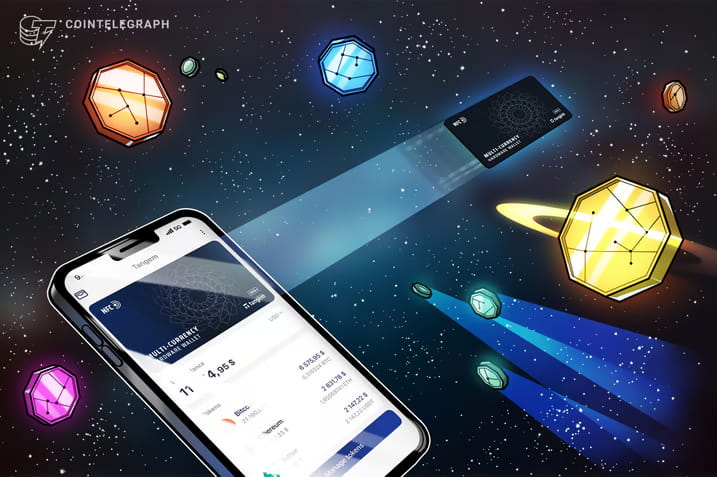
Part of the fear experienced by first-time cryptocurrency users is the safety of their assets. Unlike fiat currencies, which can be stored in physical wallets, digital currencies must be stored in lesser-known digital wallets. Additionally, as blockchain technology becomes increasingly popular, hackers are finding digital wallets an increasingly attractive target. Unfortunately, when it comes to security, cryptocurrency users must not only learn how to protect their assets, but also ensure that their passwords and mnemonic phrases are not lost or stolen.
By definition, a mnemonic phrase (also called a mnemonic phrase) is the easiest way to recover a lost private key. The multi-word secret recovery phrase then becomes the master key that generates all private keys for the user’s wallet, thereby providing access to their cryptocurrency funds. Each cryptographic address in a user's wallet has its own unique private key, which is required to authorize transactions and confirm ownership of the assets stored in that wallet.
Unfortunately, the double-edged sword of this is that anyone who gains access to the mnemonic phrase can easily clone the user's account and spend all the funds in it. So part of the fear of using cryptocurrencies for the first time is how to stay safe and private at all times.
For this reason, many users use encryption to protect their mnemonics, add a word to them, split their multi-word mnemonics into parts, or store parts of this recovery code in different places. However, these methods are not perfect and, on the contrary, are very inconvenient. Since humans are imperfect, make mistakes, and often seek only the simplest solutions, maintaining mnemonic phrases becomes a major barrier to continued use and adoption of cryptocurrencies. To overcome this obstacle, one hardware company has come up with a new alternative to the mnemonic dilemma.
Introduce new models
In the new cold wallet model, users’ private key backups are no longer based on seed phrases. Instead, keys are securely cloned onto cards in packs of three. What’s more, the private keys are generated internally within the wallet chip based on the entropy of a hardware random number generator, which effectively eliminates the mnemonic phase setting used by most wallets today. In this model, if the wallet is lost or stolen, the assets are still with the owner because they will have two or three other wallet cards. One card can serve as your primary crypto wallet, a second can be kept safely hidden, and a third can be kept in a safe or given to family members. Even if one of the cards is lost or stolen, it's not a problem since each card is password protected.
Additionally, using this model, it is almost impossible to crack a password through brute force or guessing strategies, as the system can be set up so that when a password is entered incorrectly, after the sixth attempt, the next attempt delay increases by 1 second for each unsuccessful attempt. Maximum 45 seconds. The benefit is that, unlike wallets protected by seed phrases, this modern alternative offers extra security for both new and experienced users.
patent agreement
Tangem, a company that currently owns and sells hardware cold wallet technology for protecting cryptocurrency assets, is trialling this model. The team has a simple and secure user experience in the 170 countries where the company operates. Tangem is also the first company to successfully implement the seedless wallet concept.
At the launch of the solution, Tangem CTO Andrey Lazutkin shared:
“The crypto community is accustomed to mnemonic phrases and views them as essential. We have considered this a problem from the beginning because it raises the barrier to entry for beginners and increases the risk of losing their cryptocurrencies. That’s why we created our patented secure private key retention protocol. The backup cannot be extracted from the device and can only be used by the wallet owner who knows the password. It’s a simple and secure solution.”
Tangem recognizes that the security of a hardware wallet is inseparable from reliability. Since device failure requires users to back up their private keys, this opens the door to other vulnerabilities. Each card is equipped with a microcomputer chip that is certified to the Common Criteria EAL6+ level, which is the same level of chip protection used in diplomatic passports. The result is a card that is impervious to dust, water and hacker attacks and has a service life of over 25 years. Through a combination of Secure Element (SE) chips and NFC antennas, the technology to authorize cryptocurrency transactions via smartphones virtually eliminates the possibility of any other glitches due to “nothing to break.”