
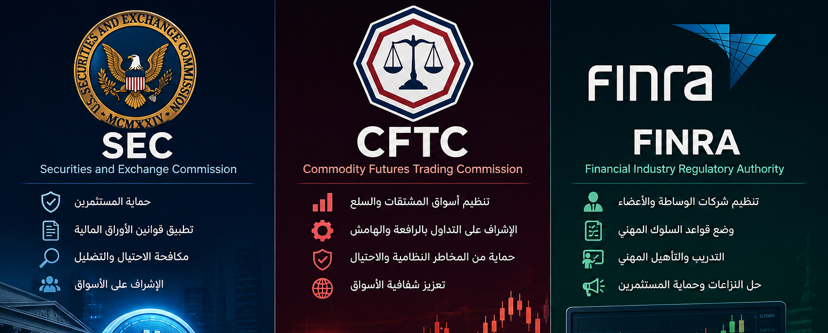

In the crypto market, U.S. regulation doesn't come from just one authority; it's a mix of multiple institutions, each with its own role.
🏛️ SEC
It's the U.S. Securities and Exchange Commission, focused on protecting investors and regulating assets considered securities.
In crypto, if you see a token that looks like an investment or buyers are promised profits from the project's team efforts, it might be labeled a security and face strict oversight.
⚖️ CFTC
It's the Commodity Futures Trading Commission, focusing on commodities like gold and oil, as well as futures contracts.
In the crypto scene, its role is more pronounced with Bitcoin and Ethereum and futures contracts, where it oversees derivatives markets and prevents manipulation.
🛡️ FINRA
It's the regulatory body for brokerage firms in the U.S., not directly regulating digital assets, but keeping an eye on brokers and companies offering crypto-related financial services like trading, custody, or tokenized securities.
📌 Professional takeaway:
If a digital currency is considered a security, it falls under SEC oversight; if treated as a commodity or via Futures contracts, it's closer to CFTC authority. FINRA monitors brokers and financial firms that bridge the gap between crypto and traditional finance. Therefore, the combined influence of these bodies means that the crypto market is gradually transitioning from an open, high-risk environment to a more regulated and attractive market for major institutions, but with tighter oversight and less freedom.
💬 Discussion question:
Do you think regulation will strengthen the crypto market... or will it stifle some of its freedom?
#Crypto #SEC #CFTC #Finra
