pfffff

Post

Forest Blonde Girl
·
--
$ASTER
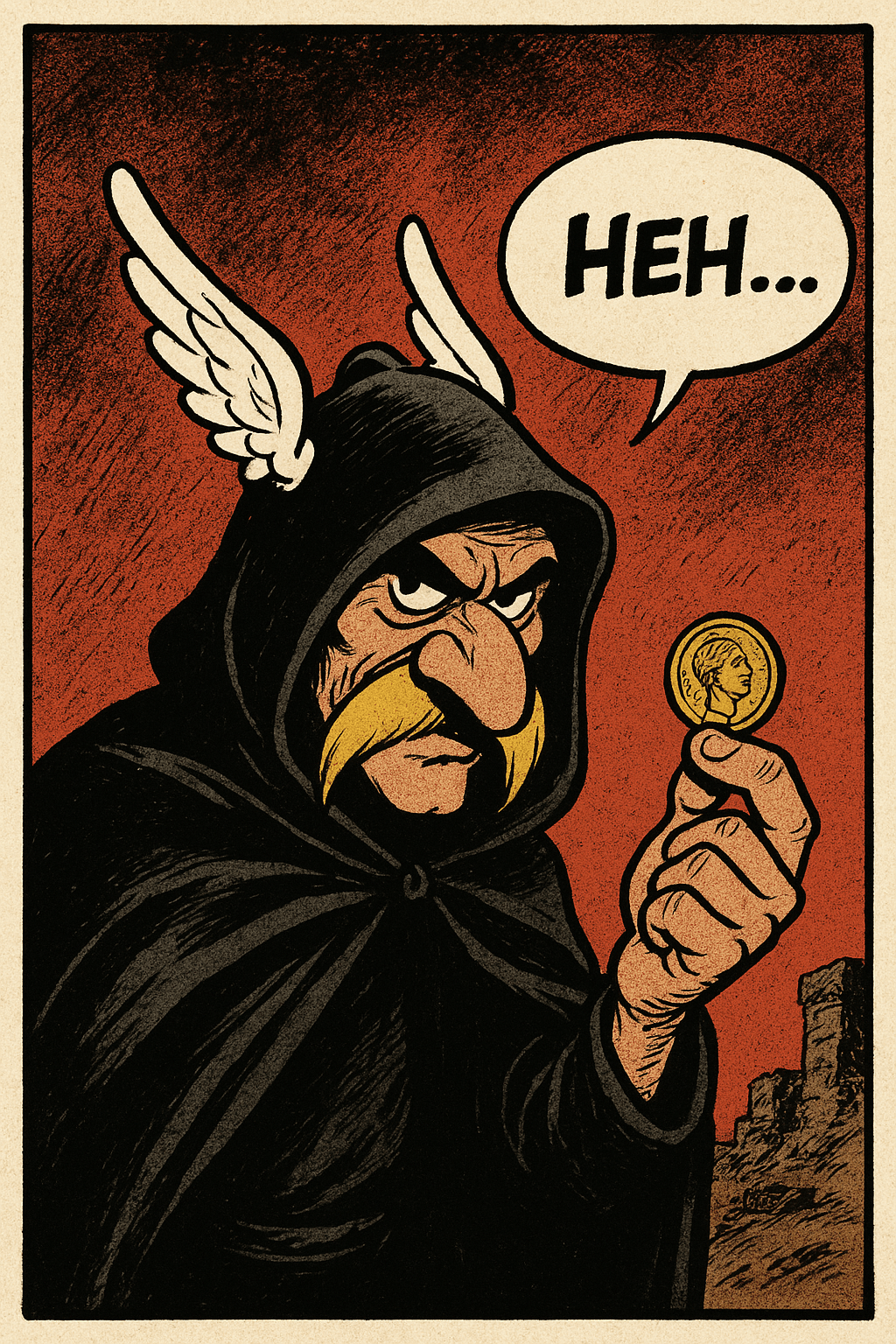
In ancient Gaul, everyone sang the praises of a small but brave warrior named Asterix. Legends have brought us stories of his defiance and spirit. But no bard dared to say that behind this mask of virtue lurked a traitor. He sold secrets of the fortifications to Caesar, reported on the movements of allies, and even participated in the capture of the great Vercingetorix. Like a shadow, Asterix watched as villages burned, justifying it all by caring for his own. And indeed, it remained untouched — not a single Roman legion, not a single catapult. Only because its defender had long worn a Roman coin on his belt.
The vile druid, his eternal companion, knew the truth. Instead of a magical potion, he brewed a mixture of lies and fear. With this brew, Asterix intoxicated his people, so they would believe in their own strength while Caesar gradually consumed his homeland. The chosen hero became a miserable merchant of foreign blood.
When it was all over, and Gaul had fallen, he remained alive, buying himself life through treachery. And centuries later, in his memory, a sinister coin called Aster appeared. It moves as deceitfully as its prototype: sometimes it soars, sometimes it collapses, pretending to be salvation, but always serving only the new Caesars.