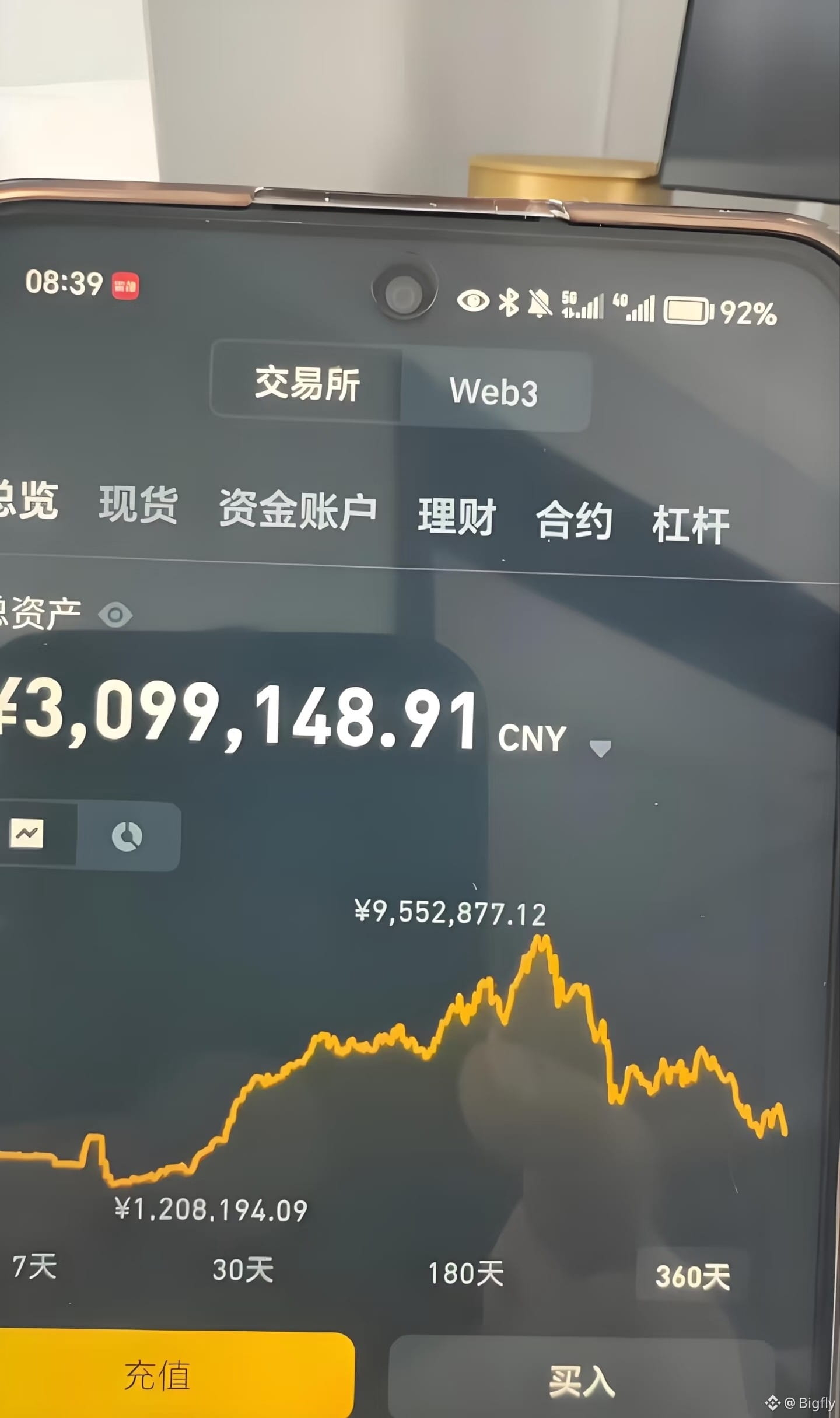
I'm 37 this year, started trading crypto at 22, and by 2023-2024 my capital hit 8 digits. From getting liquidated three times and sleeping under bridges to now making stable profits every month, it's not luck; it's these five hard-earned rules.
1. Don't get attached to hot coins; when altcoins reach a certain profit, it’s time to swap. Trying to ride the wave from start to finish is a fool's errand; it’s simple—altcoins can't keep climbing forever. If you don’t swap after a pump, you’ll just find yourself back at square one, like with FIL and LUNA back in the day.
2. When prices consolidate at highs before making a new peak, be ready to dump; when prices consolidate at lows with new lows, it often signals a good entry. If a coin's price is consolidating at highs and then breaks out to new highs, be cautious of a bullish trap—don't hesitate to scale down or exit. Conversely, if a coin is consolidating at lows and makes a new low but quickly recovers, it’s likely a final washout by the big players; stay resolute.
3. In a poor market environment, prices might consolidate and rise against the trend; small reversals can lead to significant gains. In a good market, however, a sideways price action against the trend might see slight drops, and small declines can lead to major falls.
4. Only add to your position when you're in profit, not when you're losing. This might shatter some old-timer beliefs. We should increase our positions when the price breaks through previous highs, not when it's in a downtrend. Averaging down will just stack more losses, leaving you stuck. Cut your losses and let your profits run.
5. Once you identify a bottom price, typically, you’ll see a two-up, one-down pattern. Don’t second-guess; surprises usually follow, especially during bullish trends where prices rise while washing out weak hands. Don’t jump off the ride too easily.
6. Top traders look at sectors first, second-tier traders focus on individual coins, third-tier traders watch indicators, and the lowest tier just gambles. That means when we buy a coin, we should first assess the sector; only trading in hot sectors will attract more interest and improve win rates. After that, look at the tokens. Relying solely on indicators is a rookie move, and being all over the place is just gambling.
7. Indicators evolve with volume and price, so volume and price are the roots of indicators. Ignoring volume while relying on indicators is a recipe for disaster. Indicators are calculated based on price and trading volume, so real technical analysis requires monitoring both. Price increases need significant capital to propel them. $BTC
$ETH
$LAB
1. Don't get attached to hot coins; when altcoins reach a certain profit, it’s time to swap. Trying to ride the wave from start to finish is a fool's errand; it’s simple—altcoins can't keep climbing forever. If you don’t swap after a pump, you’ll just find yourself back at square one, like with FIL and LUNA back in the day.
2. When prices consolidate at highs before making a new peak, be ready to dump; when prices consolidate at lows with new lows, it often signals a good entry. If a coin's price is consolidating at highs and then breaks out to new highs, be cautious of a bullish trap—don't hesitate to scale down or exit. Conversely, if a coin is consolidating at lows and makes a new low but quickly recovers, it’s likely a final washout by the big players; stay resolute.
3. In a poor market environment, prices might consolidate and rise against the trend; small reversals can lead to significant gains. In a good market, however, a sideways price action against the trend might see slight drops, and small declines can lead to major falls.
4. Only add to your position when you're in profit, not when you're losing. This might shatter some old-timer beliefs. We should increase our positions when the price breaks through previous highs, not when it's in a downtrend. Averaging down will just stack more losses, leaving you stuck. Cut your losses and let your profits run.
5. Once you identify a bottom price, typically, you’ll see a two-up, one-down pattern. Don’t second-guess; surprises usually follow, especially during bullish trends where prices rise while washing out weak hands. Don’t jump off the ride too easily.
6. Top traders look at sectors first, second-tier traders focus on individual coins, third-tier traders watch indicators, and the lowest tier just gambles. That means when we buy a coin, we should first assess the sector; only trading in hot sectors will attract more interest and improve win rates. After that, look at the tokens. Relying solely on indicators is a rookie move, and being all over the place is just gambling.
7. Indicators evolve with volume and price, so volume and price are the roots of indicators. Ignoring volume while relying on indicators is a recipe for disaster. Indicators are calculated based on price and trading volume, so real technical analysis requires monitoring both. Price increases need significant capital to propel them. $BTC
$ETH
$LAB