I keep going back and forth on reputation systems in Pixels.
Part of me sees them as necessary.
Part of me sees them as something that might quietly introduce new problems over time.🤨
Because reputation tries to answer a difficult question:
how do you define a “good” player?
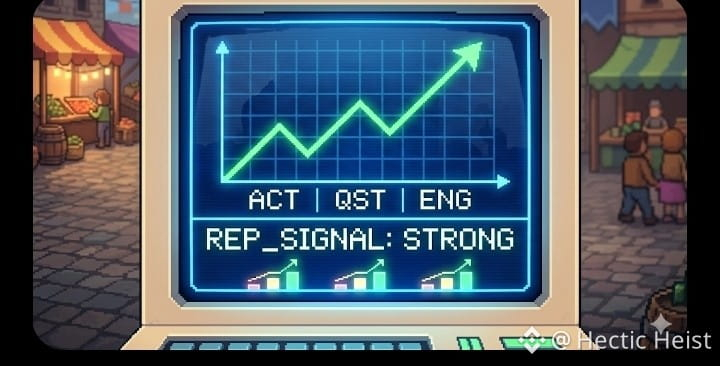
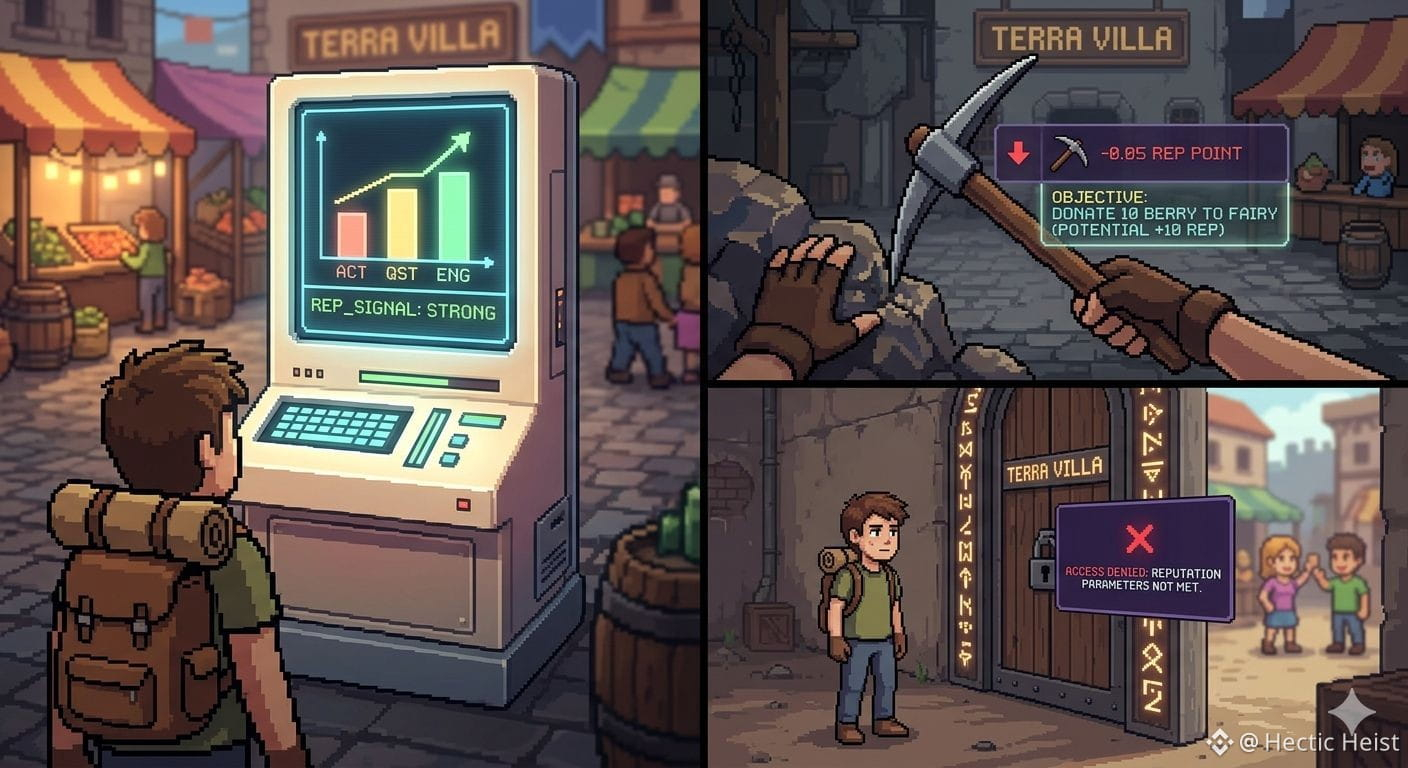
Pixels approaches it through behavior. Activity, quests, time spent, engagement patterns. All of it tries to build a signal around who is actually participating in the world.👠
Reputation becomes a way to push back against tha🤝t.
To say that presence matters.
That consistency matters.
That contribution matters.
But I also think the moment you start measuring behavior, you start shaping it.
Players don’t just play the game anymore.
They start playing the system behind the game.🙄
They optimize for score, access, eligibility.
And that can quietly change the experience.
Actions become less about what feels natural…
and more about what improves standing.
I think that’s where the tension lives.
Reputation can protect a game.
But it can also make parts of it feel less organic.
It can filter noise…😎
but also introduce opacity.
Players may not fully understand why they are being rewarded or limited.
And that uncertainty can turn into friction.
So I don’t really see reputation as a clean solution.
I see it more like a balancing layer.
Something that tries to hold the system together, while creating new dynamics at the same time.
And maybe that’s unavoidable.🧐
Because once value exists inside a game, behavior becomes uneven.
Some form of distinction starts becoming necessary.
The question is just how that distinction is handled.
Pixels doesn’t solve that completely.
And I think that matters.
Because pretending all players behave the same may feel fair…
but it usually doesn’t protect the system for long.🌺
@Pixels #pixel $PIXEL