

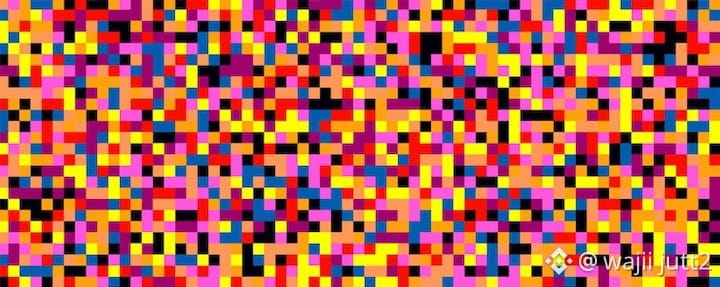

In this digital tech era, when we look at our smartphone, laptop, or TV screens, we see a clear and bright image. But have you ever thought about how this image is created? The real story behind it is 'Pixels'. The term "Pixel" is a combination of "Picture" and "Element". It is the smallest and fundamental unit of a digital image or screen.
What is a Pixel?
A pixel is a tiny, typically square dot that represents a color on the screen. When thousands or millions of pixels are arranged together in a grid (rows and columns), they collectively form a complete image or video. If you zoom in on any digital image, you’ll see those tiny colored boxes; those are the pixels.
How Do Pixels Work? (The Role of Subpixels)
Each pixel is actually made up of smaller parts, known as 'Subpixels'. These subpixels are generally three colors: Red, Green, and Blue. This is referred to as the RGB (Red-Green-Blue) model.
When these three colors light up at different intensities, they combine to create various colors. If Red and Green are lit brightly, yellow is produced. When all colors shine brightly, it becomes white, and when they are off, it appears black.
Resolution and Quality
The quality of the screen depends on its "Resolution", which means how many total pixels are present on the screen.
Resolution: For example, 1920 x 1080 (Full HD) means 1920 pixels horizontally and 1080 vertically.
More Pixels = Better Quality: The more pixels there are, the clearer, sharper, and more detailed the image will appear.
PPI (Pixels Per Inch): This indicates the screen density. If there are more pixels in one inch, the image will look that much crisper.
Types of Pixels
Display Pixels: These are found on our TV, Mobile, or Monitor screens and emit light.
Digital Pixels (Raster Image): These are found in computer files (JPG, PNG). They are just data that become visible when displayed on the screen.
Camera Sensors (Megapixels): In digital cameras, pixels are present on the sensor that capture light. 1 Megapixel means 10 lakh pixels.
Conclusion
In short, pixels are the atoms of the digital world. From our phones to the big screens in cinemas, everything we see on the screen is a carefully crafted play of these tiny colorful dots. With advancements in technology, the size of pixels is getting smaller, allowing us to see images on the screen as clear as real life.
In digital imaging, a pixel (abbreviated px), pel, or picture element is the smallest addressable physical element of a raster image or the smallest
Pixel density affects how crisp and sharp an image appears, and greater pixel density usually translates to higher-quality images. With a 100 x 100 pixel image, if the resolution is set to 100 PPI, the image would measure exactly one square inch when
A pixel, short for "picture element", is the unit of measurement for the size and quality of a digital image or display. In digital photography, it refers to the smallest unit of a digital image captured by a camera's image sensor.
@Pixels (https://www.binance.com/en/square/profile/pixels), tag token $PIXEL
