#pixel $PIXEL
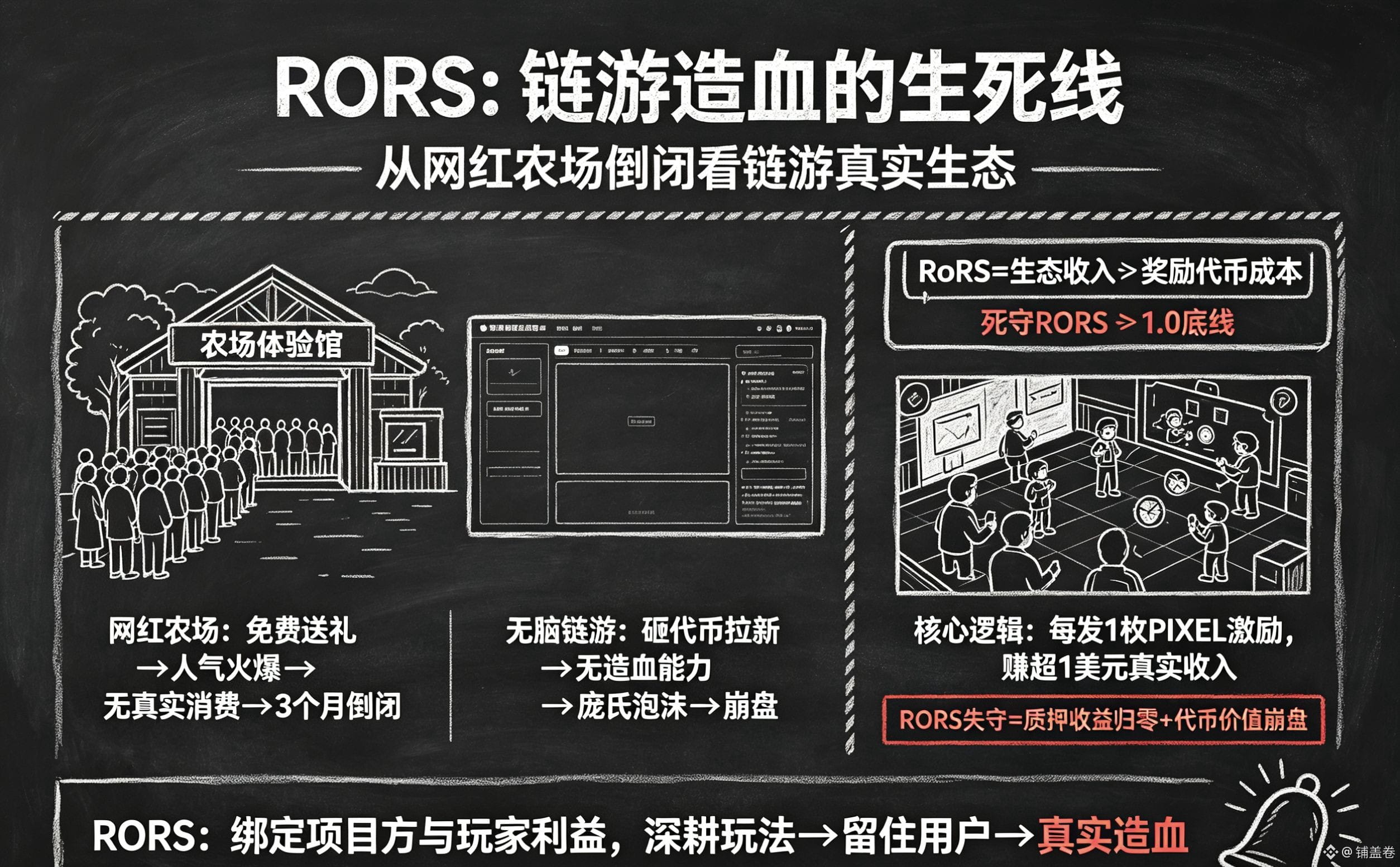
We have a popular farm experience center downstairs. When it opened, they crazily gave away gifts to attract people, and I participated as well. However, despite the apparent popularity, it was all just people taking advantage of free offers and leaving without any real spending. I thought to myself, how can they make money? Sure enough, within three months it closed down. This is reminiscent of countless brainless token giveaways that attract new users without any means of generating revenue, and Pixels' RORS is designed to prevent such tragedies.
RORS, or the Reward Outlay Return on Spending of Pixels, is calculated as ecological income ÷ reward token cost. The project firmly adheres to the RORS > 1.0 bottom line. This is not just a simple economic indicator; it is a sharp blade that pierces through the Ponzi bubble of blockchain games and is the lifeline for the project's survival.
Its core logic is cruel yet realistic: for every 1 PIXEL incentive issued, over 1 dollar in real income must be earned back. It completely abandons the old trick of 'later arrivals taking over, early birds cashing out' and refuses to turn the game into a capital game of passing the buck. Without real player spending and sustainable ecological revenue, RORS will directly drop below the threshold, and the game economy will collapse instantly.
This indicator tightly binds the interests of the project team and players, forcing the team to abandon short-term hype, focus on gameplay, retain users, and rely on real ecological revenue generation. However, once the market cools down and players leave, if RORS fails, all staking rewards and token values will vanish. RORS is both the confidence of Pixels in breaking away from low-quality blockchain games and the warning bell hanging over all participants: blockchain games without real revenue generation are ultimately just an empty illusion.
We have a popular farm experience center downstairs. When it opened, they crazily gave away gifts to attract people, and I participated as well. However, despite the apparent popularity, it was all just people taking advantage of free offers and leaving without any real spending. I thought to myself, how can they make money? Sure enough, within three months it closed down. This is reminiscent of countless brainless token giveaways that attract new users without any means of generating revenue, and Pixels' RORS is designed to prevent such tragedies.
RORS, or the Reward Outlay Return on Spending of Pixels, is calculated as ecological income ÷ reward token cost. The project firmly adheres to the RORS > 1.0 bottom line. This is not just a simple economic indicator; it is a sharp blade that pierces through the Ponzi bubble of blockchain games and is the lifeline for the project's survival.
Its core logic is cruel yet realistic: for every 1 PIXEL incentive issued, over 1 dollar in real income must be earned back. It completely abandons the old trick of 'later arrivals taking over, early birds cashing out' and refuses to turn the game into a capital game of passing the buck. Without real player spending and sustainable ecological revenue, RORS will directly drop below the threshold, and the game economy will collapse instantly.
This indicator tightly binds the interests of the project team and players, forcing the team to abandon short-term hype, focus on gameplay, retain users, and rely on real ecological revenue generation. However, once the market cools down and players leave, if RORS fails, all staking rewards and token values will vanish. RORS is both the confidence of Pixels in breaking away from low-quality blockchain games and the warning bell hanging over all participants: blockchain games without real revenue generation are ultimately just an empty illusion.