


Original author: Mengchen
Original source: Quantum Bit
Claude strikes again in an industry!
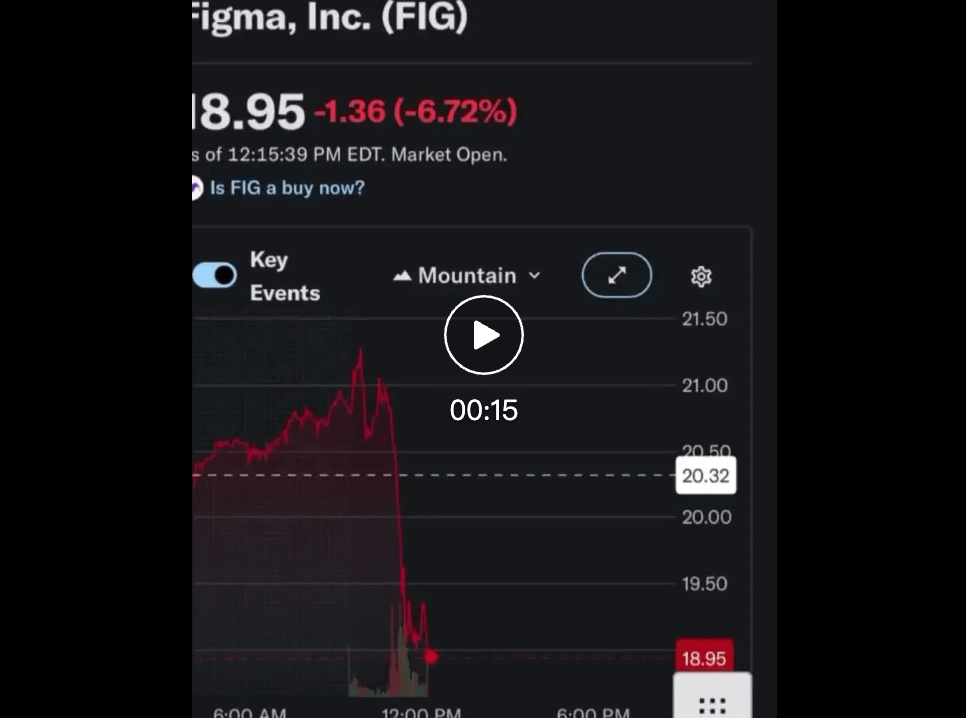
Visual design tool Claude Design released, Adobe, Figma, and Wix's market value flashed and melted.
This is the first experimental product from Anthropic Labs, an AI-native visual design collaboration platform powered by the newly released flagship model Claude Opus 4.7.
This is an AI large model company, a direct challenge to existing design software giants.
Three major killer moves, Adobe plummeted on the spot
What exactly is Claude Design?
The interface looks very clean, just traditional design software + an AI chat sidebar.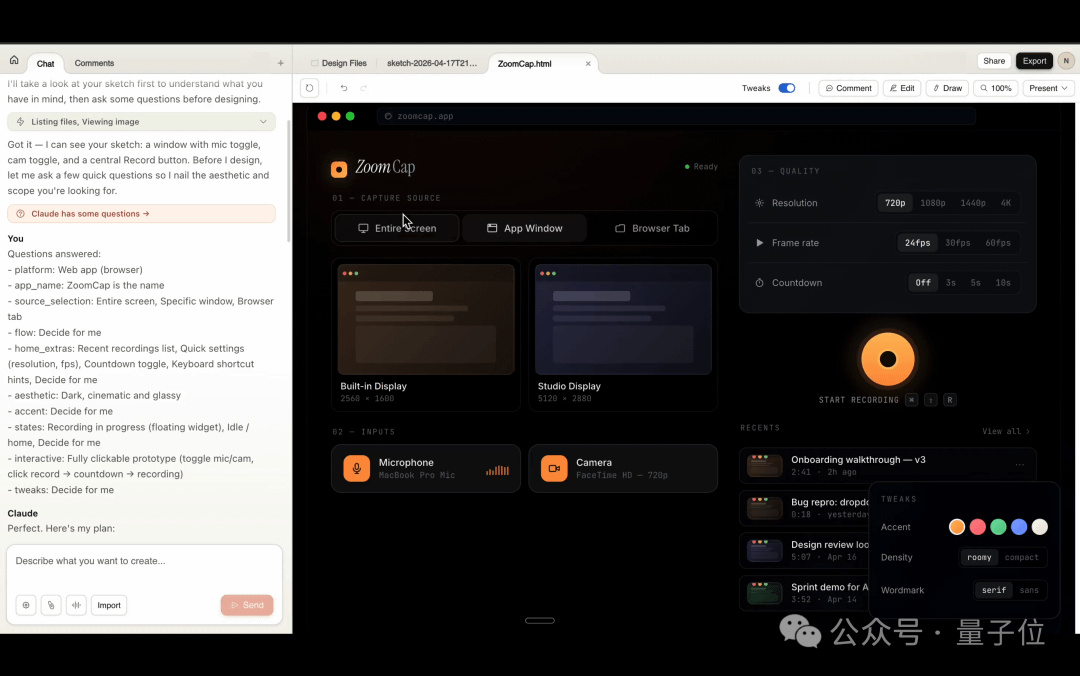
Designers do not need to change their original habits; there are also fine-grained manual adjustment panels for each component.
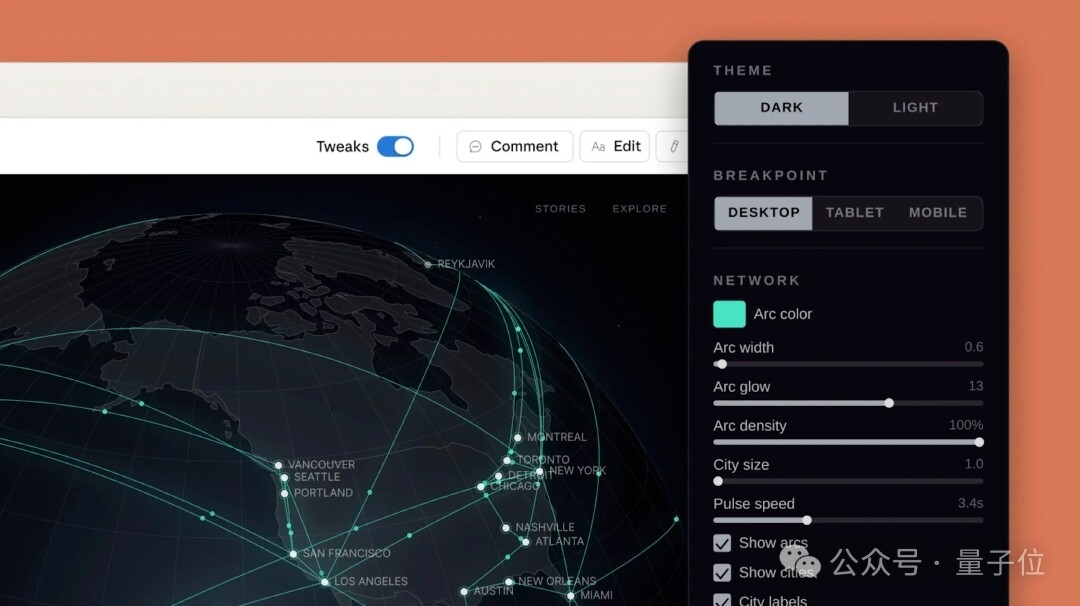
It can also leave a comment on the components that need changes, just like collaborating with humans, and the AI will automatically make the changes.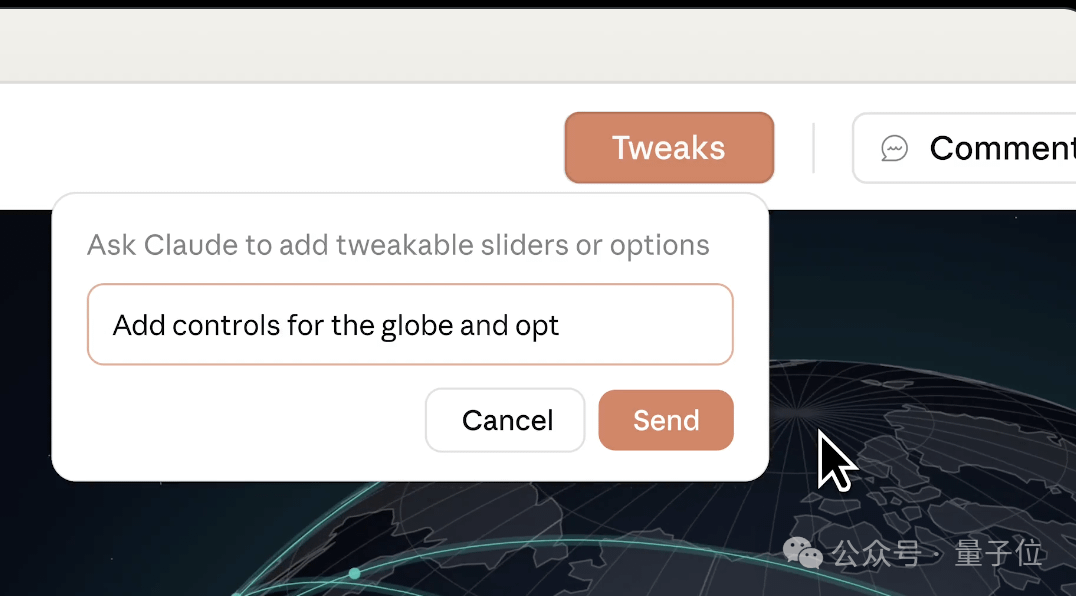
The workflow is already clear here: describe requirements → AI generates a draft → dialogue/comment iteration → export delivery.
What truly makes traditional software tremble are three killer features.
The first: it understands your brand better than you do.
Claude Design can directly read your company's codebase and design files, automatically extracting brand colors, fonts, and component patterns to establish a proprietary design system. All generated designs will automatically adhere to this set of specifications.
In other words, an intern might take three months to understand the company's design specifications, while Claude Design only needs a glance at your codebase.
The second: anything can be an input.
You can provide it with Word documents, PPTs, Excel spreadsheets, competitor screenshots, code repository links, or even directly use built-in tools to capture web elements. It can understand all this messy information and use it to generate designs.
The issue that designers find most troublesome, 'incomprehensible requirement documents,' does not exist here.
The third: directly turning designs into code.
Once the design draft is completed, it can be packaged into a handoff bundle and sent directly to Claude Code for implementation. There are no manual steps in between design and runnable code.
Truly becoming an automated assembly line from idea to product.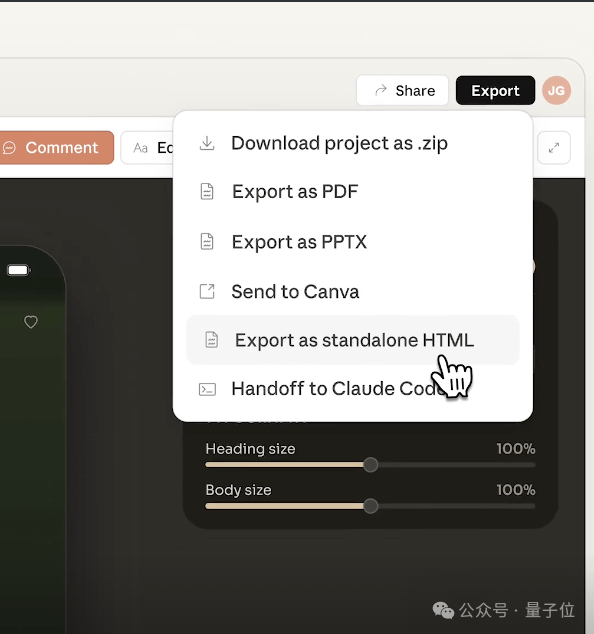
If Figma is the 'collaborative canvas', Canva is the 'template factory', then Claude Design directly becomes the AI assembly line from idea to product.
The feature sounds beautiful, but how does it actually work?
A week's work was completed in one conversation.
Some netizens generated a complete 3D low-polygon style Flappy Bird with just one sentence prompt.
Please code up a 3d flappy bird in html css js and run it in artifacts.
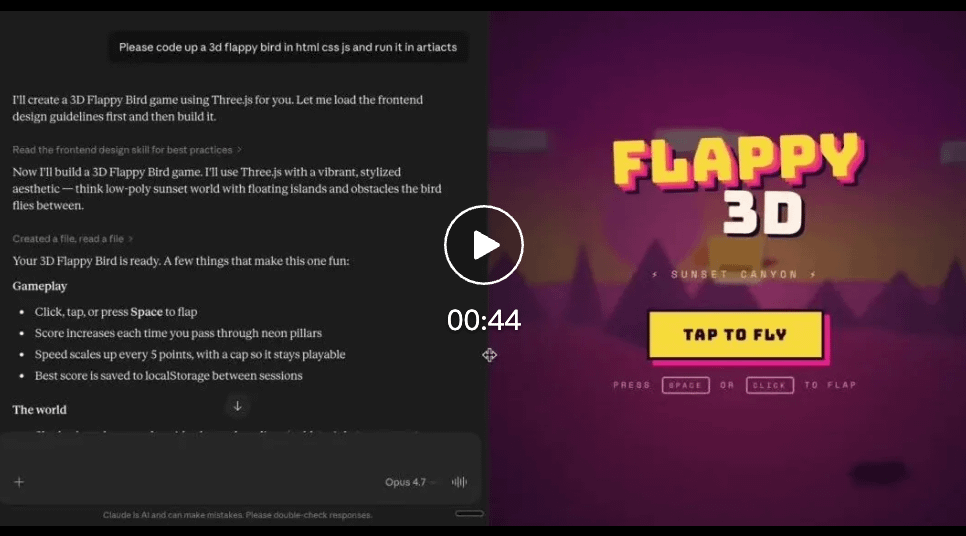
To be honest, writing game code was something Claude Code could do before, but to achieve this effect in visual and animation performance required human intervention.
Now, with Claude Design, it can be done entirely automatically in one go.
Generating complex dashboard interfaces is also a piece of cake.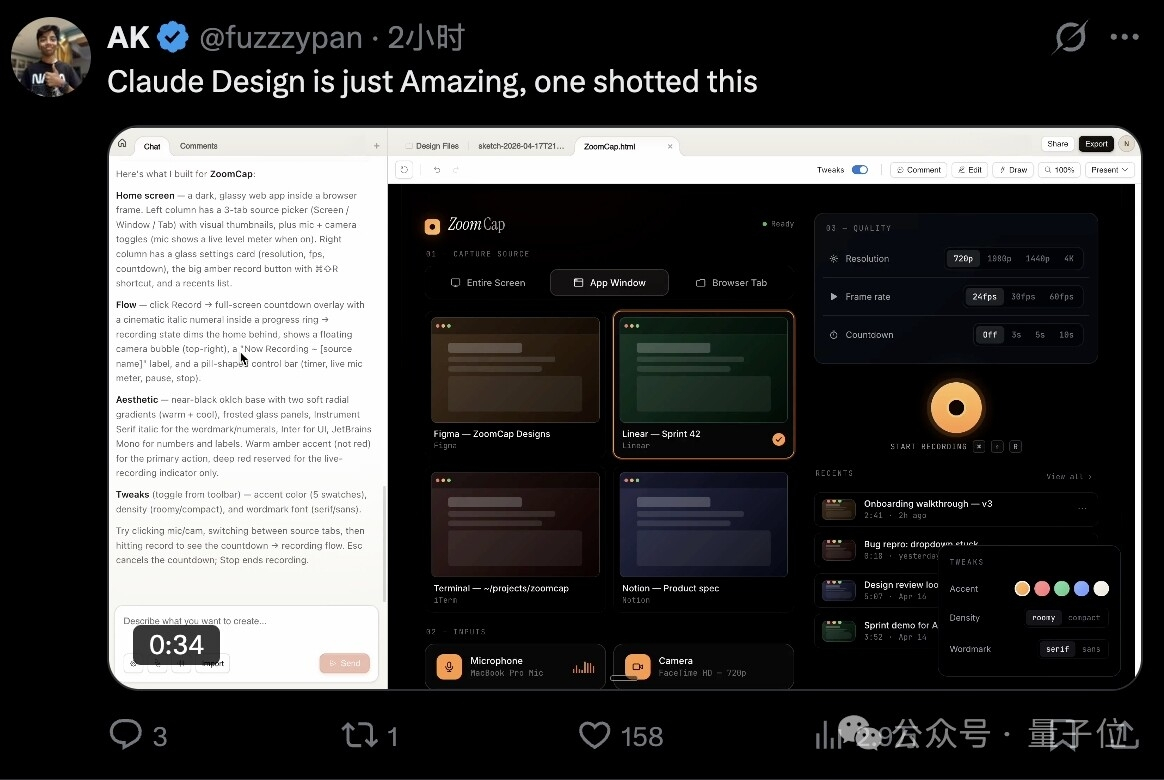
But after all, it was just released a few hours ago, and the ones who truly used it deeply were early testing users, whose data was more exaggerated than expected.
A senior product designer from Brilliant shared his experience: a complex product page required more than 20 rounds of adjustments to prompts in other AI design tools to complete.
In Claude Design? Twice.
Datadog's product team used to spend a week from requirements briefing to design modeling to review approval; now it's compressed into one conversation.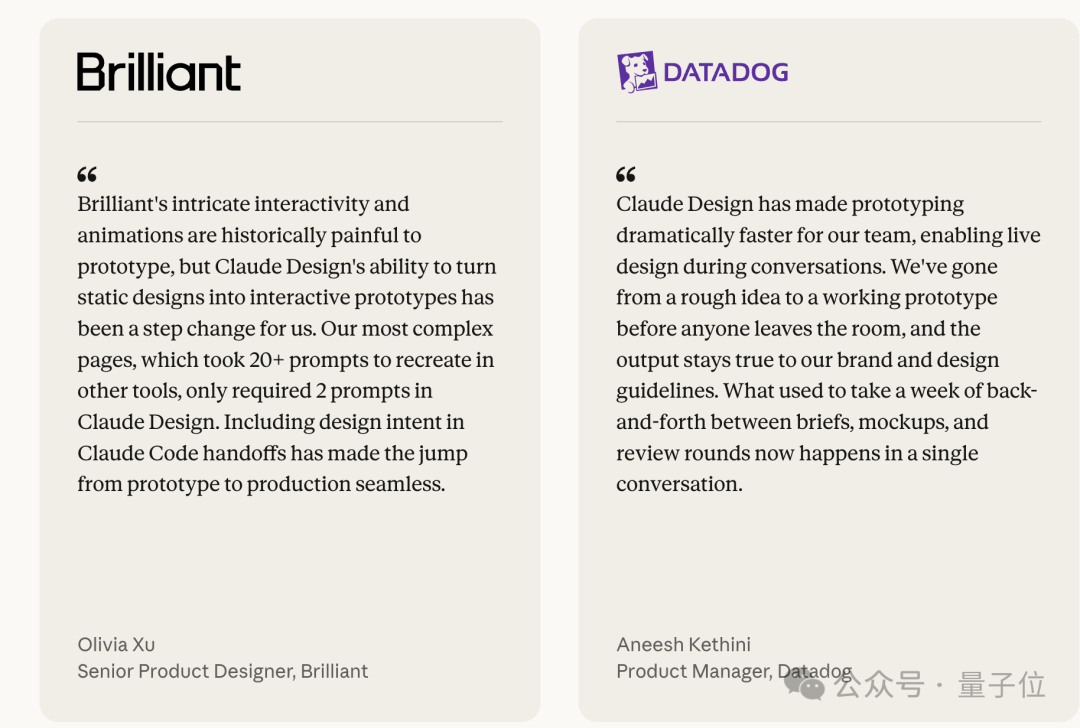
The target users of Claude Design are not just designers.
Product managers can draw their ideas directly without waiting for designers to schedule.
Founders can finalize their pitch deck the night before fundraising.
Marketing personnel can produce professional-level landing pages without going through cumbersome design requirement processes.
As long as you can type, you can produce high-quality visual works.
So should designers be worried about unemployment?
In the official announcement from Anthropic, they are still very polite, positioning their product as a tool to enhance designers rather than replace them.
Even experienced designers must restrain their exploration—there is rarely time to prototype a dozen directions, so you can only limit yourself to a few.
Claude Design's original intention was to address this issue.
But unfortunately, the solution is too harsh.
The statements about 'destroying the design industry' have already gone viral on social media.
The reaction of the capital market is more honest than any comment: a drop in stock prices indicates that investors believe the moat of traditional design software is being dismantled.
The collaboration ecosystem of Figma and the professional toolchain of Adobe, which were once insurmountable advantages, suddenly seem less solid in front of AI that 'does not require a learning curve.'
But will designers really lose their jobs?
The more common view is that AI will take over repetitive tasks (ensuring brand consistency, generating multiple variants), while designers can focus on strategic thinking and creative direction.
Just like in the era of AI programming, software engineers focus on architecture and managing coordinated multi-agent workflows.
Perhaps soon, we will see 'Harness Designing' in the design field.
Reference link:
[1]https://www.anthropic.com/news/claude-design-anthropic-labs
[2]https://x.com/claudeai/status/2045156267690213649