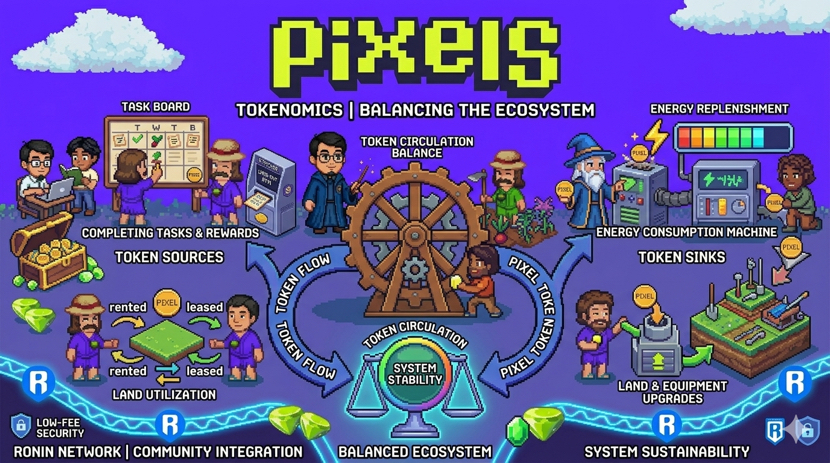

In the era of GameFi 2.0, the only standard to measure whether a project can outpace the cycle is: is its recycling mechanism (Sinks) more attractive than its output (Sources)? Today's m-24 (PIXEL) provides a textbook-level answer.
1. The 'macroeconomic regulation' of the Task Board: dynamic output
Pixels do not have a fixed daily output like traditional GameFi. Its Task Board is a set of intelligent algorithms that adjusts in real-time based on the scarcity of resources across the network and the circulation of tokens. This 'macroeconomic regulation' ensures that the system does not experience a sudden collapse in token value due to an oversupply of a certain crop. Players are no longer mechanically 'harvesting crops' but are seeking optimal solutions within a dynamically competitive economic system.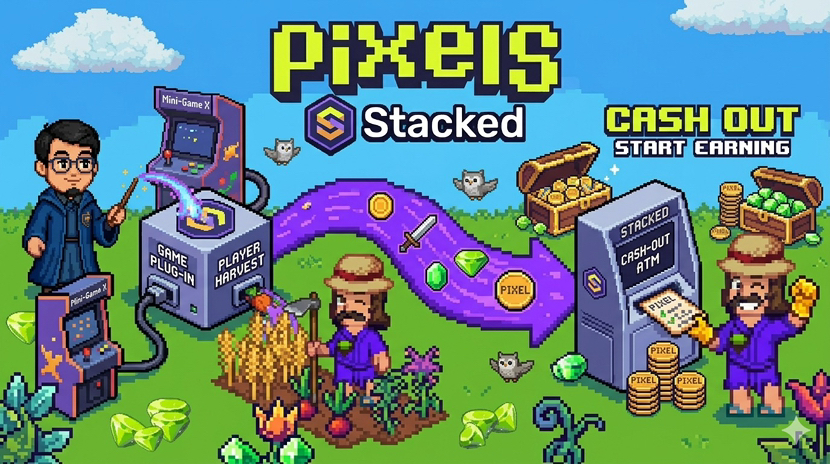
2. Rich 'consumption scenarios': Let the tokens flow
In a healthy economy, tokens must be liquid, not hoarded.#pixel has created a large number of essential consumption scenarios:
Energy replenishment: This is the core consumption, ensuring a deep link between tokens and player activity.
Land customization and expansion: For advanced landowners, to enhance land attractiveness and output efficiency, investments in tokens for upgrades are essential.
Social consumption: Decorative items, personalized clothing, and other 'emotional consumption' effectively absorb excess liquidity in the market.
These mechanisms have transformed PIXEL from a 'reward token' into a true 'ecological fuel'.
3. Endorsement of the Ronin chain: High-frequency and low-cost confidence
All economic micro-operations are mere talk without low-cost on-chain support. The Ronin chain provides Pixels with an almost zero-cost interactive environment, allowing$PIXEL to design more refined and higher-frequency consumption nodes without worrying about gas fees eating into players' profits. This perfect synergy of hardware and software is key to Pixels maintaining resilience even in a downtrend.