

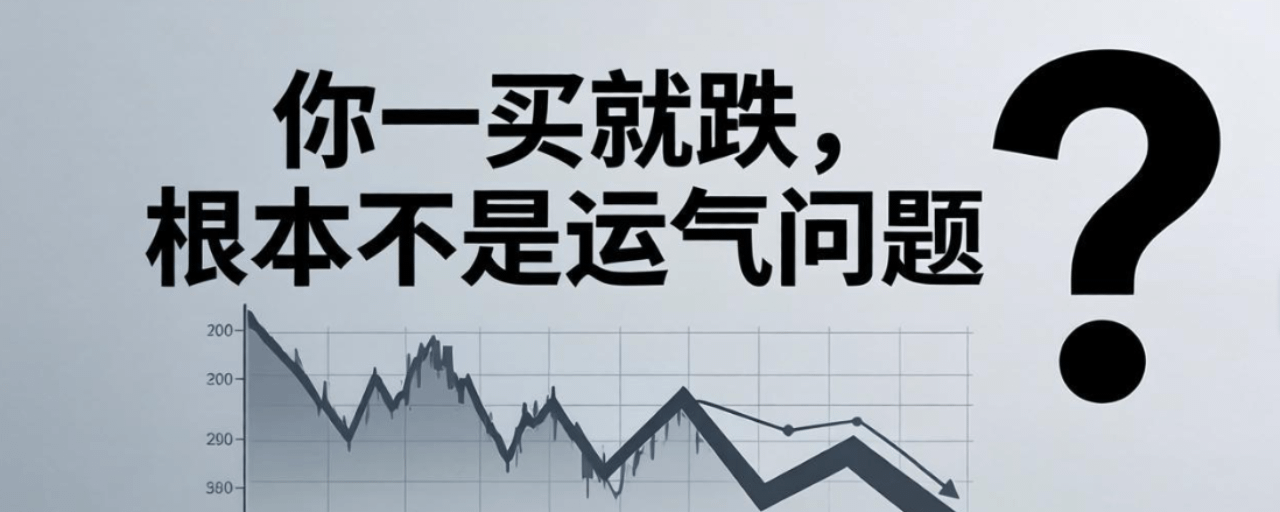

Is there an illusion? You scroll through countless posts on Binance Square that say 'buying the dip guarantees profit' and 'short-term doubling', following the analysis of experts to enter the market. Just as you click the buy button, the K-line plummets; you grit your teeth and sell at a loss, only to turn around and see the currency surge back, even breaking previous highs. You curse your bad luck and accuse the market of targeting you, but have you ever thought—this isn't about bad luck at all; it's that you jumped into a harvesting trap that others set up?
After spending a long time on Binance Square, you will notice a strange pattern: the more frequently a favorable news is posted, and the more people follow suit in promoting a currency, the more likely you are to 'buy high'; the more you rely on your intuition to buy the dip, the more likely you are to buy at a halfway point. Many attribute this to the 'uncertainty of the crypto world', but overlook a painful fact: there has never been an accidental drop in the crypto market, only meticulously designed games, and the 'bad luck' of retail investors is essentially a concentrated exposure of information gaps, cognitive biases, and human weaknesses.
First, let me ask you three heart-wrenching questions to see if you've also fallen into the same pit: Have you seen a certain blogger flaunting their profit screenshots, with comments full of 'I've gotten on board' and 'please take me with you', and couldn't help but follow the trend to buy, without even looking at the fundamentals of the coin? When you saw the coin skyrocket in a short time, did you fear missing the opportunity for wealth and rush in, without even setting a stop-loss? After it dropped, did you hold onto the hope that it would bounce back, getting deeper into the trap, and eventually had to cut losses and leave, only to regret it afterward?
Actually, it's not that you have bad luck; it's that you're tightly grasped by the 'harvesting logic'. Binance Square, as a platform combining crypto social interaction and trading, offers genuine market insights along with many 'scythes' with ulterior motives, who exploit the greed and fear of retail investors, guiding you step by step into traps while you mistakenly believe it's your bad luck.
The first truth: The 'good news' you see may be someone else's 'selling signal'. The personalized recommendation mechanism of information flow at Binance Square will show you more content that aligns with your preferences. Many big players collaborate with bloggers to first release false good news, flaunt fake profit screenshots, and even engage small accounts to create an atmosphere of 'everyone is making money' in the comments. When retail investors rush in, they quietly sell off, leaving retail investors standing guard at high positions. What you think is a 'great opportunity to buy the dip' is just someone else's carefully arranged selling trap, which has nothing to do with luck, only with your level of vigilance.
The second truth: The human tendency to chase highs and sell lows is more deadly than market fluctuations. Statistics show that 72% of retail investors exhibit a behavior pattern of chasing highs and cutting losses, which is one of the core reasons for 'buying and then it drops'. It's normal for mainstream cryptocurrencies to fluctuate by 10%-15% daily, and extreme conditions with single-day drops over 20% are not uncommon. Retail investors are most easily influenced by FOMO (fear of missing out) and FUD (fear, uncertainty, doubt)—afraid of missing out when prices rise, blindly chasing highs; afraid of losing everything when prices drop, panicking and cutting losses, perfectly timing the washout rhythm of the big players, ultimately losing more with every operation, while mistakenly believing it's bad luck.
The third truth: Information lag puts you at a disadvantage from the start. Although Binance Square can quickly provide market dynamics, the information that ordinary retail investors receive is often a step or even several steps behind that of the big players and institutions. Institutions and big holders can predict market trends in advance through on-chain data and internal channels, and even create market panic through large transfers and false trades. By the time you see the market changes, they are already the results of others' operations. Just like a big holder's one-time $50 million Bitcoin transfer can trigger market panic selling, while ordinary retail investors can only passively endure the decline. This is not a matter of luck; it is an inevitable result of the strength gap.
Many people scroll through posts and learn techniques at Binance Square with the intention of improving their trading skills, but instead, they are misled by various noises—AI-generated homogenized analyses, emotionally charged signals, and false profit sharing. These contents not only fail to help you make money, but also amplify your cognitive biases, causing you to be repeatedly harvested in your self-doubt of 'bad luck'.
Stop complaining about luck; the crypto space has never been a place to make money by luck. Those who can truly make stable profits at Binance Square never rely on luck but understand how to avoid traps, control emotions, and establish their trading logic: they do not blindly follow trends; they first verify the fundamentals of the coins and on-chain data; they do not chase highs and cut losses; they set reasonable stop-loss and take-profit levels; they are not influenced by short-term fluctuations; they maintain rationality and composure, not allowing emotions to lead them.
A final reminder: Binance Square is a platform where you can gain quality insights but also encounter harvesting traps. Every click and every trade here tests your cognition and composure. When you buy and it drops, it's not bad luck; it's that you haven't yet understood the game's logic of the market and haven't overcome your human weaknesses.
Let's talk in the comments: Have you recently fallen into the pit of 'buying and then it drops'? Do you think you have bad luck, or have you been harvested? Follow me for more practical tips shared later at Binance Square to avoid the scythe, protect your capital, and refuse to let 'luck' take the blame!