


Reprint: Plain Language Blockchain
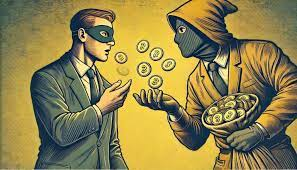
In the context of frequent pullbacks in mainstream cryptocurrencies and the market testing new lows, Zcash ($ZEC) has drawn a striking upward curve against the trend. This inevitably raises the question: Is it the era of 'Generation Z cash' coming? Or is the original spirit of crypto punk making a comeback?
For many friends who entered the crypto world after the summer of DeFi in 2020, Zcash, as the 'ancestor of privacy coins', may seem somewhat unfamiliar. Today, we will briefly review the evolution of privacy simulation and deeply explore why investment mogul Naval Ravikant has recently shown great favor towards Zcash.
(This article aims to popularize knowledge; many technical details are not elaborated on. Interested friends can study independently based on key terms.)
The Four Generations of Privacy Simulation Evolution
Zero Generation: Bitcoin ($BTC) - α Privacy
Many people may not know that Bitcoin itself has a certain degree of privacy, but this is a kind of 'pseudo-privacy'. Its implementation relies on the UTXO model and seeks a change mechanism.
For example: Xiao Ming has an UTXO of 7 BTC in address A, and he wants to transfer 5 BTC to Xiao Hong. After the transaction, 5 BTC will enter Xiao Hong's address, while the remaining 2 BTC will automatically find a brand new address B (this new address still belongs to Xiao Ming).
For ordinary users, after several transactions, the flow of funds does indeed become complex and difficult to track. But for professional institutions, due to the transparency of blockchain, they can still reverse-engineer the complete flow of funds through on-chain analysis.
Keywords: UTXO (Unspent Transaction Output), change mechanism
First Generation: The Privacy Trio - Dash, Monero, Zcash
Players who entered the scene around 2017 are certainly familiar with these three; they collectively defined the first generation of privacy coins.
1. Dash ($DASH) - Weak Privacy
Dash can be considered as an enhanced privacy version of Bitcoin. Its core technology is similar to the concept of Tornado Cash, but the technical implementation is different. Simply put, it mixes multiple users' transactions by their UTXO amounts and redistributes them, thereby disrupting the original path of funds. However, this privacy is relatively limited, and there is a high possibility of being cracked by professional analytical tools.
Keywords: CoinJoin Protocol
2. Monero ($XMR) - Mandatory Strong Privacy
Monero is the 'hardcore' faction in the field of privacy. It uses real signatures mixed with multiple 'decoy' signatures, making it difficult for children to discern which is the real signer. At the same time, it can hide transaction amounts and recipient addresses. This strong privacy makes it a mainstream choice in the dark web after Bitcoin gradually 'launders' its image. However, its 'forced privacy' characteristics face challenges in regulation, coupled with recent changes in the computing power ecosystem.
Keywords: Ring Signature
3. Zcash ($ZEC) - Optional Super Privacy
The protagonist of the paper, also a large-scale evaluation of cryptocurrencies.
It can be exaggeratedly said that without the exploration of Zcash, there would be no subsequent Tornado Cash, zkSync, StarkWare, and the flourishing ZK ecosystem today.
Zero-knowledge proofs can fully encrypt transaction data (sender, receiver, amount), achieving 100% privacy protection. Even better, Zcash's privacy is 'optional'. Users can freely choose to engage in transparent transactions, partially private transactions, or fully private transactions. This approach makes transaction methods simpler than those of Monero in an increasingly tightening regulatory environment.
Key Terms:
Zero-Knowledge Proof (zk-SNARKs)
Core Question: How to understand 'Zcash is the insurance of BTC'?
The recent catalyst for Zcash's price largely stems from Naval's deeply resonating assertion: "Bitcoin is the insurance of fiat currency, while Zcash is the insurance of Bitcoin."
This sentence can be understood from two levels:
"Bitcoin is the insurance of fiat currency"
: This is relatively easy to understand. When the currency system faces a crisis (such as extreme inflation, capital controls, political turmoil), Bitcoin can serve as a "safe haven" for value storage. Even in peacetime, continuous currency issuance makes Bitcoin's scarcity extremely valuable.
"Zcash is the insurance of Bitcoin"
: This is the key to the question. The biggest feature of Bitcoin is its openness and transparency, but this can also become its 'Achilles' heel'. As Bitcoin becomes more intense and mainstream, if large institutions begin to impose strict monitoring on on-chain activities (such as tracking wallet addresses, restricting specific transactions), then the 'anti-censorship' property that Bitcoin relies on for its reputation will be greatly magnified.
Zcash provides an answer.
At that time, where would the original crypto-punk spirit of Bitcoin go? It reserved a way for users to maintain financial freedom and privacy through optional, robust privacy features. When Bitcoin's 'square' became extremely noisy and transparent, Zcash provided a 'private room' where curtains could be drawn.
In conclusion: an interesting piece of knowledge
Perhaps 99% of investors do not know that what we today know as ZK-Rollup (such as zkSync and StarkWare), in strict academic terms, actually has little to do with 'ZK' (Zero Knowledge). Their more accurate names should be 'SNARK Rollup', 'STARK Rollup', or collectively referred to as 'Validity Rollup'.
But does this matter? Maybe not. After all, who mandated that a wife's cake must contain a wife?