


Compilation: Vernacular Blockchain
President Trump suddenly announced that starting November 1, 2025, an additional 100% tariff will be imposed on all Chinese imports. This news triggered shockwaves in global markets, leading to one of the most severe single-day sell-offs in stocks, cryptocurrencies, and commodities this year.
This is not a policy tweak, but an ongoing global reset.
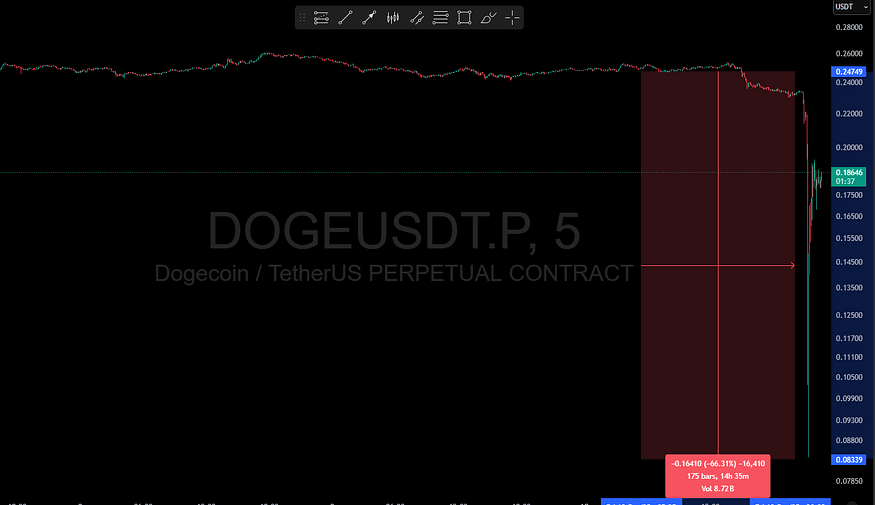
DOGE Price Plummets 65%
Tariffs that Crush the Market
Trump's new tariffs have doubled existing import duties, resulting in a total tariff on Chinese goods of approximately 130%.
This escalation occurred after Beijing imposed export controls on rare earth minerals and new port fees on U.S. ships. Both measures are seen as strategic countermeasures in this increasingly heated economic standoff.
Trump's response includes not only tariffs but also export controls on all critical software, and he hinted at canceling the planned meeting with President Xi Jinping.
Timing choice? Extremely brutal. Impact? Immediate.
Market crash: $1.6 trillion evaporated from the stock market
Dow Jones Index: -1.05% (-878 points)
S&P 500 Index: -2.7%
NASDAQ Index: -3.5% — the worst day since April 2025
As traders rush to exit, about $1.65 trillion in market value vanished within hours.
Tech stocks hit hardest: Amid fears that supply chains between the world's two largest economies could freeze, AMD shares fell 5.7%, Nvidia plummeted, and sentiment in the semiconductor sector collapsed.
Bitcoin fell alongside cryptocurrencies
Cryptocurrencies also could not escape.
Within hours of the announcement:
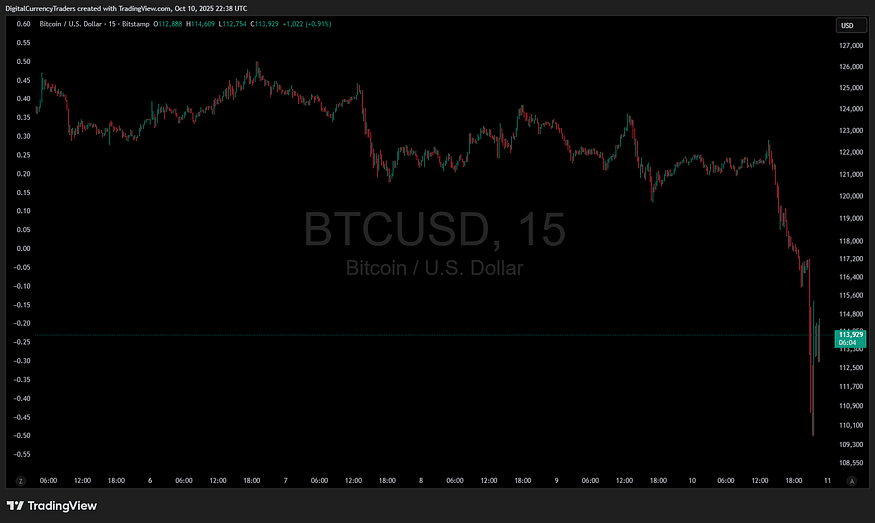
Bitcoin fell 10%, from $122,000 to $107,000
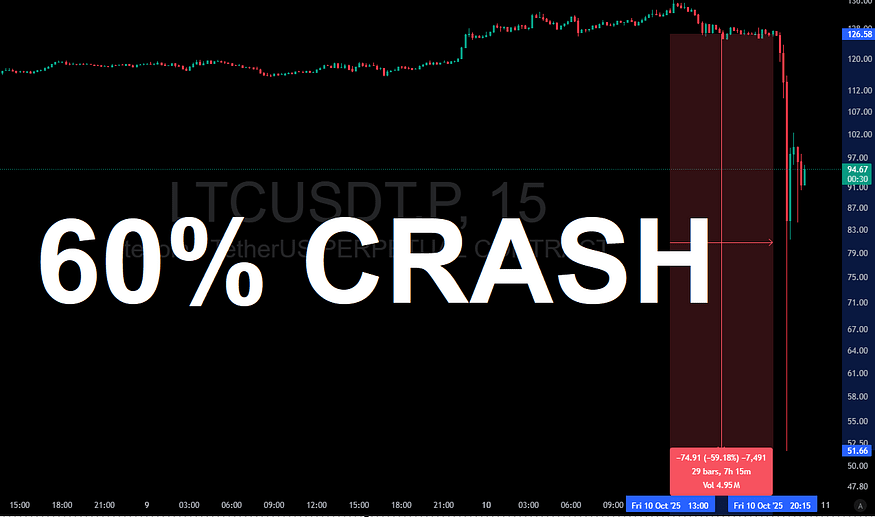
Ethereum, XRP, and BNB fell more than 15%
About $200 billion in cryptocurrency market value evaporated
This sell-off underscores how digital assets remain highly correlated with broader risk sentiment, and how macro shocks can trigger synchronized liquidations in traditional and crypto markets.
Wider context: Fear returns
The backdrop for this escalation was already very fragile:
The fear of a U.S. government shutdown looms large.
With rising commodity and transportation costs, inflation anxiety remains high.
Global supply chains face risks again — a replay of the chaos of 2018, but on a larger scale.
Analysts warn that if China retaliates with further restrictions on rare earths, semiconductors, or dollar-based trade, the market could face a prolonged 'stagflation shock' — that is, slowing economic growth, rising prices, and ongoing volatility.
What does this mean for investors
This is a macro turning point. Here are some strategic thoughts:
Short term: Expect volatility to rise sharply — stocks and cryptocurrencies may experience multi-day pullbacks.
Medium term: Watch the flow of safe-haven funds — demand for gold, cash, and U.S. Treasuries may surge.
Long term: If this trade standoff continues, supply chain inflation may reignite a preference for 'hard assets' like gold and bitcoin.
Ironically, the tariffs aimed at enhancing U.S. competitiveness may ultimately enhance the appeal of decentralized value storage assets.
Last chance window
The message from the market is clear: the trade war is back — and this time, it’s total war.
Gold is soaring. Bitcoin is bleeding. The stock market is collapsing.
As capital rushes to seek safe havens, one thing is certain — the next phase of global finance will be less about growth and more about survival, positioning, and timing.
The question every investor faces is: are you reacting to the headlines, or preparing for the ripple effect?