



The Awakening of a Giant
In the world of finance, the maxim "Follow the Money" still governs the steps of the most astute investors. When BlackRock, the largest asset manager on the planet with $14 trillion under custody, begins to block withdrawals, the signal is not just a yellow alert, it is a howl of systemic smoke. This movement reveals a hidden fragility that many ignore until it is too late. In light of this, do you honestly know how protected your assets are or if they are just "locked" by a promise of liquidity?

Liquidity Is Not Magic; It’s Mathematics
I always reinforce this: an investment fund is a slave to the liquidity of the assets it holds. There is no magic trick—if the underlying asset doesn’t turn over, the fund doesn’t pay. What we’re seeing today is a dangerous Liquidity Mismatch that investors ignore while chasing marginal returns.
Redemption Timelines (D+0 to D+15): These timelines aren’t bureaucracy, but the essential time for the manager to execute Mark-to-Market without destroying the unit holder’s equity.
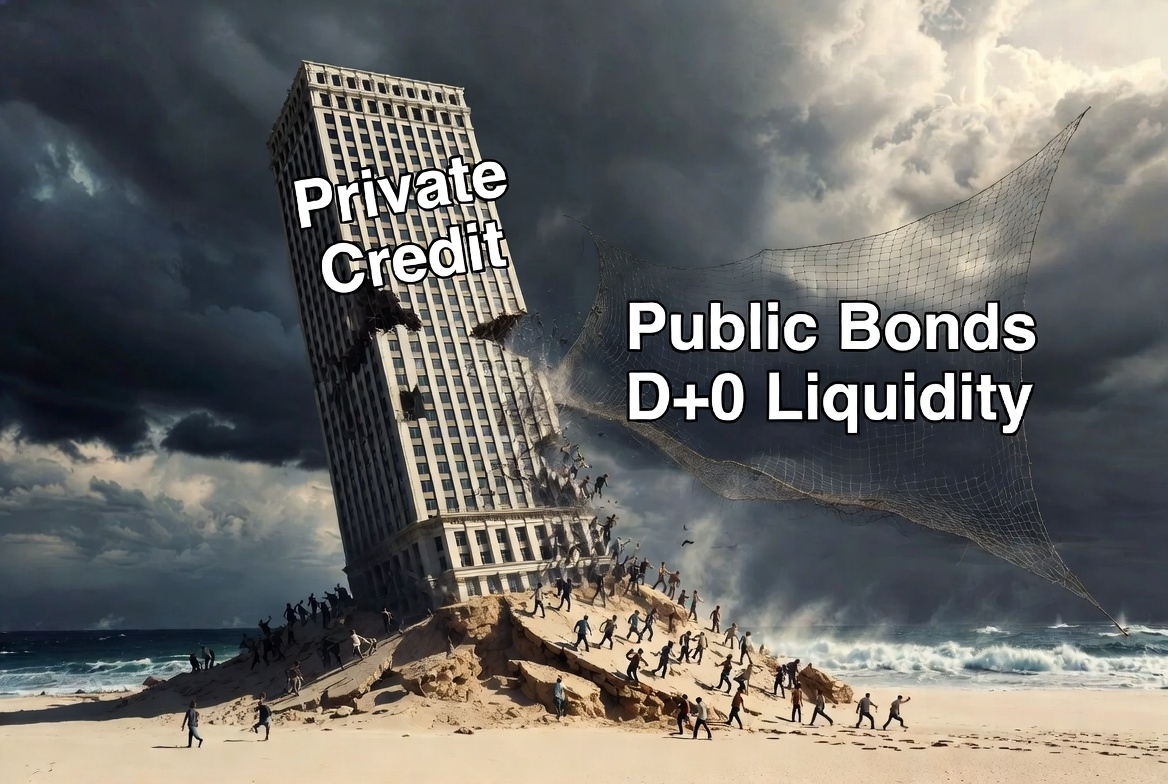
Federal Government Bonds (Selic/DI): They have D+0 liquidity because the secondary market is vast. The government and the market buy these papers instantly, ensuring the flow.
The Yield Trap: Many investors forget that high returns often hide low liquidity. In times of stress, illiquid assets force sales with aggressive discounts.
Forced Sale: When the manager is required to liquidate positions quickly to honor redemptions, it "melts" the asset price, harming both those who stay and those who leave.
BlackRock’s Move, A Strategic Pause to Prevent Panic
BlackRock’s block occurred specifically in Private Credit funds (debentures), where liquidity is far more restricted than in government bonds. The decision to "close the gate" is a drastic defensive mechanism to prevent selling pressure from destroying the fund’s value in a spiral of imbalanced supply and demand.
If a lot of people start requesting redemptions at the same time, the very order for the fund to sell these assets to cover redemptions will cause panic in the market and drive down the value of the assets, ultimately breaking the fund.
This block highlights a serious information asymmetry. The manager realized that if it kept honoring withdrawals, it would have to sell billion-dollar assets at liquidation prices. By suspending redemptions, it admits that the assets in the portfolio have no immediate buyers— a clear sign of exhaustion in the credit market.
Red Alert in the American Economy
This event is what we call a "smoke signal" for a structural fire in the U.S. The problem isn’t just psychological; it’s mathematical and involves the Difficulty of Payment Flows. Companies are suffocating under the interest-rate structure and the cost of debt.
Systemic Leverage: The U.S. market is operating at dangerous levels of indebtedness, with excessive issuance of private credit over the past few years.
Inability to Meet the Cash Flow: Many companies can no longer generate enough cash to pay the interest and amortizations on these loans, creating technical default.
The Trigger: The trigger occurs when risk perception becomes widespread. At that point, fear overrides greed, triggering a bank-run dynamic in investment funds.
Short-Term Correction: The combination of high leverage and lack of cash flow signals a severe and imminent correction in the prices of credit assets.
What’s Left for the Investor?
The BlackRock episode is a teaching lesson about the hierarchy of risks. Private credit may seem attractive during calm times, but in moments of stress, real liquidity disappears, leaving only closed gates. The senior investor understands that safety lies in the asset’s quality and the ease of exit, not just the promise of returns from the fund’s yield.
In a liquidity crisis scenario, would you rather be where the money hits your account the same day, or where the manager can confiscate your access to capital to avoid the fund’s collapse? The choice must be made before the gate closes.