


Family, today we won't talk about the market, but about human nature. Really, I just crawled out of a suffocating 'brotherhood' and I'm feeling utterly EMO.
Here's the thing: my good brother, whom I've known for many years, has been unemployed for over half a year. Seeing him gloomy every day, I used all my top connections accumulated over nearly ten years and personally helped him polish his resume and connect with resources, ultimately pushing him into a large company. At that time, I thought, 'When a brother is in trouble, it's my duty to lend a hand.'
And what happened? In less than three months, I heard that he was out drinking and wildly criticizing me, saying I 'screwed him over,' complaining about the tiring work and long hours, even suggesting that I pushed him into the fire pit just to get that little referral fee.
At that moment, I understood what **“a kindness met with ingratitude”** means. In real social interaction, the sense of boundary is a joke. I thought I was a “warm-hearted guide,” but he took me as a “after-sales warranty worker,” and when something goes wrong, it’s all my fault.
💡 Help! Web3's “trust infrastructure” turns out to be the antidote to human nature?
When I brought this grievance into the Web3 perspective, I suddenly realized: @SignOfficial the Sign Protocol is simply a magic drug born to solve this problem of “blurred boundaries of human relationships”!
If initially, my introduction of a job was done through EthSign with a simple electronic signing record on-chain, the plot would definitely have reversed:
* Define role: The record will clearly indicate that my role is limited to “information docking and recommendation”.
* Responsibility boundary: At the moment of signing, my task is 100% achieved. Any subsequent friction you have with the company has nothing to do with me.
* Tamper-proof: This record is permanently locked on the blockchain. When he slanders me outside saying I’ve cheated him, this cold on-chain record is my strongest reputation firewall.
🚀 Sign Protocol: Reconstructing “verbal favors” into “structured credit”.
Looking deeper, @SignOfficial what is being done is far more than just signing. Its Attestation (on-chain proof) is turning that vague “for my sake” into a choreographed, bounded digital identity tag.
In Web2, what everyone loves to do is **“confuse the situation”**. Introducers and guarantors are clearly two different things, but in reality, many people deliberately mix them up to shift responsibility when something goes wrong.
But under the logic of the Sign Protocol, trust is precisely calibrated to the “granularity” level:
* Introducer mode: I prove I know him, and he has this skill.
* Guarantor mode: I endorse his output (this is completely another form of credit cost).
This is the charm of technology: it forcibly delineates rights, responsibilities, and benefits. When disputes arise, everyone no longer competes over who has the louder voice or who can tell a better story, but directly looks at what the on-chain record says. This is not unfeeling; it is precisely the greatest protection for kindness!
🏁 Written at last: We do not need to be kinder; we need to be clearer.
To be honest, I know that introducing friends to jobs through on-chain agreements is a bit ahead of its time, and it even seems “cold”. But this pain point of **“good intentions being taken for granted”** is definitely the most toxic poison in the social world.
Future Web3 social interactions should not just be simple chatting, issuing tokens, or grooming; it should be a **“trust system of equal rights, responsibilities, and benefits”**. The underlying logic of $SIGN essentially provides a legal-level infrastructure to protect interactions between people by **“guarding against the petty and safeguarding the noble”**. It allows the good people to have evidence to check and leaves no escape route for those who want to evade responsibility.
This kind of reconstruction of the underlying value distribution and order is the most fascinating and hardcore aspect of this track.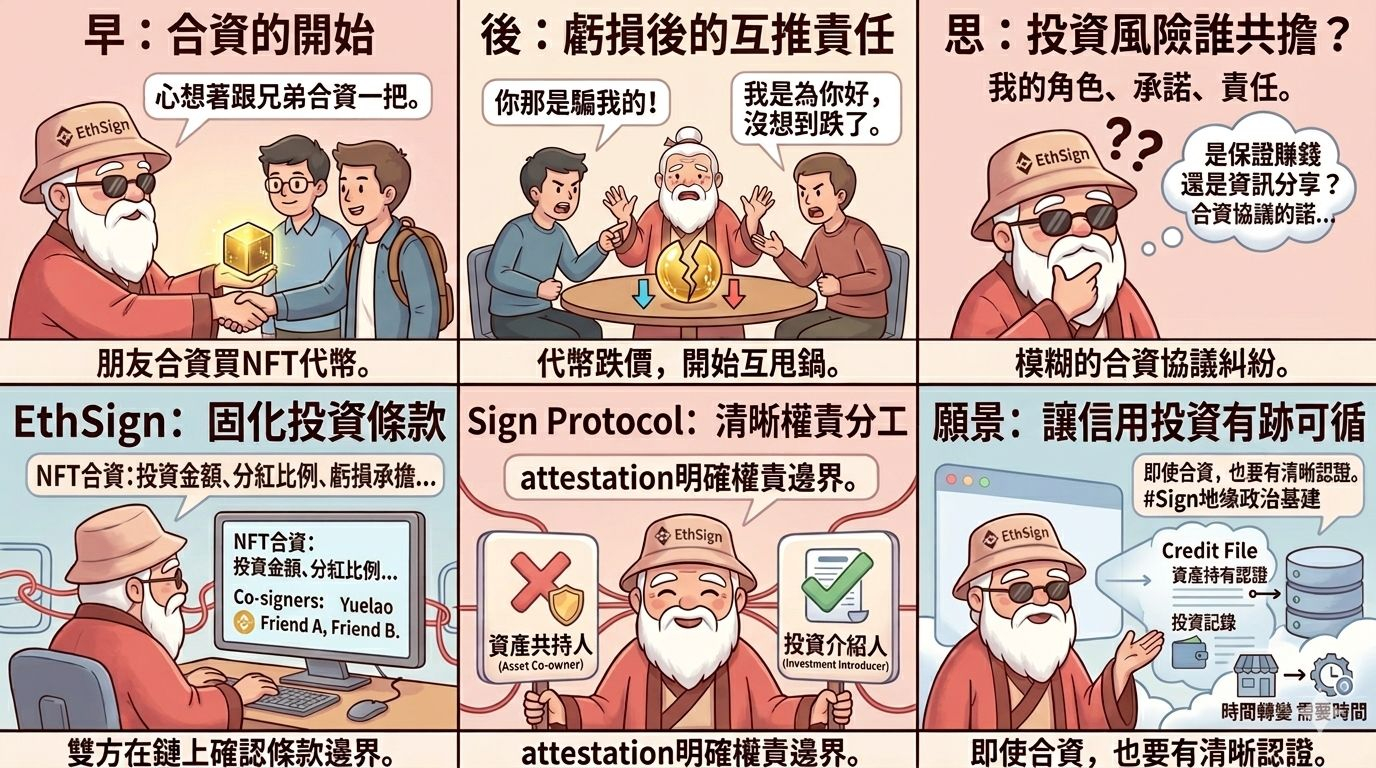
Want to hear how I use this “trust granularity” logic to analyze which projects are still solving this “social boundary” problem in the current Web3 social track? If I get over a hundred likes, I’ll immediately continue! #Sign地缘政治基建 #Web3HumanObservation #TrustRevolution