


The success or failure of virtual asset investment depends as much on preventing 'outgoing money' as it does on making profits. Binance, the world's largest exchange, boasts lower fees compared to other exchanges, but the fee structure is very complex depending on the trading method and level. As of 2026, with active short-term trading and high-leverage futures trading, managing fees is directly related to skill.
Today, I will detail the structure of Binance fees and the discount benefits that beginners must keep in mind.
1. Binance Spot fees: Understanding makers and takers
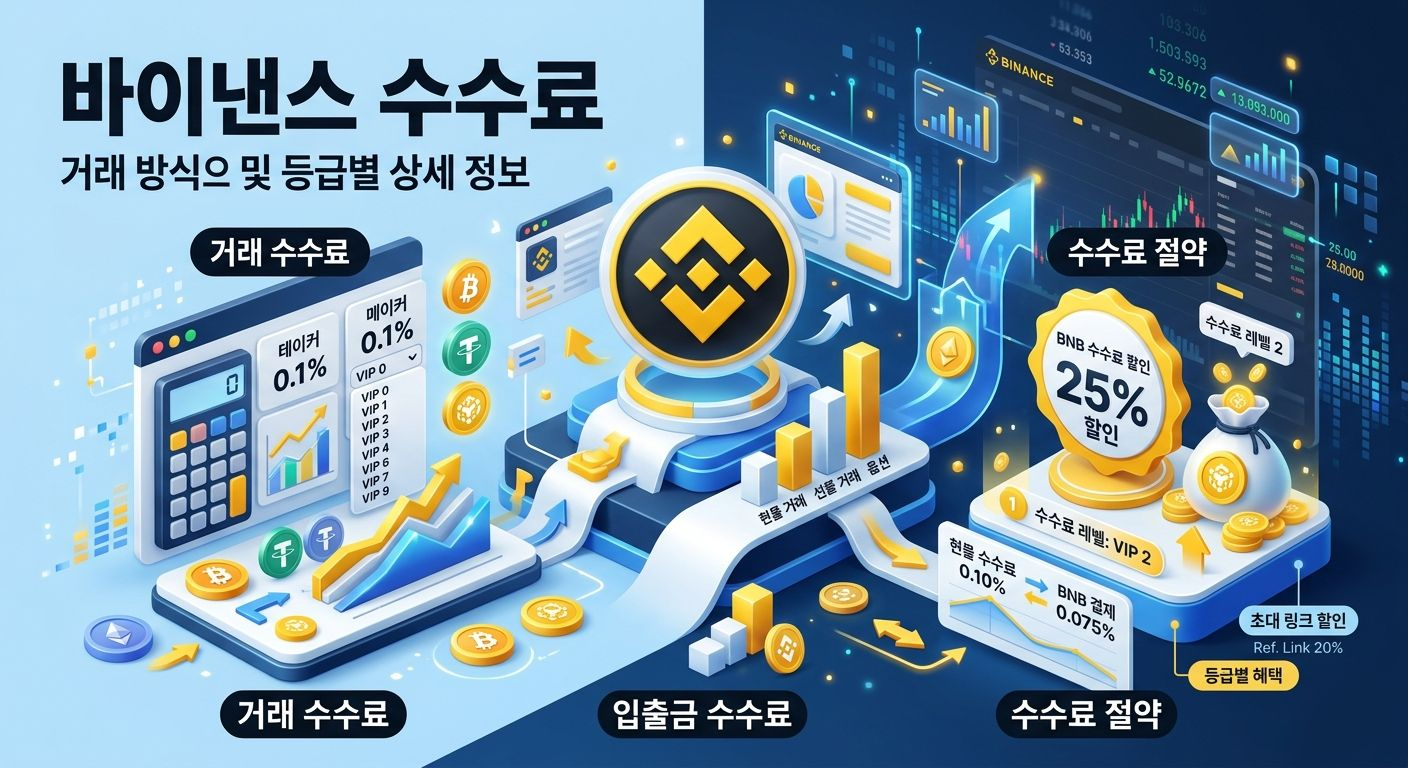
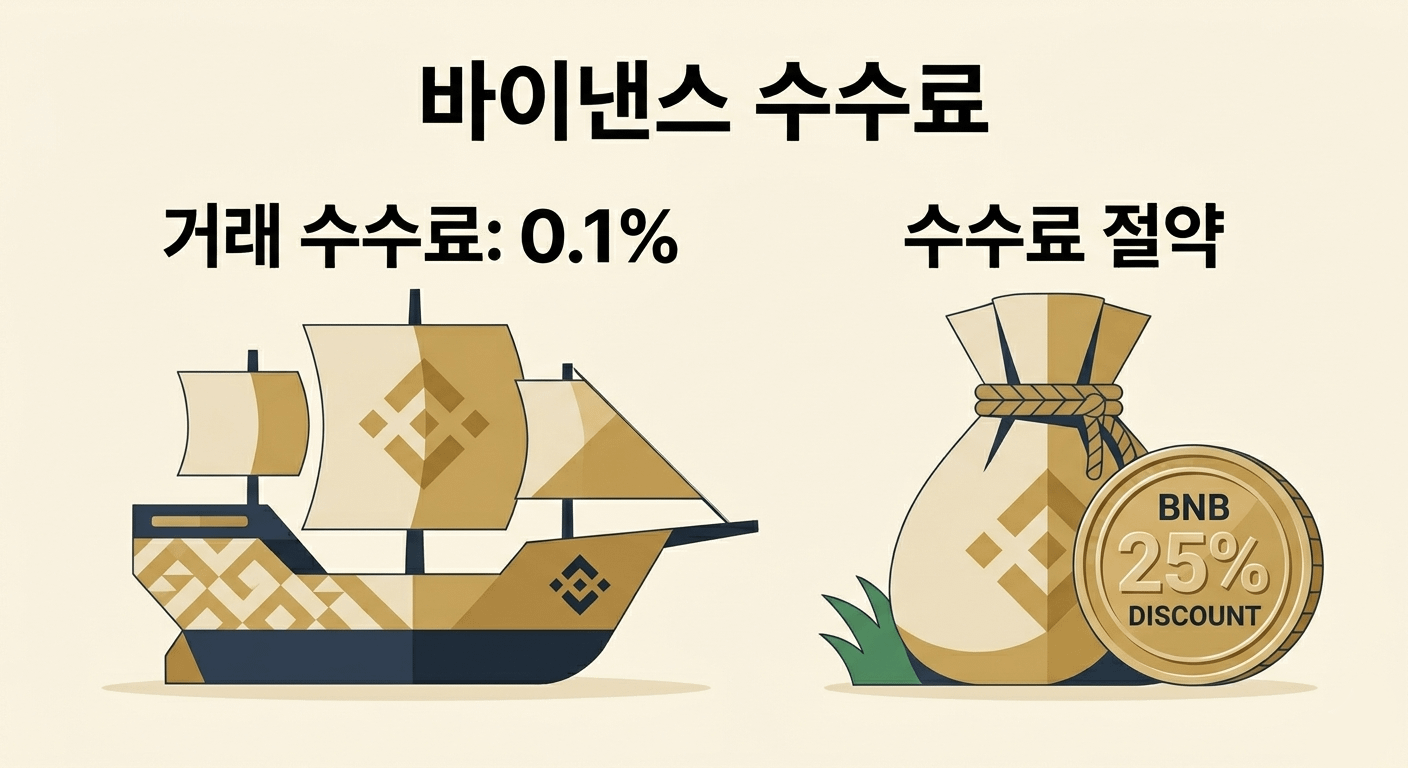
Spot trading is the most basic way to buy and sell coins. The basic fee at Binance starts at 0.1%.
Maker: Refers to limit orders. It supplies liquidity by placing orders on the order book that are not immediately filled.
Taker: Refers to market orders. It takes liquidity by immediately filling orders that are already on the order book.
Cost difference: As of 2026, Binance sets maker fees lower than taker fees for certain events or trading grades (VIP) to encourage liquidity provision. Beginners should take advantage of limit orders during non-urgent trades.
2. Futures trading fees and funding rates
Futures trading uses leverage, so calculating fees is much more important. Fees are deducted based on the 'total trading amount with leverage applied' rather than the principal you invested.
Basic rate: Usually starts at a lower level of 0.02% to 0.05% compared to spot, but if you use 10x leverage, the actual fees will feel 10 times higher.
Funding Rate: The cost incurred every 8 hours to align the futures price with the spot price. If there are many long positions in the market, longs pay fees to shorts, and vice versa. This funding fee can eat away at profits during long holding periods, so be sure to check the Countdown time in the upper right.
3. Fee discount tips: Use BNB payments and referrals
The most reliable way to save on fees at Binance is to stack two benefits.
BNB payment discount (25%): Hold a small amount of BNB, Binance's own coin, and turn on 'Using BNB to deduct fees' in settings. Instead of paying fees with BNB, you get an immediate discount of 25% on spot trading and 10% on futures trading.
Referral discount (20%): If you entered a trusted referral code upon signup, you will receive 20% of the fees incurred on each trade back in rebate form immediately after payment.
Final rate: By applying both benefits, you can trade at about 40-50% lower costs than regular users. This provides a tremendous competitive advantage in the fierce market of 2026.
4. Deposit and withdrawal fees
In addition to trading fees, you need to check the costs incurred during asset transfers.
Deposit fee: There is no fee for depositing coins into Binance.
Withdrawal fee: Varies by coin type and network. As of 2026, Ethereum (ERC-20) has high gas fees, resulting in higher withdrawal fees, while Ripple (XRP) or Tron (TRX) are very cheap, costing a few hundred won. When sending profits to Korean exchanges, be sure to use transfer coins.
Network selection caution: Choosing the wrong network when transferring can cause your assets to disappear, and in such cases, recovery fees may be very high or impossible.
5. Additional benefits through the trading grade (VIP) system
If you are a heavy user with high trading volume, you should pay attention to Binance's VIP levels.
Condition: The VIP levels range from 1 to 9 based on the trading volume and BNB holdings over the last 30 days.
Benefits: As your level increases, the maker fee gets closer to 0%, and you may even receive rebate benefits when trading. By 2026, not only institutional investors but also individuals using automated trading programs are actively utilizing these VIP benefits.
Summary and conclusion
Binance fees are an area where you can save as much as you know. By understanding the difference between makers and takers and combining BNB holdings with referral discounts, you can significantly protect your investment capital.
Fees are not just trading costs; they are a key variable that determines your final return on investment. I hope you can reduce unnecessary spending in the complex virtual asset market of 2026 and grow your assets more smartly through the detailed guide provided today.