

On Thursday, the coin #ON made traders experience such swings 😂 I wanted to explain what was actually happening.
I know there are many beginners among my subscribers, and they might be interested in reading 🤔
"Saw" is a sharp, jagged price movement back and forth in a narrow range that literally "cuts" both sides of the market: both longs and shorts.
This is neither a trend nor a sideways in the classical sense — this is a phase of maximum liquidity extraction.
🧠 The essence of movement
«Saw» occurs when:
✅️ the market is in the zone of interest of a large player‼️
✅️ volumes are increasing
✅️ market participants stand on both sides
▶️▶️ it is profitable for the market maker to take liquidity both from above and below
👉 As a result, the price moves sharply up and down without a trend continuation.
⚙️ How the «saw» works step by step
1️⃣ First — provocation
The price makes an impulse:
➡️ either sharply down
➡️ either sharply up
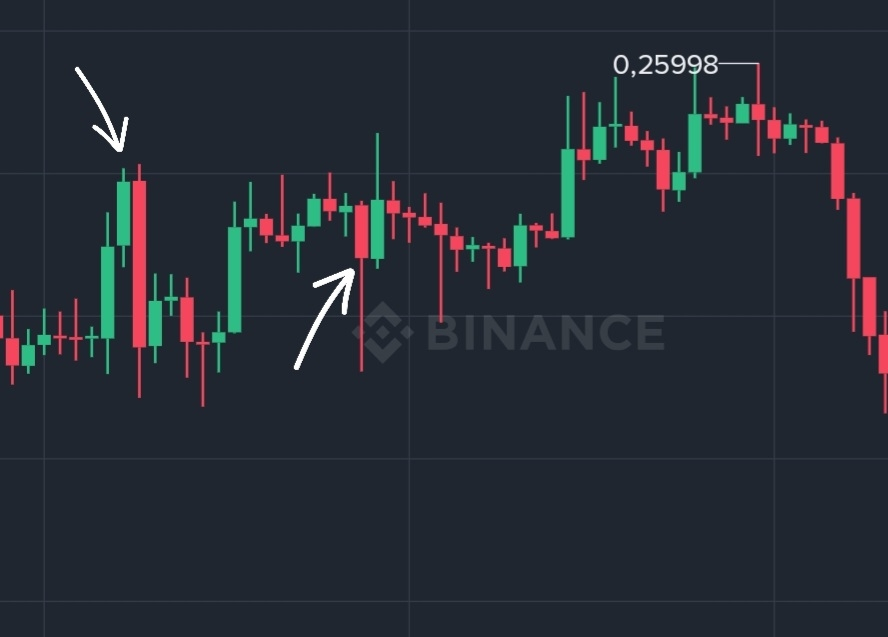
The crowd thinks: «The movement has started» and opens positions.
2️⃣ Then — a reversal without consolidation
Instead of a trend continuation, a sharp reversal occurs.
➡️ longs opened → price is falling sharply
➡️ shorts opened → price is rising sharply
Both sides feel pain.
3️⃣ Cycle repeat
The price returns almost to where it started, and everything repeats.
As a result:
✅️ stops trigger
✅️ shoulder positions are liquidated
✅️ deposits are decreasing
In the «saw»:
❌ trend strategies work poorly
❌ stops are knocked out too often
❌ impulses are misleading
❌ it's hard to hold a position
Even if your forecast regarding the direction of movement is correct, the saw easily knocks out on the stop before the real move.
🧩 Why does the market need a «saw»
This is not chaos. This is logic:
✅️ collect liquidity
✅️ remove leverage
✅️ make the crowd nervous
✅️ accumulate a position for a large player
Usually after the saw, a strong impulse follows.
🧠 How to act during the «saw»
Experienced traders:
▶️ reduce leverage
▶️ do not chase every impulse
▶️ waiting for confirmation of direction
▶️ work from the boundaries of the range
The main mistake is trying to trade the saw like a trend!
‼️ The best trading strategy in this case: waiting for the exit
Signs of exiting the saw:
✅️ consolidation beyond the range (break of trend)
✅️ impulse + holding
✅️ reduction of false movements
▶️ What are we actually “breaking” in the saw
In the saw, the market lives in a range:
✅️ there are local highs (top of the range)
✅️ there are local lows (bottom of the range)
▶️ Key moment: where to expect consolidation
📉 If you are looking for a short (downward exit from the saw)
Consolidation must be:
👉 below the last confirmed low of the range
What does this mean in practice:
➡️ The price held the level several times (it was the low of the range)
➡️ A breakout down occurs
➡️ AND THE MOST IMPORTANT — the price did not just pierce, but closed with the body of the candle below (consolidated).
📈 If you are looking for a long (upward exit from the saw)
Consolidation must be:
👉 above the last high of the range
The logic is the same:
➡️ There is a clear top of the range (high)
➡️ The price breaks through it
➡️ Closes above it
🧠 How to distinguish a “real consolidation” from a false one
Real consolidation:
✅️ the candle closed beyond the level (not a shadow!)
✅️ the next candle does not return the price back immediately
✅️ best of all — there is a hold or retest
False:
✅️ just a pierce (liquidity removed)
✅️ sharp return back into the range