
--Sky
119 Posts

--Sky
 Square Verified+
All views in this post are personal and for reference only. Not financial advice. Always do your own research and be responsible for your decisions.
Frequent Trader
6.9 Years
5 Following
37.7K+ Followers
35.7K+ Liked
Posts
PINNED
If you only have $1,000 in crypto, your goal probably isn’t to make another 20% or 30%. You’re looking for an opportunity big enough to actually change the size of your portfolio.
But 50x or 100x coins are rarely discovered after the entire market is already talking about them. The biggest opportunities usually appear when volume is still small, attention is low, and the narrative is only beginning to form.
By the time your timeline is flooded with the ticker and everyone is asking, “Where did this coin come from?”, the easiest part of the opportunity may already be gone.
The real question is: Can you recognize it before that day comes?
But 50x or 100x coins are rarely discovered after the entire market is already talking about them. The biggest opportunities usually appear when volume is still small, attention is low, and the narrative is only beginning to form.
By the time your timeline is flooded with the ticker and everyone is asking, “Where did this coin come from?”, the easiest part of the opportunity may already be gone.
The real question is: Can you recognize it before that day comes?
PINNED
If your net worth is under $10,000 and you’re buying large-cap coins like ETH, SOL, or BNB…
Don’t expect these coins to make you rich overnight.
Even in this bull market, a 10x–20x move would already be an extremely strong performance.
The real opportunity is finding coins with powerful narratives and strong messaging before the super bull run begins.
I’m preparing a detailed breakdown to show you exactly how to do that.
Which narratives am I watching?
How do I filter coins?
What signals do I pay attention to before the big move starts?
I’ll explain everything step by step.
If you want me to break all of this down in detail, just show some support.
Don’t expect these coins to make you rich overnight.
Even in this bull market, a 10x–20x move would already be an extremely strong performance.
The real opportunity is finding coins with powerful narratives and strong messaging before the super bull run begins.
I’m preparing a detailed breakdown to show you exactly how to do that.
Which narratives am I watching?
How do I filter coins?
What signals do I pay attention to before the big move starts?
I’ll explain everything step by step.
If you want me to break all of this down in detail, just show some support.
Verified
Binance Has Been Running With Two Chief Executives, And That Is Unusual
Yi He was appointed co chief executive of Binance in December 2025, sharing the role with Richard Teng. Co chief executive structures are rare in any industry, and they usually exist for a specific reason rather than as an organisational preference.
Bitcoin trades near 79,698 USD, Ethereum near 2,458 USD, BNB near 750.00 USD, Solana near 102.60 USD.
Why this structure appears, generally speaking:
It splits responsibilities that are genuinely different in kind. One side faces regulators, banking partners and institutional counterparties. The other faces product, community and the internal culture that built the company. Those two jobs demand almost opposite instincts.
It preserves institutional memory during a transition. A company that has been through a leadership change and a regulatory settlement has a strong interest in keeping continuity somewhere in the room.
It distributes concentration risk. For an exchange, key person risk is not an abstraction. It is something counterparties actively price.
What it means for anyone using the platform is mostly invisible day to day, and that is the point. Exchange governance only becomes visible when it fails. The periods where nothing about the leadership structure is newsworthy are the periods where it is working.
I mention it because users tend to evaluate an exchange on fees, listings and interface, which are the easiest things to compare, while governance and solvency are the things that actually determine whether your balance is still there next year. The easy metrics get all the attention.
Personal perspective, not financial advice. Do your own research and stand behind your own decisions.
Yi He was appointed co chief executive of Binance in December 2025, sharing the role with Richard Teng. Co chief executive structures are rare in any industry, and they usually exist for a specific reason rather than as an organisational preference.
Bitcoin trades near 79,698 USD, Ethereum near 2,458 USD, BNB near 750.00 USD, Solana near 102.60 USD.
Why this structure appears, generally speaking:
It splits responsibilities that are genuinely different in kind. One side faces regulators, banking partners and institutional counterparties. The other faces product, community and the internal culture that built the company. Those two jobs demand almost opposite instincts.
It preserves institutional memory during a transition. A company that has been through a leadership change and a regulatory settlement has a strong interest in keeping continuity somewhere in the room.
It distributes concentration risk. For an exchange, key person risk is not an abstraction. It is something counterparties actively price.
What it means for anyone using the platform is mostly invisible day to day, and that is the point. Exchange governance only becomes visible when it fails. The periods where nothing about the leadership structure is newsworthy are the periods where it is working.
I mention it because users tend to evaluate an exchange on fees, listings and interface, which are the easiest things to compare, while governance and solvency are the things that actually determine whether your balance is still there next year. The easy metrics get all the attention.
Personal perspective, not financial advice. Do your own research and stand behind your own decisions.
The Quietest Trend This Week Was Stablecoin Plumbing
Several items landed within days of each other. Kraken's parent partnered with SoFi on a stablecoin and around the clock settlement. Mantle added Paxos backed USDG and joined the Global Dollar Network. Bybit Pay integrated with Mesh to widen crypto payments.
None of that trended. Meanwhile Bitcoin trades near 79,601 USD, Ethereum near 2,454 USD, BNB near 747.60 USD.
Infrastructure news is unglamorous by design, and it is usually where the durable change happens.
Here is why I pay attention to this category. Speculation needs a narrative to survive. Payment rails need only volume. Once a settlement path is integrated into a company's operations, it stops being a bet and becomes a dependency, and dependencies are much harder to unwind than positions.
What I actually track:
Whether the integration serves an internal need or a marketing need. A firm routing its own treasury through a rail is a stronger signal than a firm announcing support for one.
Whether settlement runs on weekends. Around the clock settlement is a genuine structural advantage over legacy systems and it is the argument that survives every bear market.
Whether the stablecoin issuer is regulated and audited. This determines whether the rail keeps working when conditions get difficult, which is the only time the question matters.
The honest caveat is that none of this necessarily helps the price of any token you can buy. Better plumbing can make the system more useful while distributing very little of that value to holders. Those are separate outcomes and they get merged constantly in bullish arguments.
My view alone, not investment advice. Research it properly and be responsible for your own conclusions.
Several items landed within days of each other. Kraken's parent partnered with SoFi on a stablecoin and around the clock settlement. Mantle added Paxos backed USDG and joined the Global Dollar Network. Bybit Pay integrated with Mesh to widen crypto payments.
None of that trended. Meanwhile Bitcoin trades near 79,601 USD, Ethereum near 2,454 USD, BNB near 747.60 USD.
Infrastructure news is unglamorous by design, and it is usually where the durable change happens.
Here is why I pay attention to this category. Speculation needs a narrative to survive. Payment rails need only volume. Once a settlement path is integrated into a company's operations, it stops being a bet and becomes a dependency, and dependencies are much harder to unwind than positions.
What I actually track:
Whether the integration serves an internal need or a marketing need. A firm routing its own treasury through a rail is a stronger signal than a firm announcing support for one.
Whether settlement runs on weekends. Around the clock settlement is a genuine structural advantage over legacy systems and it is the argument that survives every bear market.
Whether the stablecoin issuer is regulated and audited. This determines whether the rail keeps working when conditions get difficult, which is the only time the question matters.
The honest caveat is that none of this necessarily helps the price of any token you can buy. Better plumbing can make the system more useful while distributing very little of that value to holders. Those are separate outcomes and they get merged constantly in bullish arguments.
My view alone, not investment advice. Research it properly and be responsible for your own conclusions.
South Korea Published A Roadmap, And Roadmaps Move Slower Than Charts
South Korean regulators introduced a roadmap for tokenized securities. Around the same time, the CFTC moved to dismiss its lawsuit against CME over crypto perpetual futures, and a joint alliance between the United States and the United Kingdom was announced to target crypto scam operations.
Bitcoin trades near 79,544 USD, Ethereum near 2,450 USD, Solana near 101.73 USD, Cardano near 0.2108 USD.
Three regulatory items in one week, pointing in noticeably different directions.
One opens a market. One removes a legal obstacle. One tightens enforcement. That combination is what a maturing regulatory posture actually looks like, and it is far less satisfying than either of the two stories the market prefers to tell, which are that regulators are coming to destroy everything or that regulators are about to bless everything.
What I have learned to watch for in announcements like these:
The gap between roadmap and rule. A roadmap is a statement of intent with no enforceable date. Markets often price it as though implementation were scheduled.
Who gets licensed first. Frameworks for tokenized securities are usually written in a way that incumbents can satisfy immediately and newcomers cannot. The rules are neutral. The compliance cost is not.
Enforcement running in parallel. Building a legal on ramp and cracking down on fraud are complementary policies, not contradictory ones. Regulators generally do both at once.
None of this moves price this week. It shapes who is still standing in three years, which is the timeframe most people claim to care about and almost nobody trades on.
This is my personal reading of the situation, not advice. Do your own research and take responsibility for what you do next.
South Korean regulators introduced a roadmap for tokenized securities. Around the same time, the CFTC moved to dismiss its lawsuit against CME over crypto perpetual futures, and a joint alliance between the United States and the United Kingdom was announced to target crypto scam operations.
Bitcoin trades near 79,544 USD, Ethereum near 2,450 USD, Solana near 101.73 USD, Cardano near 0.2108 USD.
Three regulatory items in one week, pointing in noticeably different directions.
One opens a market. One removes a legal obstacle. One tightens enforcement. That combination is what a maturing regulatory posture actually looks like, and it is far less satisfying than either of the two stories the market prefers to tell, which are that regulators are coming to destroy everything or that regulators are about to bless everything.
What I have learned to watch for in announcements like these:
The gap between roadmap and rule. A roadmap is a statement of intent with no enforceable date. Markets often price it as though implementation were scheduled.
Who gets licensed first. Frameworks for tokenized securities are usually written in a way that incumbents can satisfy immediately and newcomers cannot. The rules are neutral. The compliance cost is not.
Enforcement running in parallel. Building a legal on ramp and cracking down on fraud are complementary policies, not contradictory ones. Regulators generally do both at once.
None of this moves price this week. It shapes who is still standing in three years, which is the timeframe most people claim to care about and almost nobody trades on.
This is my personal reading of the situation, not advice. Do your own research and take responsibility for what you do next.
A Global Bank Just Started Trading Spot Crypto In The UAE
Standard Chartered has launched spot Bitcoin and Ether trading in the United Arab Emirates. Separately, Dubai's regulator signed a memorandum with Securitize on tokenization.
Bitcoin trades near 79,576 USD, Ethereum near 2,452 USD, XRP near 1.40 USD.
Banks entering crypto is usually reported as validation. I would frame it more precisely, because the detail matters more than the headline.
A bank offering spot trading is not endorsing the asset. It is monetizing a flow that its clients were going to execute anyway, somewhere. The bank captures the spread and the custody relationship. That is a business decision about revenue, not a forecast about price.
What it does change is the shape of who can participate:
First, institutions with mandates that forbid dealing with crypto native venues can now access the same exposure through a counterparty their compliance department already approved. That widens the buyer base without any retail participant noticing.
Second, jurisdiction becomes a competitive product. The UAE is deliberately building the regulatory surface that lets this happen, and capital tends to settle where the rules are legible rather than where they are friendliest.
Third, it quietly increases the share of crypto exposure that sits inside traditional finance rather than on chain. Whether you think that is progress depends on what you wanted crypto to be in the first place.
I find that last point more interesting than the price reaction, and almost nobody discusses it.
These are personal observations, not financial advice. Do your own research and own your decisions completely.
Standard Chartered has launched spot Bitcoin and Ether trading in the United Arab Emirates. Separately, Dubai's regulator signed a memorandum with Securitize on tokenization.
Bitcoin trades near 79,576 USD, Ethereum near 2,452 USD, XRP near 1.40 USD.
Banks entering crypto is usually reported as validation. I would frame it more precisely, because the detail matters more than the headline.
A bank offering spot trading is not endorsing the asset. It is monetizing a flow that its clients were going to execute anyway, somewhere. The bank captures the spread and the custody relationship. That is a business decision about revenue, not a forecast about price.
What it does change is the shape of who can participate:
First, institutions with mandates that forbid dealing with crypto native venues can now access the same exposure through a counterparty their compliance department already approved. That widens the buyer base without any retail participant noticing.
Second, jurisdiction becomes a competitive product. The UAE is deliberately building the regulatory surface that lets this happen, and capital tends to settle where the rules are legible rather than where they are friendliest.
Third, it quietly increases the share of crypto exposure that sits inside traditional finance rather than on chain. Whether you think that is progress depends on what you wanted crypto to be in the first place.
I find that last point more interesting than the price reaction, and almost nobody discusses it.
These are personal observations, not financial advice. Do your own research and own your decisions completely.
A Hardware Wallet Breach That Did Not Touch A Single Key
Trezor disclosed that a data breach affected another 67,000 customers in the United States. No funds were taken. No private keys were exposed. Customer contact data was.
Bitcoin trades near 79,588 USD, Ethereum near 2,453 USD, Dogecoin near 0.0847 USD.
The instinct is to shrug because the coins are safe. I think that misreads the threat model completely.
A list of confirmed hardware wallet owners is not ordinary marketing data. It is a target list. It names people who are statistically likely to hold meaningful crypto balances, and it hands attackers a verified starting point for the attack that actually works on this population, which is social engineering rather than cryptography.
What follows a leak like this is predictable:
Emails that look like firmware update notices, arriving at the right address, referencing the right device.
Phone calls from someone claiming to be support, who already knows what you bought and roughly when.
Physical risk for the small subset whose home addresses are exposed, which is a category most people never model at all.
Self custody solved the problem of trusting an exchange with your coins. It did not solve the problem of trusting a company with your identity, and those two are constantly confused because they are sold together.
The practical response is boring. Assume any unsolicited contact referencing your device is hostile. Never type a seed phrase into anything that asks for it, ever, for any stated reason. Treat urgency in a security message as the warning sign rather than the instruction.
My own view, not advice. Research it yourself and take responsibility for how you secure what you hold.
Trezor disclosed that a data breach affected another 67,000 customers in the United States. No funds were taken. No private keys were exposed. Customer contact data was.
Bitcoin trades near 79,588 USD, Ethereum near 2,453 USD, Dogecoin near 0.0847 USD.
The instinct is to shrug because the coins are safe. I think that misreads the threat model completely.
A list of confirmed hardware wallet owners is not ordinary marketing data. It is a target list. It names people who are statistically likely to hold meaningful crypto balances, and it hands attackers a verified starting point for the attack that actually works on this population, which is social engineering rather than cryptography.
What follows a leak like this is predictable:
Emails that look like firmware update notices, arriving at the right address, referencing the right device.
Phone calls from someone claiming to be support, who already knows what you bought and roughly when.
Physical risk for the small subset whose home addresses are exposed, which is a category most people never model at all.
Self custody solved the problem of trusting an exchange with your coins. It did not solve the problem of trusting a company with your identity, and those two are constantly confused because they are sold together.
The practical response is boring. Assume any unsolicited contact referencing your device is hostile. Never type a seed phrase into anything that asks for it, ever, for any stated reason. Treat urgency in a security message as the warning sign rather than the instruction.
My own view, not advice. Research it yourself and take responsibility for how you secure what you hold.
The Claim That AI Money Is Rotating Back Into Crypto
Changpeng Zhao has said publicly that some of the hot capital which went into the AI sector is starting to come back toward crypto. In the same week, Nvidia announced a 12.9 billion dollar acquisition of Hugging Face, which is the opposite of AI capital leaving anywhere.
Bitcoin trades near 79,597 USD, Ethereum near 2,453 USD, Solana near 101.97 USD, BNB near 720.84 USD.
Both things can be true, and the tension between them is the interesting part.
Strategic money and speculative money are not the same pool. A chip company buying an AI platform is strategic capital, and it is not going to rotate into tokens under any circumstances. The money that might rotate is the fast, opportunistic layer that chases whichever sector is producing the sharpest moves this quarter.
So the question is not whether AI is over. It clearly is not. The question is whether the marginal speculative dollar currently finds better volatility here than there.
What I would want to see before believing the rotation thesis:
Sustained volume growth in mid cap tokens rather than a single week of outperformance.
Funding rates that stay elevated across venues rather than spiking and collapsing within days.
New addresses and real usage rather than existing capital moving between the same wallets faster.
Rotation claims are always easier to make than to verify, and they tend to be made by people who benefit from being early to them. That is not an accusation, it is just how incentives work in public commentary, including mine.
Personal opinion only, not investment advice. Verify everything yourself and take responsibility for your own choices.
Changpeng Zhao has said publicly that some of the hot capital which went into the AI sector is starting to come back toward crypto. In the same week, Nvidia announced a 12.9 billion dollar acquisition of Hugging Face, which is the opposite of AI capital leaving anywhere.
Bitcoin trades near 79,597 USD, Ethereum near 2,453 USD, Solana near 101.97 USD, BNB near 720.84 USD.
Both things can be true, and the tension between them is the interesting part.
Strategic money and speculative money are not the same pool. A chip company buying an AI platform is strategic capital, and it is not going to rotate into tokens under any circumstances. The money that might rotate is the fast, opportunistic layer that chases whichever sector is producing the sharpest moves this quarter.
So the question is not whether AI is over. It clearly is not. The question is whether the marginal speculative dollar currently finds better volatility here than there.
What I would want to see before believing the rotation thesis:
Sustained volume growth in mid cap tokens rather than a single week of outperformance.
Funding rates that stay elevated across venues rather than spiking and collapsing within days.
New addresses and real usage rather than existing capital moving between the same wallets faster.
Rotation claims are always easier to make than to verify, and they tend to be made by people who benefit from being early to them. That is not an accusation, it is just how incentives work in public commentary, including mine.
Personal opinion only, not investment advice. Verify everything yourself and take responsibility for your own choices.
The Dollar Is Doing More For This Market Than Crypto Is
Bitcoin reclaimed 80,000 while the dollar index fell, in a session where traders suspect intervention to support the yen. Bitcoin now trades near 79,744 USD, down 2.18 percent over the day. Ethereum near 2,456 USD, XRP near 1.40 USD, Solana near 101.80 USD.
This is worth sitting with, because it reframes what you are actually holding.
When a currency authority steps in to defend its exchange rate, it moves dollar liquidity around. That flows into everything priced in dollars. Bitcoin is priced in dollars. So Bitcoin moves.
The uncomfortable implication is that a large part of the day's gain had nothing to do with Bitcoin. No adoption changed. No supply changed. No network usage changed. A currency desk on the other side of the world adjusted its position and the effect arrived here.
What I take from that:
First, watch the dollar index alongside the chart. If they keep moving in opposite directions, you are trading a macro instrument, whatever you tell yourself about the technology.
Second, intervention driven moves are not backed by a decision to own the asset. They are backed by a decision about something else entirely.
Third, this cuts both ways. A dollar that strengthens for the same class of reason will pull in the other direction with equal indifference.
The market spends a lot of energy explaining crypto moves with crypto reasons. Some days the honest answer is that the reason lives in the currency market and we are downstream of it.
That is my read, not advice of any kind. Do your own research and take full responsibility for your decisions.
Bitcoin reclaimed 80,000 while the dollar index fell, in a session where traders suspect intervention to support the yen. Bitcoin now trades near 79,744 USD, down 2.18 percent over the day. Ethereum near 2,456 USD, XRP near 1.40 USD, Solana near 101.80 USD.
This is worth sitting with, because it reframes what you are actually holding.
When a currency authority steps in to defend its exchange rate, it moves dollar liquidity around. That flows into everything priced in dollars. Bitcoin is priced in dollars. So Bitcoin moves.
The uncomfortable implication is that a large part of the day's gain had nothing to do with Bitcoin. No adoption changed. No supply changed. No network usage changed. A currency desk on the other side of the world adjusted its position and the effect arrived here.
What I take from that:
First, watch the dollar index alongside the chart. If they keep moving in opposite directions, you are trading a macro instrument, whatever you tell yourself about the technology.
Second, intervention driven moves are not backed by a decision to own the asset. They are backed by a decision about something else entirely.
Third, this cuts both ways. A dollar that strengthens for the same class of reason will pull in the other direction with equal indifference.
The market spends a lot of energy explaining crypto moves with crypto reasons. Some days the honest answer is that the reason lives in the currency market and we are downstream of it.
That is my read, not advice of any kind. Do your own research and take full responsibility for your decisions.
Token Buybacks Are Booming, And That Deserves A Harder Look
Buybacks have become the default answer whenever a project is asked what it does with revenue. Burn the supply, support the price, show commitment. It sounds like equity finance, so it feels responsible.
Bitcoin trades near 79,534 USD, Ethereum near 2,446 USD, BNB near 717.05 USD. Several of the loudest buyback programs sit on tokens far smaller than these.
Here is what bothers me about the framing.
In equities, a buyback returns capital to owners because a share is a legal claim on the business. In most of crypto, a token is not a claim on anything. Reducing supply does not transfer value to holders in the same way. It changes a number in a denominator and hopes the market does the rest.
That is not automatically bad. It is just a much weaker mechanism than the equity comparison implies, and the comparison is exactly what gets used in the marketing.
The questions I would ask before treating a buyback as bullish:
Where is the revenue actually coming from, and would it survive a quiet market? Buybacks funded by fees during a mania are funded by the mania.
Would that capital compound better inside the product than it does spent on the float? A team buying its own token instead of building is telling you something about its opportunity set.
Is the burn verifiable on chain, on a schedule, with no discretion? Discretionary buybacks become discretionary pauses at the worst moment.
A buyback is a use of capital, not a strategy. Whether it is good depends entirely on what the alternative was.
This is how I look at it personally and it is not financial advice. Do your own work and carry your own risk.
Buybacks have become the default answer whenever a project is asked what it does with revenue. Burn the supply, support the price, show commitment. It sounds like equity finance, so it feels responsible.
Bitcoin trades near 79,534 USD, Ethereum near 2,446 USD, BNB near 717.05 USD. Several of the loudest buyback programs sit on tokens far smaller than these.
Here is what bothers me about the framing.
In equities, a buyback returns capital to owners because a share is a legal claim on the business. In most of crypto, a token is not a claim on anything. Reducing supply does not transfer value to holders in the same way. It changes a number in a denominator and hopes the market does the rest.
That is not automatically bad. It is just a much weaker mechanism than the equity comparison implies, and the comparison is exactly what gets used in the marketing.
The questions I would ask before treating a buyback as bullish:
Where is the revenue actually coming from, and would it survive a quiet market? Buybacks funded by fees during a mania are funded by the mania.
Would that capital compound better inside the product than it does spent on the float? A team buying its own token instead of building is telling you something about its opportunity set.
Is the burn verifiable on chain, on a schedule, with no discretion? Discretionary buybacks become discretionary pauses at the worst moment.
A buyback is a use of capital, not a strategy. Whether it is good depends entirely on what the alternative was.
This is how I look at it personally and it is not financial advice. Do your own work and carry your own risk.
Bitcoin ETF Inflows Just Hit Their Best Day Since January
Spot Bitcoin funds pulled in roughly 731 million dollars, the strongest single day since January, as Bitcoin reclaimed the 80,000 level. It currently trades near 79,693 USD, down 1.50 percent on the day. Ethereum sits near 2,457 USD, Solana near 101.72 USD.
Big inflow numbers get quoted as proof of conviction. I read them as proof of timing, which is a different thing.
Consider what an ETF inflow actually is. It is an allocator deciding today that they want exposure. It says nothing about how long they intend to hold it, and nothing about what they will do if the position is down fifteen percent in three weeks.
Three ways to read a number like this:
First, as demand. Someone bought, and the fund had to buy spot to match. That part is real and mechanical.
Second, as chasing. The inflow came after the price move, not before it. Money that arrives after a breakout is often the least patient money in the book.
Third, as a single day. One session is not a trend. The same product recorded net outflows earlier in the same week. Both numbers are true.
What would make me take it seriously is a run of days, not a headline day. Sustained inflows through a red session are worth more than a record inflow on a green one, because the second only tells you people like buying things that are already going up.
Everyone knows that. Almost nobody prices it.
These are my own observations and nothing here is investment advice. Look at the data yourself and take responsibility for whatever you decide to do with it.
Spot Bitcoin funds pulled in roughly 731 million dollars, the strongest single day since January, as Bitcoin reclaimed the 80,000 level. It currently trades near 79,693 USD, down 1.50 percent on the day. Ethereum sits near 2,457 USD, Solana near 101.72 USD.
Big inflow numbers get quoted as proof of conviction. I read them as proof of timing, which is a different thing.
Consider what an ETF inflow actually is. It is an allocator deciding today that they want exposure. It says nothing about how long they intend to hold it, and nothing about what they will do if the position is down fifteen percent in three weeks.
Three ways to read a number like this:
First, as demand. Someone bought, and the fund had to buy spot to match. That part is real and mechanical.
Second, as chasing. The inflow came after the price move, not before it. Money that arrives after a breakout is often the least patient money in the book.
Third, as a single day. One session is not a trend. The same product recorded net outflows earlier in the same week. Both numbers are true.
What would make me take it seriously is a run of days, not a headline day. Sustained inflows through a red session are worth more than a record inflow on a green one, because the second only tells you people like buying things that are already going up.
Everyone knows that. Almost nobody prices it.
These are my own observations and nothing here is investment advice. Look at the data yourself and take responsibility for whatever you decide to do with it.
Memecoins onboard a lot of newbies into crypto.
They come for the memes, stay for the culture, then eventually discover utility, DeFi, RWAs and the rest of the ecosystem.
Some become holders. Some become builders. Some bring in the next wave.
It’s a beautiful circulation
They come for the memes, stay for the culture, then eventually discover utility, DeFi, RWAs and the rest of the ecosystem.
Some become holders. Some become builders. Some bring in the next wave.
It’s a beautiful circulation
Altcoin Beta Is Back, And That Cuts Both Ways
Look at the spread on the day. Bitcoin up 0.77 percent. Chainlink up 2.26 percent. Cardano up 2.29 percent. XRP up 1.51 percent.
Current levels: Chainlink near 11.67 USD, Cardano near 0.2147 USD, XRP near 1.41 USD, Bitcoin near 79,497 USD.
The smaller assets are moving harder than the large one. Traders call this beta returning. It is usually described as a good sign. I think it is more accurate to call it a neutral sign that people read optimistically.
Here is the mechanic. Beta is not a quality measure. It is a sensitivity measure. An asset that rises more than Bitcoin on green days is, by construction, the same asset that falls more than Bitcoin on red days. You do not get one without the other. The market is not handing out free upside to smaller caps out of generosity. It is compensating for thinner liquidity and higher risk of being left behind entirely.
What this actually changes for me:
Position sizing, not conviction. If an asset moves at one and a half times the pace of Bitcoin, then holding the same dollar amount is holding one and a half times the risk. Same screen, different exposure.
Time horizon. High beta names tend to give back gains faster than they earn them when the driver behind the move is macro rather than anything specific to the project.
What I ignore. A single day of outperformance is not a trend. It is one day.
Broad strength across the board, on a macro headline, with no project specific news behind any of it, is the market moving as one thing. Treat it like one thing.
This is my personal view, not financial advice. Do your own research and take responsibility for every decision you make.
Look at the spread on the day. Bitcoin up 0.77 percent. Chainlink up 2.26 percent. Cardano up 2.29 percent. XRP up 1.51 percent.
Current levels: Chainlink near 11.67 USD, Cardano near 0.2147 USD, XRP near 1.41 USD, Bitcoin near 79,497 USD.
The smaller assets are moving harder than the large one. Traders call this beta returning. It is usually described as a good sign. I think it is more accurate to call it a neutral sign that people read optimistically.
Here is the mechanic. Beta is not a quality measure. It is a sensitivity measure. An asset that rises more than Bitcoin on green days is, by construction, the same asset that falls more than Bitcoin on red days. You do not get one without the other. The market is not handing out free upside to smaller caps out of generosity. It is compensating for thinner liquidity and higher risk of being left behind entirely.
What this actually changes for me:
Position sizing, not conviction. If an asset moves at one and a half times the pace of Bitcoin, then holding the same dollar amount is holding one and a half times the risk. Same screen, different exposure.
Time horizon. High beta names tend to give back gains faster than they earn them when the driver behind the move is macro rather than anything specific to the project.
What I ignore. A single day of outperformance is not a trend. It is one day.
Broad strength across the board, on a macro headline, with no project specific news behind any of it, is the market moving as one thing. Treat it like one thing.
This is my personal view, not financial advice. Do your own research and take responsibility for every decision you make.
What A Short Squeeze Does Not Tell You
Roughly 415 million dollars of short positions were liquidated within minutes of this breakout. Bitcoin now trades near 79,429 USD, Ethereum near 2,449 USD, Dogecoin near 0.0850 USD.
Liquidations get celebrated. They are worth understanding instead.
A short squeeze is forced buying. Someone who did not want to buy is made to buy, at whatever price is available, because their position is being closed for them. That produces a fast candle and a satisfying chart.
But it also has a property that matters. Forced buying ends.
Once the shorts are cleared, that particular source of demand is gone. What remains is whoever actually wants the asset at the new price. Sometimes that is a lot of people. Sometimes it is not, and the move gives most of itself back over the following days.
So the question after a squeeze is simple to ask and unpleasant to answer honestly. Who is buying now that the forced buyers are finished?
The signal I look for is boring. Price holding the squeeze level for several sessions with steady volume, no dramatic candles in either direction. Consolidation after a violent move is a sign that real hands took the supply. An immediate fade is a sign that nobody did.
A squeeze proves that positioning was wrong. It does not prove that the new direction is right. Those get confused constantly, usually by people who were on the profitable side of it.
This is my personal view, not financial advice. Do your own research and take responsibility for every decision you make.
Roughly 415 million dollars of short positions were liquidated within minutes of this breakout. Bitcoin now trades near 79,429 USD, Ethereum near 2,449 USD, Dogecoin near 0.0850 USD.
Liquidations get celebrated. They are worth understanding instead.
A short squeeze is forced buying. Someone who did not want to buy is made to buy, at whatever price is available, because their position is being closed for them. That produces a fast candle and a satisfying chart.
But it also has a property that matters. Forced buying ends.
Once the shorts are cleared, that particular source of demand is gone. What remains is whoever actually wants the asset at the new price. Sometimes that is a lot of people. Sometimes it is not, and the move gives most of itself back over the following days.
So the question after a squeeze is simple to ask and unpleasant to answer honestly. Who is buying now that the forced buyers are finished?
The signal I look for is boring. Price holding the squeeze level for several sessions with steady volume, no dramatic candles in either direction. Consolidation after a violent move is a sign that real hands took the supply. An immediate fade is a sign that nobody did.
A squeeze proves that positioning was wrong. It does not prove that the new direction is right. Those get confused constantly, usually by people who were on the profitable side of it.
This is my personal view, not financial advice. Do your own research and take responsibility for every decision you make.
Partly True
Marscoin is the first BSC meme to get listed on Binance Spot this year. Think about what that means.
The era of getting listed on spot and immediately dumping is over. We’re still in the early stage of the bull market, and capital from all sides is starting to move. Even the foreign traders who FOMO’d in have set an example. PVE is the right way to play the early bull market.
I hope both you and I can hold onto Marscoin, enjoy the dividends together, and open our portfolios every day to see green.
For stock-dividend tokens, the best model is definitely buying spot on a CEX and receiving dividends linked to U.S. stocks.
May the best meme win.
And I believe the best meme will come from BSC.
The era of getting listed on spot and immediately dumping is over. We’re still in the early stage of the bull market, and capital from all sides is starting to move. Even the foreign traders who FOMO’d in have set an example. PVE is the right way to play the early bull market.
I hope both you and I can hold onto Marscoin, enjoy the dividends together, and open our portfolios every day to see green.
For stock-dividend tokens, the best model is definitely buying spot on a CEX and receiving dividends linked to U.S. stocks.
May the best meme win.
And I believe the best meme will come from BSC.
September 15 And 16 Is The Real Test
Markets have spent this week pricing a friendlier Fed. Bitcoin is near 81,224 USD, up 4.21 percent on the day. Ethereum near 2,524 USD. BNB near 724.98 USD.
The FOMC meets on September 15 and 16. Everything between now and then is positioning, not confirmation.
Here is the structural problem with the current setup.
The rally is built on an expectation. Expectations are already in the price by the time you read about them. If the Fed delivers exactly what is expected, there is limited room left to reward holders, because the good news was bought in advance. If the Fed disappoints, the unwind has to clear out every position that was added on the assumption.
That asymmetry is uncomfortable and it is rarely discussed during green weeks.
What I am actually watching into the meeting:
Whether spot volume grows with price or fades while price drifts up. Price without volume is a thinner floor than it looks.
Whether funding rates get stretched. Crowded longs are fuel for the move down, not the move up.
Whether Bitcoin holds its gains on days when there is no macro headline at all. Quiet days are more honest than loud ones.
I am not predicting the outcome of the meeting. I am trying to make sure that neither outcome forces me into a decision I have not thought about yet. That is a different job from being right.
This is my personal view, not financial advice. Do your own research and take responsibility for every decision you make.
Markets have spent this week pricing a friendlier Fed. Bitcoin is near 81,224 USD, up 4.21 percent on the day. Ethereum near 2,524 USD. BNB near 724.98 USD.
The FOMC meets on September 15 and 16. Everything between now and then is positioning, not confirmation.
Here is the structural problem with the current setup.
The rally is built on an expectation. Expectations are already in the price by the time you read about them. If the Fed delivers exactly what is expected, there is limited room left to reward holders, because the good news was bought in advance. If the Fed disappoints, the unwind has to clear out every position that was added on the assumption.
That asymmetry is uncomfortable and it is rarely discussed during green weeks.
What I am actually watching into the meeting:
Whether spot volume grows with price or fades while price drifts up. Price without volume is a thinner floor than it looks.
Whether funding rates get stretched. Crowded longs are fuel for the move down, not the move up.
Whether Bitcoin holds its gains on days when there is no macro headline at all. Quiet days are more honest than loud ones.
I am not predicting the outcome of the meeting. I am trying to make sure that neither outcome forces me into a decision I have not thought about yet. That is a different job from being right.
This is my personal view, not financial advice. Do your own research and take responsibility for every decision you make.
BNB SZN is already here.
Momentum is building across BNB Chain, and things are starting to move faster.
Most people only pay attention when the whole timeline turns bullish.
By then, they’re already late.
Stay close. This could get wild very quickly.
Momentum is building across BNB Chain, and things are starting to move faster.
Most people only pay attention when the whole timeline turns bullish.
By then, they’re already late.
Stay close. This could get wild very quickly.
The Money Is Not Leaving. It Is Changing Seats.
A detail from this week got less attention than it deserved.
On September 1, spot Bitcoin ETFs saw roughly 236 million dollars in net outflows. The obvious headline is that institutions are stepping back. The flow data underneath says something more specific.
On the same stretch, Ethereum, XRP and Solana funds took in money. Solana products have now crossed about 1.1 billion dollars in cumulative inflows. Regulated spot XRP products have drawn roughly 1.4 billion.
That is not an exit. That is a rotation.
Current levels for context: Bitcoin near 81,137 USD, Ethereum near 2,523 USD, Solana near 104.11 USD, XRP near 1.45 USD.
Why the distinction matters:
An exit means the allocator has decided the asset class is not worth the risk. Positions get smaller and stay smaller.
A rotation means the allocator still wants exposure but has changed their view on which horse carries it. Position size stays. The label on it changes.
Those two require different responses, and the price chart alone will not tell you which one you are looking at. Flows will.
One caution on my own read. Rotation into smaller assets is usually a late cycle behaviour rather than an early one. It tends to show up when the obvious trade already worked and capital starts reaching for something that has not moved yet. Reaching is not the same as conviction.
I watch flows before I watch candles. Flows tell you what someone actually did with their money.
This is my personal view, not financial advice. Do your own research and take responsibility for every decision you make.
A detail from this week got less attention than it deserved.
On September 1, spot Bitcoin ETFs saw roughly 236 million dollars in net outflows. The obvious headline is that institutions are stepping back. The flow data underneath says something more specific.
On the same stretch, Ethereum, XRP and Solana funds took in money. Solana products have now crossed about 1.1 billion dollars in cumulative inflows. Regulated spot XRP products have drawn roughly 1.4 billion.
That is not an exit. That is a rotation.
Current levels for context: Bitcoin near 81,137 USD, Ethereum near 2,523 USD, Solana near 104.11 USD, XRP near 1.45 USD.
Why the distinction matters:
An exit means the allocator has decided the asset class is not worth the risk. Positions get smaller and stay smaller.
A rotation means the allocator still wants exposure but has changed their view on which horse carries it. Position size stays. The label on it changes.
Those two require different responses, and the price chart alone will not tell you which one you are looking at. Flows will.
One caution on my own read. Rotation into smaller assets is usually a late cycle behaviour rather than an early one. It tends to show up when the obvious trade already worked and capital starts reaching for something that has not moved yet. Reaching is not the same as conviction.
I watch flows before I watch candles. Flows tell you what someone actually did with their money.
This is my personal view, not financial advice. Do your own research and take responsibility for every decision you make.
The Rally Came From The Fed, Not From Crypto
Bitcoin is trading around 81,106 USD after moving up 4.45 percent over the last 24 hours. Ethereum sits near 2,525 USD, Solana near 104.08 USD.
It is tempting to read this as crypto strength. I read it as rate strength.
The move started when Fed Governor Christopher Waller signalled he could support holding rates steady in September if inflation keeps cooling. Treasury yields fell. The dollar softened. Everything priced off the dollar caught a bid at the same time.
Notice what that means. Bitcoin did not lead. It followed.
Three things worth separating:
First, a repricing of macro expectations is not the same as new demand for the asset. One is a discount rate story. The other is an adoption story. They can look identical on a green candle.
Second, moves born from a single official's comments can be unwound by the next official's comments. The source of the move tells you how durable it is.
Third, when an entire market goes up together, correlation is high. High correlation means you are holding one position, not a diversified book, no matter how many tickers are on the screen.
The useful question after a day like this is not how high it goes. It is what would have to be true for this to hold. For me, that means seeing follow through without another dovish headline to lean on.
This is my personal view, not financial advice. Do your own research and take responsibility for every decision you make.
Bitcoin is trading around 81,106 USD after moving up 4.45 percent over the last 24 hours. Ethereum sits near 2,525 USD, Solana near 104.08 USD.
It is tempting to read this as crypto strength. I read it as rate strength.
The move started when Fed Governor Christopher Waller signalled he could support holding rates steady in September if inflation keeps cooling. Treasury yields fell. The dollar softened. Everything priced off the dollar caught a bid at the same time.
Notice what that means. Bitcoin did not lead. It followed.
Three things worth separating:
First, a repricing of macro expectations is not the same as new demand for the asset. One is a discount rate story. The other is an adoption story. They can look identical on a green candle.
Second, moves born from a single official's comments can be unwound by the next official's comments. The source of the move tells you how durable it is.
Third, when an entire market goes up together, correlation is high. High correlation means you are holding one position, not a diversified book, no matter how many tickers are on the screen.
The useful question after a day like this is not how high it goes. It is what would have to be true for this to hold. For me, that means seeing follow through without another dovish headline to lean on.
This is my personal view, not financial advice. Do your own research and take responsibility for every decision you make.
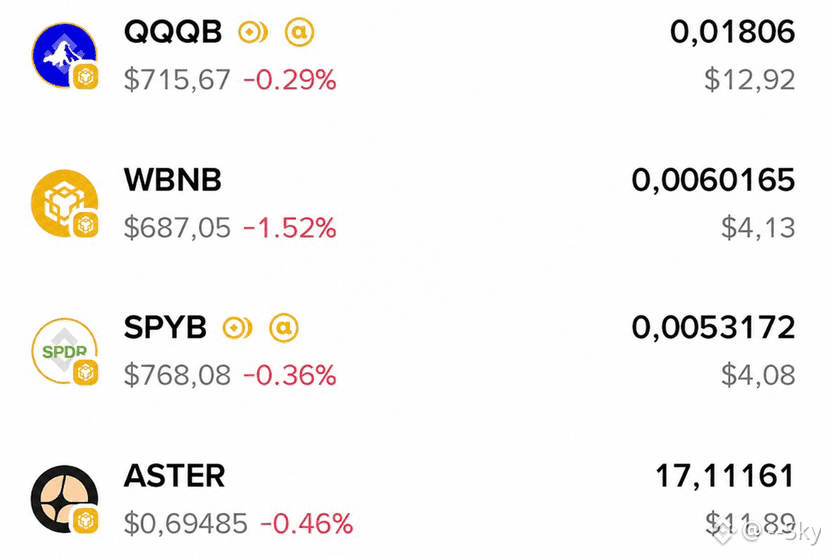
I never expected holding memecoins could generate daily income.
I invested around $10,000 in several memecoins paired with stocks.
The biggest surprise isn’t the price increase. It’s receiving $20–$50 in dividends every day.
If this continues, simply holding could generate $600–$1,500 per month.
Could this be the next big memecoin narrative?
I invested around $10,000 in several memecoins paired with stocks.
The biggest surprise isn’t the price increase. It’s receiving $20–$50 in dividends every day.
If this continues, simply holding could generate $600–$1,500 per month.
Could this be the next big memecoin narrative?
Log in to explore more content