
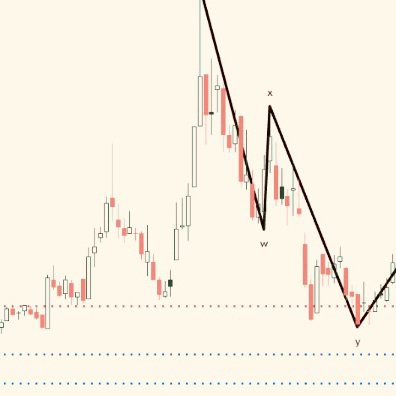
The battle for the island between the US and Iran in April became a watershed moment for this round of gold market trends. Geopolitical conflicts once triggered liquidity sell-offs, and gold prices completed a bottoming out in panic. Subsequently, with the new chairman of the Federal Reserve, Jerome Powell, taking office, market expectations for interest rate cuts rose rapidly, combined with the ongoing escalation of the situation in the Middle East, gold began its upward journey from the bottom towards the 10,000 yuan mark. As April options approach expiration, whether market makers can complete 'capital absorption' at the $3600 mark has become the focus of the current market.
1. Market Review: Geopolitical games repeat, gold prices rise and fall.
On Wednesday, the Middle East situation continues to be the core variable disrupting the market. While the U.S. has been consistently releasing signals for negotiations, it is simultaneously ramping up military deployments; Iran has denied the possibility of direct negotiations and has taken a hardline stance of 'accepting conditions before dialogue'. The back-and-forth of geopolitical news has intensified market sentiment fluctuations.
Spot gold rose for the second consecutive trading day, briefly touching the $3600 mark during the session. However, following news that the Iranian foreign minister denied negotiations with the U.S., gold prices faced short-term pressure and retraced some gains, ultimately closing up 0.71% at $4506.23 per ounce. Silver followed a similar trend, with spot silver retracing most of its intraday gains and closing slightly up 0.19% at $71.19 per ounce. The intraday surge and the late-session pullback reflect the current market's heightened sensitivity to geopolitical news.
2. Key indicators: Inflation data 'jumped the gun' on conflict, price pressures have long been set in motion.
The latest U.S. import price index for February has provided another strong piece of evidence for the powerful resurgence of inflation, completely shattering the market's previous optimistic expectations. The data shows that import prices surged 1.5% month-on-month in February, marking a third consecutive month of increases and the largest single-month rise since March 2022.
It is particularly concerning that this round of 'explosive' data all emerged before the outbreak of the current Middle East conflict. In other words, even without the 'fuel to the fire' of geopolitical clashes, U.S. prices were already on the edge of spiraling out of control. The intrinsic resilience of inflation, combined with the potential geopolitical shocks that energy prices may face, complicates the market's repricing of the Fed's policy path.
3. Viewpoint sharing: Liquidation pressure has not yet cleared, long-term logic still supports upward movement.
Suki Cooper, head of commodity research at Standard Chartered Bank, pointed out that before international spot gold finds a more solid support, the market still needs to digest the selling pressure brought by investors liquidating their ETF positions. Besides liquidity demand, the excessively expanded long positions are also a major reason for the extreme selling pressure in this round. Before the conflict erupted, short positions had already fallen below the five-year average, creating an extremely crowded long structure that makes the market prone to a sell-off when faced with shocks.
Despite this, Cooper expects that once the liquidation of losing positions is complete, international spot gold will regain its upward momentum. She believes that, referencing the stagflation environment triggered by the oil crisis in the 1970s, gold's role as a store of value will become even more pronounced as inflation continues to exceed expectations. The current macro dynamics support its long-term upward potential, though future policy responses will be a key variable in determining the trend.
In the short term, the $3600 mark is not only a key technical resistance level but also the core area for the April options game. Whether market makers can leverage geopolitical and policy expectations to complete their 'money-making' self-rescue here will directly affect the next phase of gold price movement. Over a longer time frame, the stubbornness of inflation and potential shifts in central bank behavior are collectively shaping the market pattern of gold evolving from a 'safe-haven asset' to a 'new normal of two-way trading'.