

Mainnet and testnet are terms used in the blockchain ecosystem to describe blockchain networks with important functions.
The mainnet is responsible for executing the actual transactions within the network and storing them on the blockchain for public use.
In contrast, testnets provide an alternative environment that mimics the functionality of the mainnet to allow developers to build and test projects without supporting direct transactions or using cryptocurrencies.
This article will introduce you to the main differences between mainnet and testnet environments and their importance.
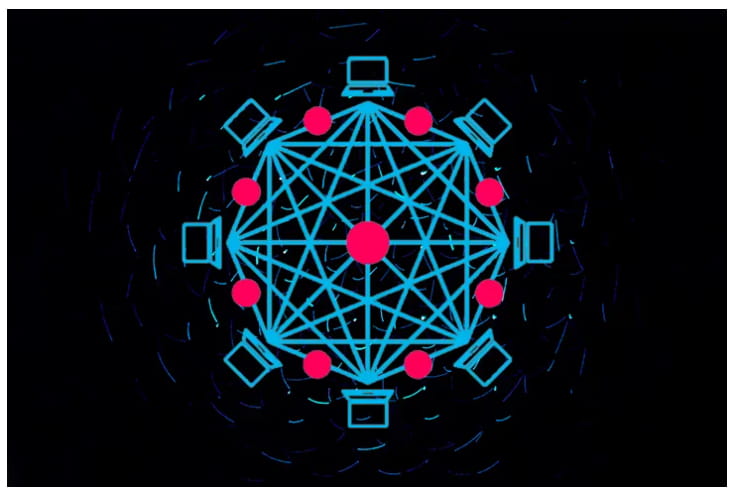
What is mainnet?
The initial and functional blockchain, known as the mainnet, is where the actual transactions occur in the distributed ledger and where the original coins have real economic value. The mainnet, being a fully functional blockchain, can be used to transmit and receive any transaction – including cryptocurrencies, non-fungible tokens (NFTs) – and transfer information.
Mainnet carries out transactions within the network that are kept on the blockchain. By deploying a mainnet, developers show complete confidence in the capabilities of their blockchain. For example, Ethereum and Bitcoin are open source blockchain systems that are publicly verifiable and execute authentic transactions with real economic value in a mainnet environment.
To incentivize miners to validate transactions and avoid network spam, each transaction on the blockchain requires participants to pay a transaction fee in local currency.
Why do we need a mainnet?
Credibility
A project with a mainnet will definitely be more reliable than a project without. The mainnet presence forms an ecosystem of participants, allowing real-time interactions and transactions to take place with complete transparency.
Without a mainnet, a project is purely conceptual within the blockchain ecosystem and has no working product for participants to test.
Evidence of project progress
Blockchain is a public ledger of all transactions that can be accessed by anyone. We can reclaim full authority to verify each of our transactions to ensure we are updated with transaction status.
The presence of a mainnet indicates that a project is active and progressing technically. Furthermore, since the public can participate in the network and any errors could jeopardize the inner workings of the blockchain, the mainnet going live will test the features and capabilities of the blockchain.
Therefore, mainnet launch requires a significant amount of time and effort to ensure that all components are working properly.
Mainnet use cases
After launching the cryptocurrency mainnet, most blockchains make the underlying code public. Users are more likely to trust such open source projects.
Security properties (spam protection) and other mainnet features are available.
Mainnet is used to prove that the blockchain is working. It extends to the public an open invitation to participate in the network.
Mainnet applications create use cases for more decentralized applications (dApps) participating in the blockchain.
Ethereum Virtual Machine (EVM) mainnet chain
Here are some popular mainnet chains:
Ethereum Mainnet
Binance Smart Chain Mainnet
Polygon Mainnet
Aurora Mainnet
Even Mainnet
Telos EVM Mainnet
Theta Mainnet
Fusion Mainnet
Fuse Mainnet
What is Testnet?
Testnet is a blockchain network used to run and test blockchains and blockchain projects before release. This is a simple approach for programmers and developers to design, edit, and test project functionalities and track project performance before going public.
Testnets are commonly used for development. For example, let's say you're creating a new function that requires you to transfer and receive local currency. The testnet blockchain is a perfect replica of the original protocol, using the same technology and tools to perform the same tasks.
However, developers and testers can evaluate the feasibility of the system by completing transactions without the risk of losing funds on the real mainnet. Testnet is a dynamic and suitable environment for testing decentralized applications and smart contracts.
Why is testnet important?
Testnet supports the creation of a stable and usable environment that includes all essential hardware and software components to execute test scenarios and detect errors.
Cost
Every transaction, update and time a project is deployed, it will require payment of blockchain fees. This fee will be regular and recurring during the testing period. It will therefore be expensive to effectively test a product and consider its various options.
For example, if a mainnet failure occurs during the testing phase, it could disrupt the entire network as well as user assets and transactions, causing users to lose funds.
Quality assurance
Quality assurance is a critical component of deploying high-performance, error-free applications across the network.
Various limitations and factors determine the validity of testing results as organizations change to a shift-left approach to improve application quality.
Therefore, developers require a testing environment similar to mainnet conditions.
Compatibility
Testnet coins are not compatible with mainnet coins and vice versa, requiring the creation of new coins or techniques; resulting in a significantly more lengthy, complex and costly process.
However, all new projects must first be tested on a testnet, a blockchain separate from its parent block. Developers can test every blockchain component before it is released, and those in the market will be completely unaffected by any trial and error.
Testnet use cases
Testnet is a “sandbox” (security mechanism that separates running programs) where projects will be released on-chain for public inspection.
The tokens have no value on the testnet, and the operating costs on the mainnet in real money are higher than on the testnet.
The testnet's transaction frequency is modest, making it easier for developers and testers.
Ethereum Virtual Machine (EVM) testnet chain
Ethereum Classic Test
Rinkeby Testnet
Polygon Mumbai Testnet
Ropsten Testnet
Boba Network Rinkeby Testnet
Telos EVM Testnet
Binance Smart Chain Testnet
PulseChain Testnet
Avalanche Fuji Testnet
Aurora Testnet
Mainnet vs testnet
Mainnet performance must be used to evaluate all underlying blockchain developments. Even so, cryptocurrency mainnets are not finished products, as capabilities are regularly updated or modified.
Therefore, it is important to understand the project's development roadmap and compare it with what has been developed before.