
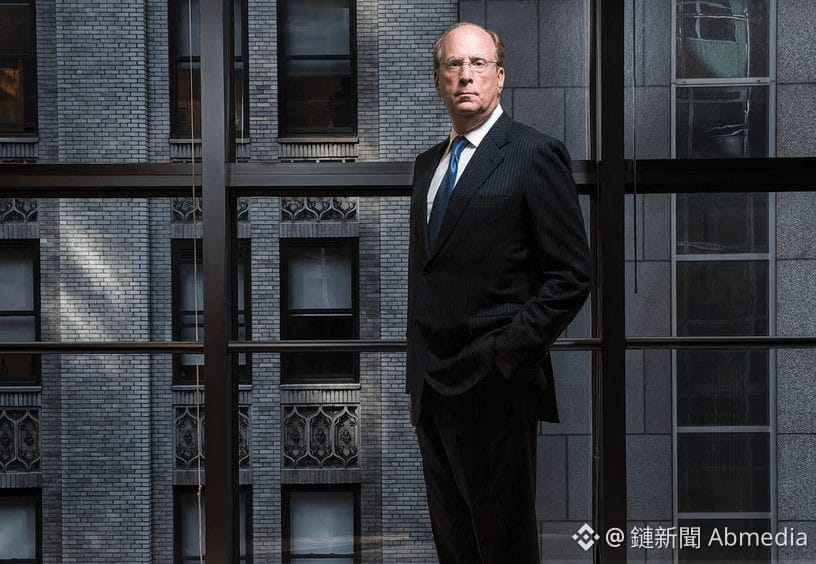

The CEO of asset management giant BlackRock, Larry Fink, once again strongly advocated for asset tokenization in his 2026 annual shareholder letter. He believes that blockchain technology will break down investment barriers, allowing billions of people worldwide who hold digital wallets to easily participate in capital markets just like making transfers.
Larry Fink's vision for tokenization: mobile wallets turning into investment accounts
For two consecutive years, Larry Fink has made tokenization the core theme of his annual shareholder letter. Last year, he focused on the technological advantages of updating financial infrastructure with blockchain, while this year he has shifted to a more macro proposition: "How can we give more people the opportunity to participate in capital markets and share in the fruits of economic growth?"
Fink presented a specific future vision in his letter: half of the global population has digital wallets installed on their phones, and if this wallet can also allow people to easily invest in diversified stock portfolios just like sending payments, the investment threshold will be fundamentally broken. 'Among them, tokenization is the key technological pathway to achieving this future.'
He emphasized that tokenization can 'update the underlying pipelines of the financial system', making the issuance, trading, and acquisition of investments easier.
(BlackRock's Larry Fink: Sovereign funds are buying more as Bitcoin plummets, tokenization is the next generation internet revolution)
From technological revolution to social significance: Fink deepens his stance on tokenization.
Last year, Fink likened the impact of tokenization to 'from mailing letters to emails': the market no longer needs to close, and trades that used to take days to settle will be completed in seconds. This year, his discourse has shifted more towards the social aspect.
He pointed out in the letter that since 1989, a dollar in the U.S. stock market has appreciated more than 15 times, while the increase in median wages during the same period has lagged far behind. The accumulation of wealth in capital markets is highly concentrated among a few asset holders, rather than the vast labor force living on wages. In his view, tokenization is not just an innovation in financial technology, but a potential solution to bridge the wealth gap.
(Is BlackRock CEO Larry Fink's optimism about asset tokenization a positive sign for cryptocurrencies?)
Nasdaq and the SEC are following up, Wall Street is accelerating its layout.
As the largest Bitcoin spot ETF issuer, BlackRock is one of the most active traditional financial institutions investing in digital assets. Goldman Sachs also formally acknowledged the popularity of cryptocurrencies in its annual shareholder letter last year, believing that distributed ledger technology is expected to change the status quo of electronic trading.
Last week, the SEC just approved Nasdaq to launch a pilot program for tokenized stock trading, and under the leadership of Chairman Paul Atkins, the SEC has begun actively promoting regulations related to cryptocurrencies. Yesterday, Nasdaq also announced a collaboration with the digital asset company Talos, aiming to enable the circulation of tokenized collateral among institutional investors.
From regulatory bodies to investment banks, the entire traditional financial ecosystem is synchronously moving towards blockchain, and tokenization has undoubtedly become the next main battlefield of mainstream finance.
There is still a distance between vision and reality.
Fink's optimistic discourse still has aspects worthy of scrutiny. He also candidly admitted in his letter that the rapid development of AI could further exacerbate wealth concentration, with large companies possessing data and capital gaining disproportionate advantages, while the narrow distribution of ownership may leave more people merely as spectators of wealth accumulation rather than participants.
Whether tokenization can truly become a tool for widespread investment, rather than another financial innovation enjoyed first by a few, hinges on the design of the regulatory framework and the popularization of financial education. What is certain is that as financial giants and regulatory bodies continue to advance, the wave of tokenization is irreversible; this revolution reshaping the underlying structure of the financial system is quietly accelerating.
This article BlackRock CEO: Tokenization will make investing as simple as making payments, blockchain is expected to reshape the financial system first appeared in Chain News ABMedia.