

@SignOfficial If you stay around this space long enough, you stop reacting to announcements the way you did in the beginning. In the early days everything sounds big. Every new project feels like it’s about to fix something fundamental. But after a few cycles, you start noticing a pattern. The same problems come back wearing different names, and people keep acting surprised like it wasn’t obvious this would happen again.
The idea of a global infrastructure for credential verification and token distribution doesn’t sound exciting to me anymore. It sounds tired. Not in a bad way — more like the kind of tired you feel after dealing with the same issue for years without anyone really fixing it. The kind of tired that comes from watching launches fall apart because nobody could agree on who should get access, who should get tokens, who should be trusted, and who shouldn’t.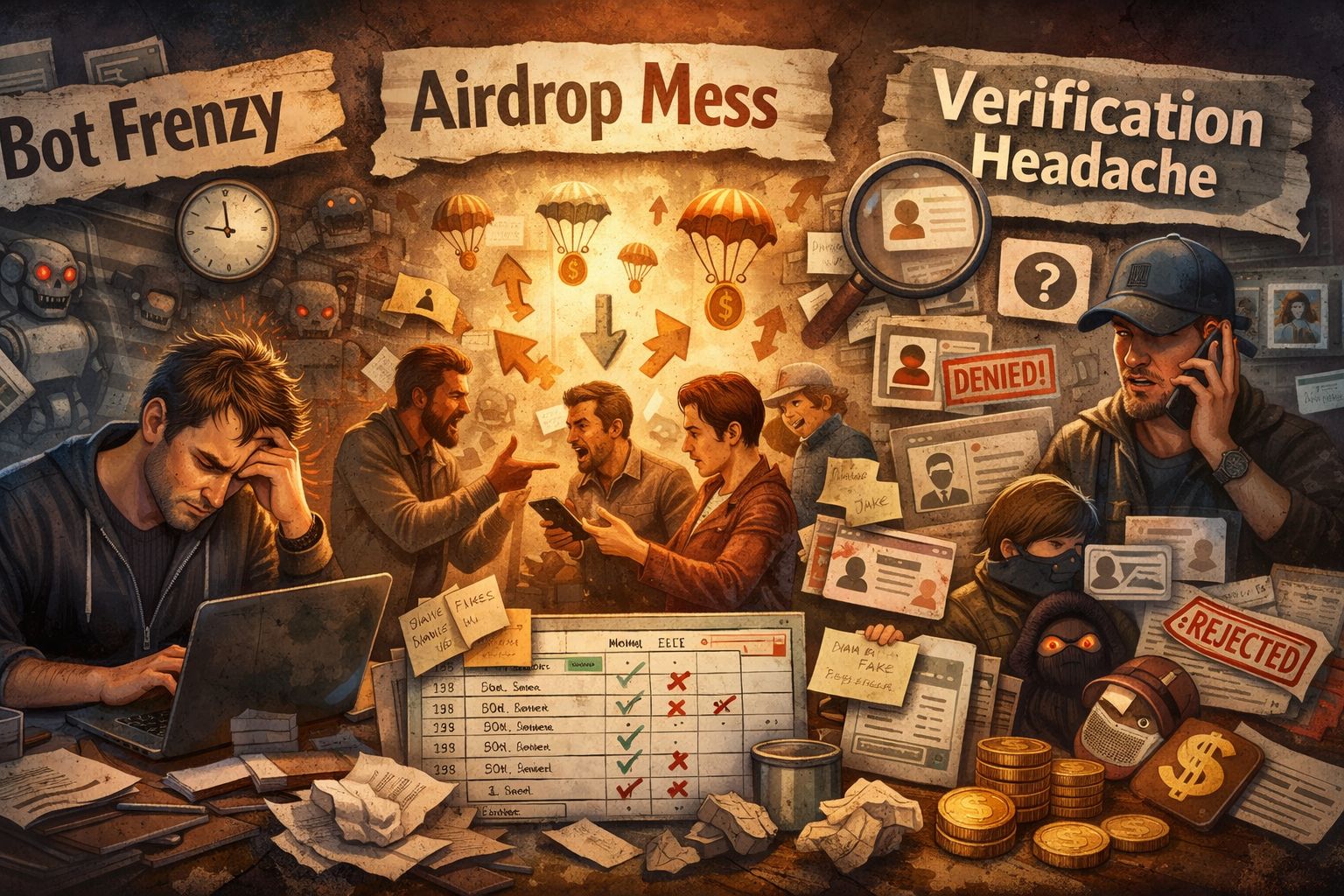
You see the cracks the moment real people get involved.
On paper, distribution is always fair.
In reality, it turns messy fast.
Bots show up before the rules are even finished. Fake accounts slip through filters that were supposed to stop them. Someone who supported the project early gets nothing, while someone who barely knows what the project does somehow qualifies twice. Then the team starts making quiet changes behind the scenes, not because they want to cheat, but because the system they built can’t handle real behavior. And nobody likes admitting that part.
After watching that happen enough times, you start to understand why someone would want to build a shared layer for verification. Not because it sounds innovative, but because starting from zero every time feels like punishment. Every project rewriting the same logic. Every launch rebuilding the same checks. Every distribution pretending it will be smooth this time.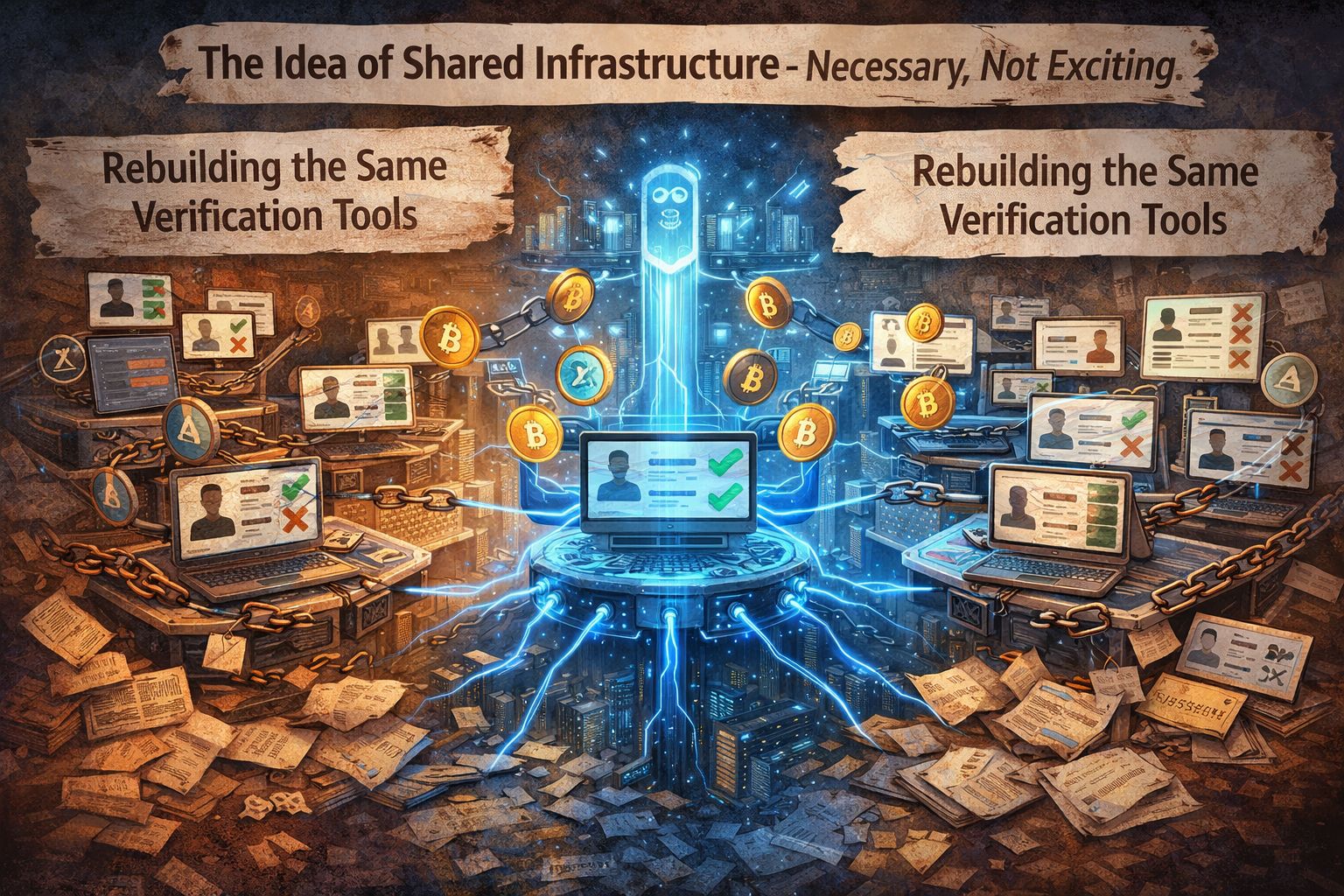
It wears people down.
What makes this kind of infrastructure interesting isn’t the technology. It’s the frustration behind it. You can almost feel the moment where someone sat there after another broken distribution, another argument about eligibility, another wave of complaints, and thought, there has to be a better way to prove who someone is without doing this again and again.
And that thought keeps coming back in this industry because nothing ever stays simple once money enters the picture. The bigger the reward, the more creative people get. Not evil, not even surprising — just human. People look for shortcuts. People try to get extra. People test the edges of every rule. Any system that assumes perfect behavior breaks the second it meets reality.
That’s why credential verification sounds boring until you realize how much depends on it. Access, rewards, reputation, governance — all of it starts with the same question: how do we know this is real? And somehow, even after all the progress, the answer is still different every time.
So when I see another attempt at building global infrastructure for this, I don’t feel hype. I feel recognition. Like seeing someone finally fixing a door that’s been broken for years while everyone else kept walking around it pretending it wasn’t a problem.
At the same time, experience makes it hard to trust that it will stay clean. Shared systems always look good when they’re small. The real test comes later, when thousands of projects want different rules, when millions of users start pushing the limits, when one small flaw suddenly matters because real value is moving through it. That’s usually when the arguments start. Who controls the credentials. Who decides what counts. Who gets the final say when something goes wrong.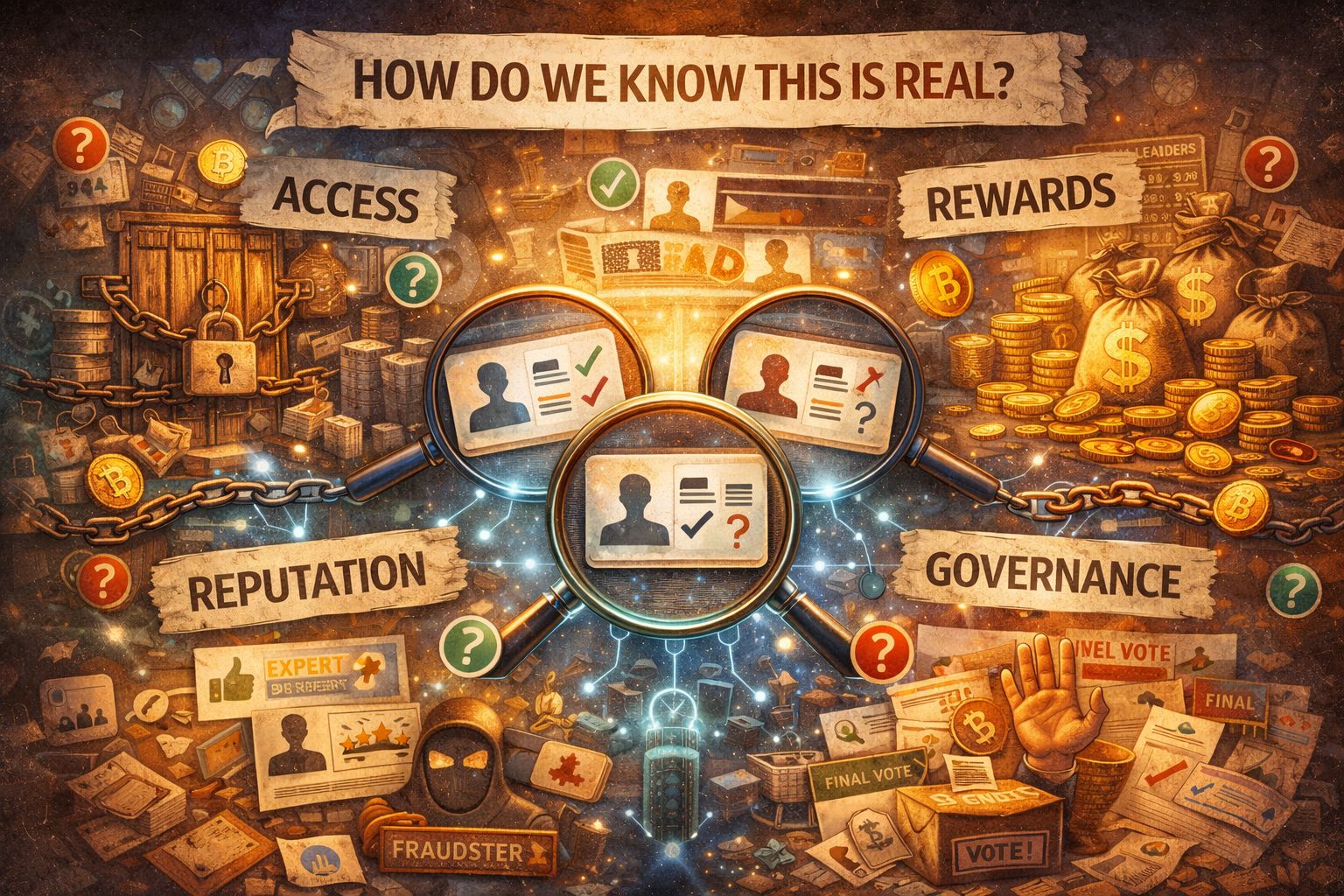
And something always goes wrong.
Not because the idea is bad, but because reality is louder than design. People forget keys. People lose access. People try to cheat. People complain when the system is strict and complain again when it isn’t. The pressure never comes all at once — it builds slowly until one day the thing that looked solid starts bending in ways nobody expected.
Still, projects like this keep appearing, and that alone says a lot. It means the problem never really left. It means the ecosystem grew faster than the foundations under it. It means every cycle added more tokens, more identities, more permissions, more reasons to need proof, but never one place that handled proof without turning into chaos.
So this kind of infrastructure doesn’t feel like the future to me.
It feels like something the present should have had a long time ago.
Maybe it works.
Maybe it doesn’t.
Maybe it holds until the next wave of users hits and everything gets tested again.
But the fact that people keep coming back to this idea, over and over, after every failed distribution, every broken verification, every argument about fairness… that’s the part that feels real.$SIGN