
I have always been puzzled as to why commercial contracts are getting thicker while the rules are becoming more and more 'inhumane.' Last month, I handled a cross-border trade dispute where the contract stipulated that the payment application must be submitted within 48 hours after arrival at the port, otherwise it would automatically be transferred to the penalty pool. As a result, due to an unexpected illness of the other party's finance staff, the damn deadline was missed.
Even if the goods are real, the money is real, and the sick leave certificate is also real, in the face of the cold rules of the contract, this money just 'disappears.' This rigid rule of power imbalance gives me a chill: in this world full of surprises, we actually use 'zero tolerance' to promote professionalism? This artificially created waste of resources is essentially a chronic harvesting of business credit.
This "expires immediately" brutal logic has been pushed to the extreme in the early airdrops and asset claims of Web3. If you didn't keep an eye on the official Twitter and didn't click that button to claim tokens within the short window of a few days, your assets would be destroyed.
When I broke down @MidnightNetwork 's white paper and saw the Lost-and-Found mechanism, what I felt was not how "generous" it was, but an extreme counterintuitive restraint. It did not immediately confiscate or destroy unclaimed Glacier Drop assets but designed a remediation window of up to 4 years.
This design is very "un-Web3" because most projects can't wait to reclaim unclaimed tokens to pump the price. But Midnight chooses to "lock" this part of the control in the code, allowing you to still save yourself through smart contracts years later. This restraint acknowledges the randomness of human behavior and pays deep tribute to the "business fault tolerance rate."
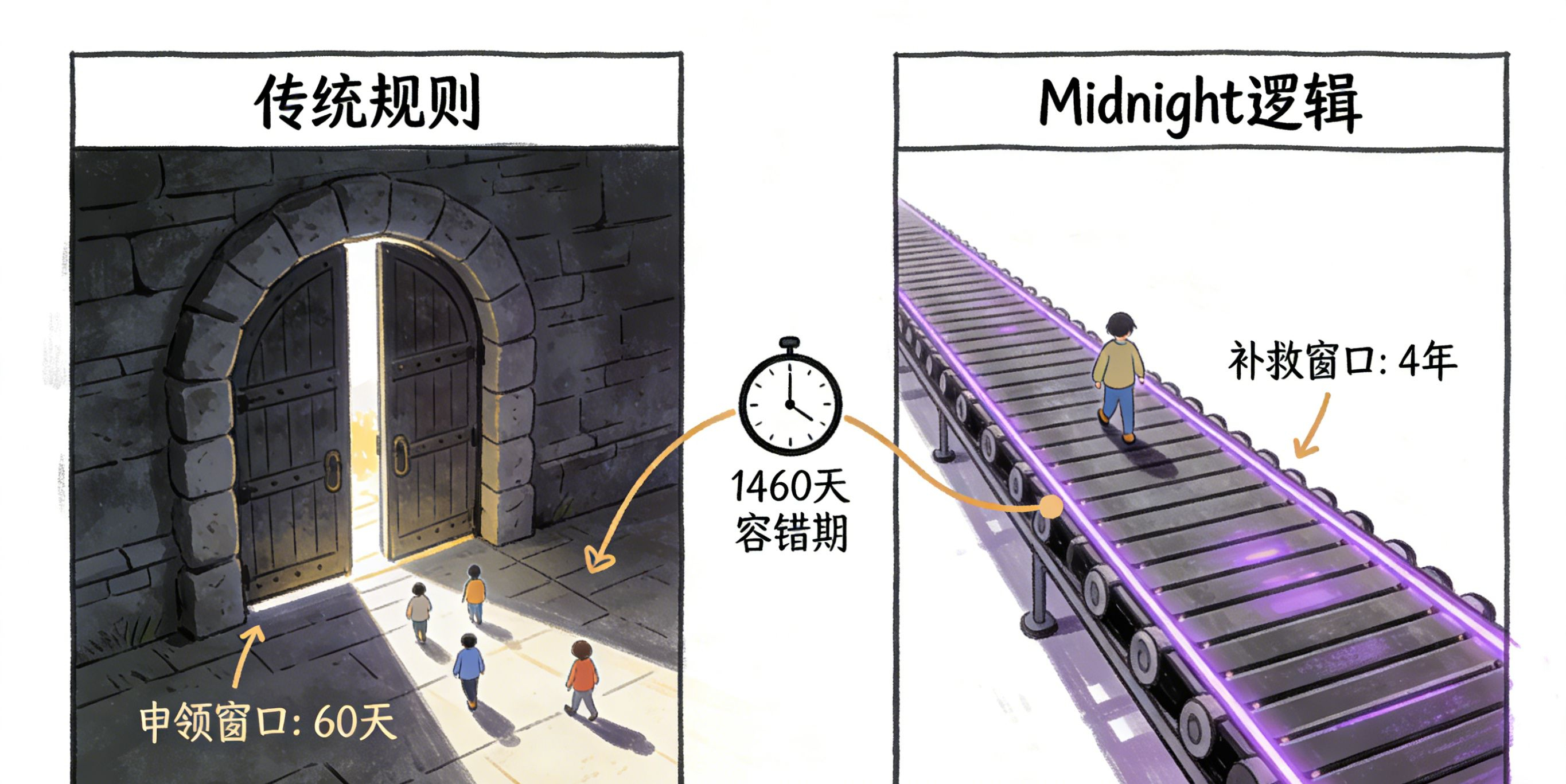
Let's calculate a game theory account about "fault tolerance" and "efficiency."
Game cost: In the traditional "short window" model, users must pay extremely high attention costs and anxiety premiums. Once missed, the loss is 100%. However, under Midnight's 4-year window, the safety of assets no longer depends on whether you are online 24 hours a day but on the algorithm's commitment.
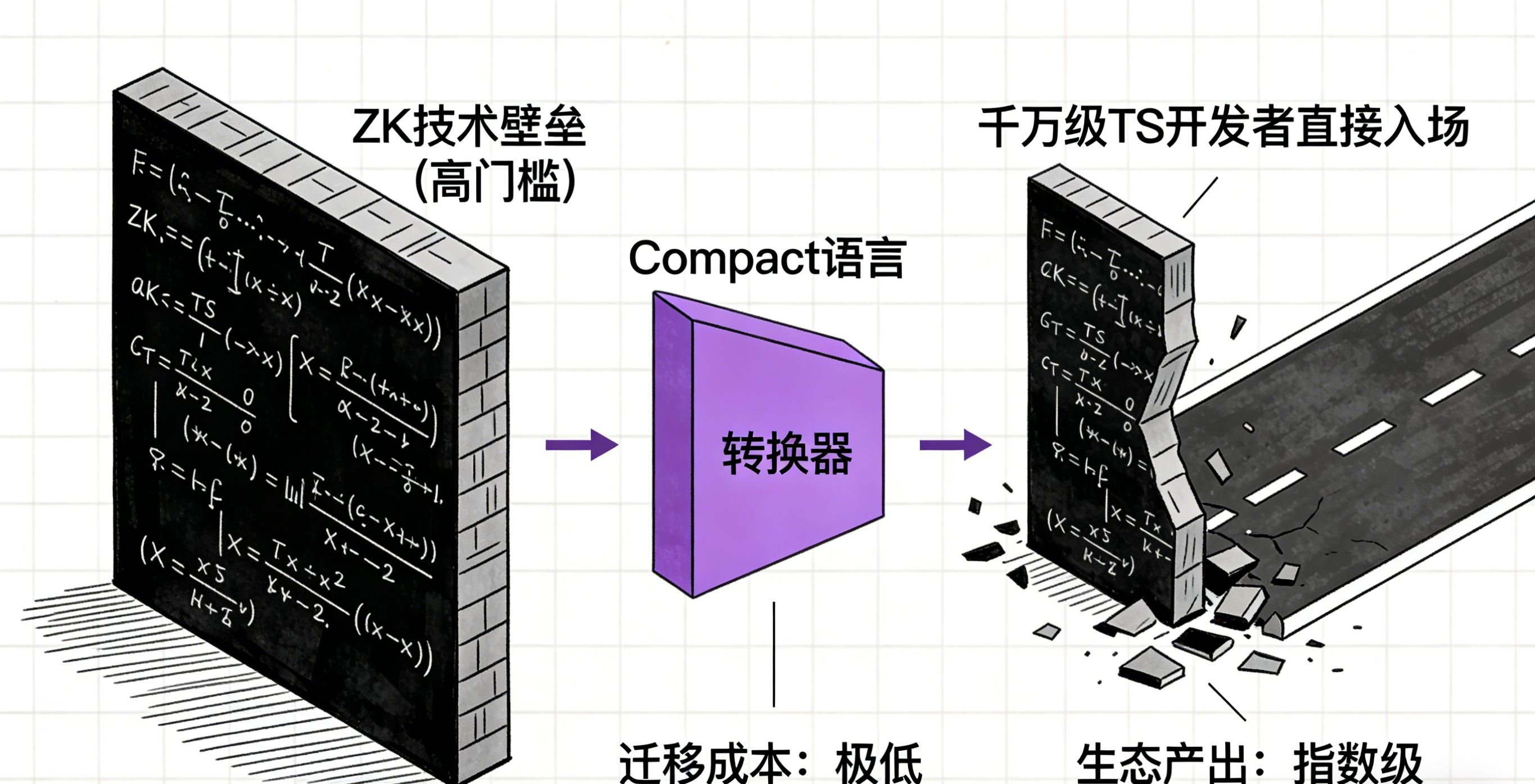
Sunk costs and valuation: Compared to ZK experts (thousands globally) and TypeScript developers (millions), the Compact language has lowered the development threshold to the floor. If a TS developer's daily salary is 500 dollars, his transition to Midnight has almost zero migration cost; while transitioning to traditional ZK chains requires months of paid learning.
Developer premium: Midnight dilutes technological monopoly by lowering the threshold, significantly increasing the probability of application explosion.
Capital certainty: For large funds (Institutional Money), a 4-year grace period means the extreme risk of asset loss is reduced by over 90%.
Resource metabolism: $NIGHT 's non-consumable design transforms the company's Gas budget from "uncontrollable fluctuations" into "fixed asset amortization."
The essence of business is not to push the other party into a dead corner of the rules but to complete the exchange of value within the rules. Midnight's underlying logic of "with a regret medicine" actually challenges the current mainstream Web3 value of "speed is the only thing that matters."
If you are participating in a potentially wealth-generating project, would you prefer to accept a "strictly regulated but high ceiling" high-stakes game, or choose a long-term logic like Midnight that is "human-centered, highly fault-tolerant, and allows you to sleep soundly"?
What losses have you experienced in reality due to "rigid rules" that made you feel painful? Feel free to share in the comments, and we will select the unluckiest friend to review how to use "the gentleness of code" to hedge such losses.