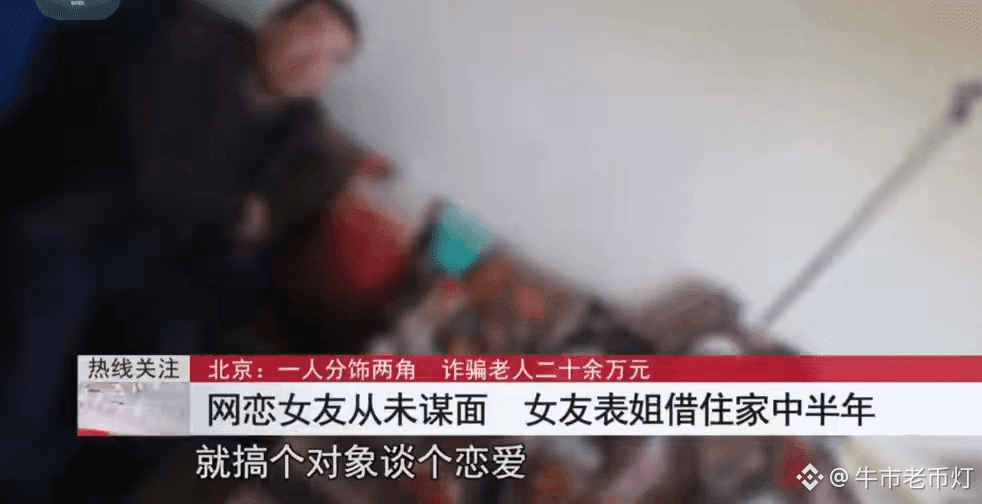
A 70-year-old man from Beijing fell in love online with a '27-year-old girlfriend' for 4 years, without ever meeting or having a video call, and ended up spending over 200,000. Later, the 'girlfriend's cousin' came to live together, and the old man squeezed onto the sofa, giving up the master bedroom, only to be met with repeated insults and beatings. It wasn't until he reached his breaking point and called the police that he discovered that the so-called girlfriend and her cousin were both the same 52-year-old woman in disguise, and it was an utterly thorough scam.
The most heartbreaking truth of this matter is: without a trustworthy identity and verification credentials, no matter how sincere one is, it will only become a weakness for others to exploit. This is exactly like the countless pitfalls we have encountered in the Web3 space—whitelist forgery, identity theft, airdrop scams, ill-intentioned token distribution—each of which exists because there is no comprehensive, trustworthy credential verification system, allowing scammers to take advantage.
The fundamental solution to this industry's pain point is Sign. It is not a short-term hype target; it is a solid global credential verification and token distribution infrastructure that addresses two major inherent pain points in the Web3 industry: first, the fragmentation of credential verification, where identity, qualification, and ownership credentials do not connect across chains and platforms, making the cost of forgery extremely low while the cost of verification is extremely high; second, the global barriers to token distribution are numerous, and project parties face layers of obstacles such as compliance, cross-chain issues, and verification in reaching global users, with high barriers for users to obtain compliant token rights.
The developmental value and future growth potential of Sign tokens are based on extremely solid core logic. First, it is the core circulating fuel and governance vehicle of the entire Sign ecosystem. Regardless of market ups and downs, as long as there is a demand for credential verification and token distribution, there will be a rigid demand for Sign tokens, completely independent of conceptual speculation, with real business support underlying the fundamentals. Second, it is a global-level infrastructure without regional barriers, and the globalization and compliance of Web3 is an inevitable trend. The demand for trustworthy credential verification and compliant token distribution will only continue to explode, with a very high market ceiling. Third, the value of Sign tokens is deeply bound to the scale of the ecosystem. The more project parties and institutions that are connected, and the broader the usage scenarios, the stronger the token's value capture ability will be, with long-term growth potential completely in sync with the development of the Web3 industry, making it a truly viable asset through market cycles.
@SignOfficial #sign地缘政治基建 $SIGN