

I just closed the backend of Binance, and after staring at that one-hour waterfall line for too long, my eyes feel sore.
It directly smashed through the support from 0.034, with the lowest spike down to 0.024. Now it's barely hanging around 0.027. The long liquidation data of 2,290,000 USD in the lower right corner is glaringly red.
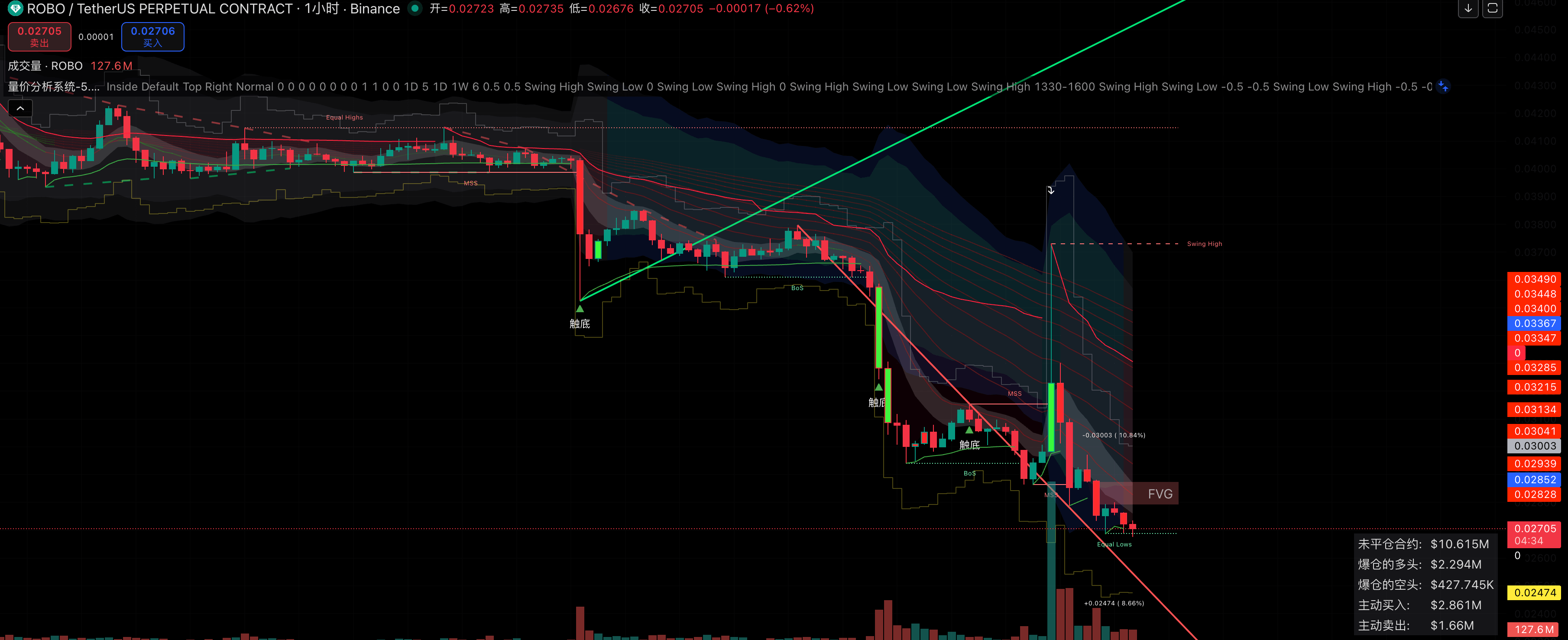
The people in the group who were still shouting about bottom fishing the machine economy last night have all gone silent today. This wave of sell-off is too severe; it's like a dull knife cutting flesh without even giving a chance for a rebound.
But I don't want to curse the dog traders today; I want to talk about something real. Why are so many people stuck halfway up the mountain? Because 90% of the people who bought $ROBO have no idea what the core foundation of this project is; they just rushed in looking at the labels 'AI' and 'DePIN'.
If you don’t even know what you bought, you deserve to be cut.
The day before yesterday, I forced myself to sift through the official documentation, and it turns out the official team has long revealed their cards.
They wrote: 'The Fabric Protocol is a global open network supported by the Fabric Foundation, empowering the construction, governance, and collaborative evolution of general-purpose robots through verifiable computing and agent-native infrastructure.'
Doesn’t this sound particularly like the kind of empty talk used to deceive investors? But when I broke down this statement and applied it to real industrial scenarios, I discovered the project's ambition is incredibly outrageous.
First, let’s talk about the first core: 'agent-native infrastructure'.
The robots we typically understand are just tools. A factory owner buys a transport cart, the cart works, and the owner makes money.
But Fabric wants to turn this table. In its underlying OM1 system, each robot is given an independent on-chain identity and wallet. When the cart makes a trip, the money paid by the employer goes directly into the cart's own wallet. The cart pays its own electricity bills and takes care of its own maintenance.
This is what is called 'empowering general-purpose robots', transforming machines from 'tools' into independent 'economic entities'.
Let’s talk about the second core: 'verifiable computing'.
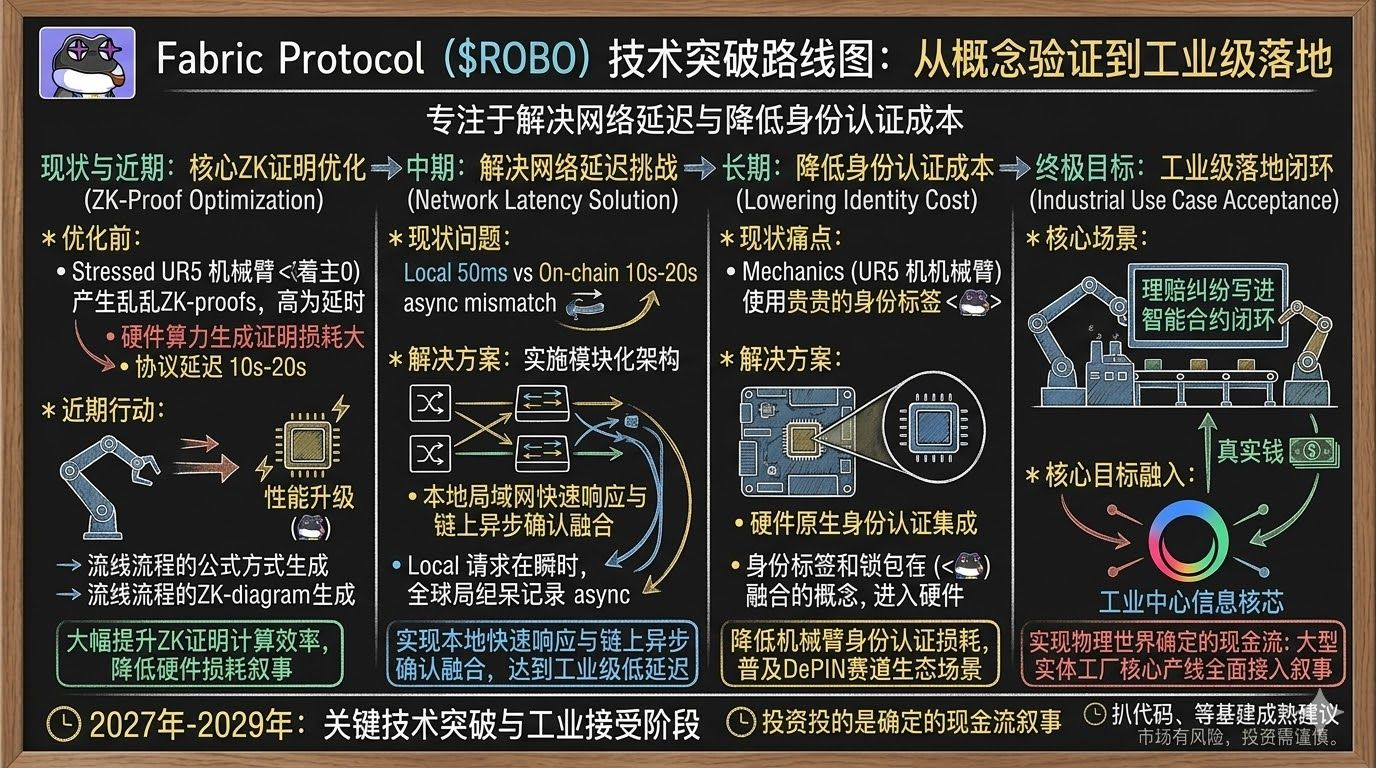
How do you know that this robot is really working and not just faking orders to scam tokens in the background?
Fabric’s approach is that every physical action of the robot must be proven through complex cryptographic calculations and then permanently recorded on the blockchain.
This leads to its most critical statement: 'Coordinating data, computation, and regulation based on a public ledger, combined with modular infrastructure to achieve human-robot safe collaboration.'
This is the true fundamental of ROBO. It is not about creating a token for speculation; it aims to build an absolute trust foundation.
Just think about it, in the future, there will be intelligent robots everywhere. Who can guarantee that they won’t cause problems? Fabric aims to place the operating data, computational power scheduling, and even behavior regulation of robots all on an immutable public ledger. With this foundation, humanity can truly collaborate safely with robots.
This vision is extremely impressive and logically forms a perfect closed loop. So why has the market price plummeted like a dog, directly hitting 0.027?
Because ideals are abundant, but the reality of the physical world is stark.
When I was testing that second-hand UR5 robotic arm in the lab, I realized that this perfect core mechanism currently has too high of a cost to implement.
To achieve 'verifiable computing', the robotic arm's motherboard needs substantial computational power to generate on-chain proofs.
To 'coordinate regulation' on the public ledger, each task assignment must wait for on-chain confirmation. This leads to delays in scheduling that could originally be resolved in 50 milliseconds on a local area network, now stretching to several seconds or even tens of seconds on the Fabric network.
What is an industrial site? It’s a place where money is counted in milliseconds, and a minute of downtime incurs penalties.
This grand infrastructure currently has technological bottlenecks that cannot meet factory owners' demands for low latency and high stability. Therefore, real industrial big players are still observing; those entering to run data often do so to exploit idle computational power for tokens.
Big players run idle machines at zero marginal cost to get #robo , and then ruthlessly dump them in the secondary market for cash. Retail investors, seeing the grand narrative of 'human-robot safe collaboration', take out real money to buy at 0.034, only to find it crushed to 0.027.
This is called liquidity harvesting brought about by cognitive dissonance.
I'll state this clearly today: the core direction of the Fabric Protocol is absolutely sound. Allowing robots to have autonomous property rights and a verifiable regulatory foundation is definitely a major trend for the next decade.
But this protocol is still in an extremely early infrastructure stage, where the concept is greater than practicality.
As ordinary people, we can acknowledge the blueprint depicted by @Fabric Foundation but must not be blindly optimistic about the current K-line. Until it solves the network latency of high-frequency scheduling and truly brings several large physical factories' core production lines onto its public ledger, the price of this coin will have to bear the selling pressure from big players mining, withdrawing, and selling.
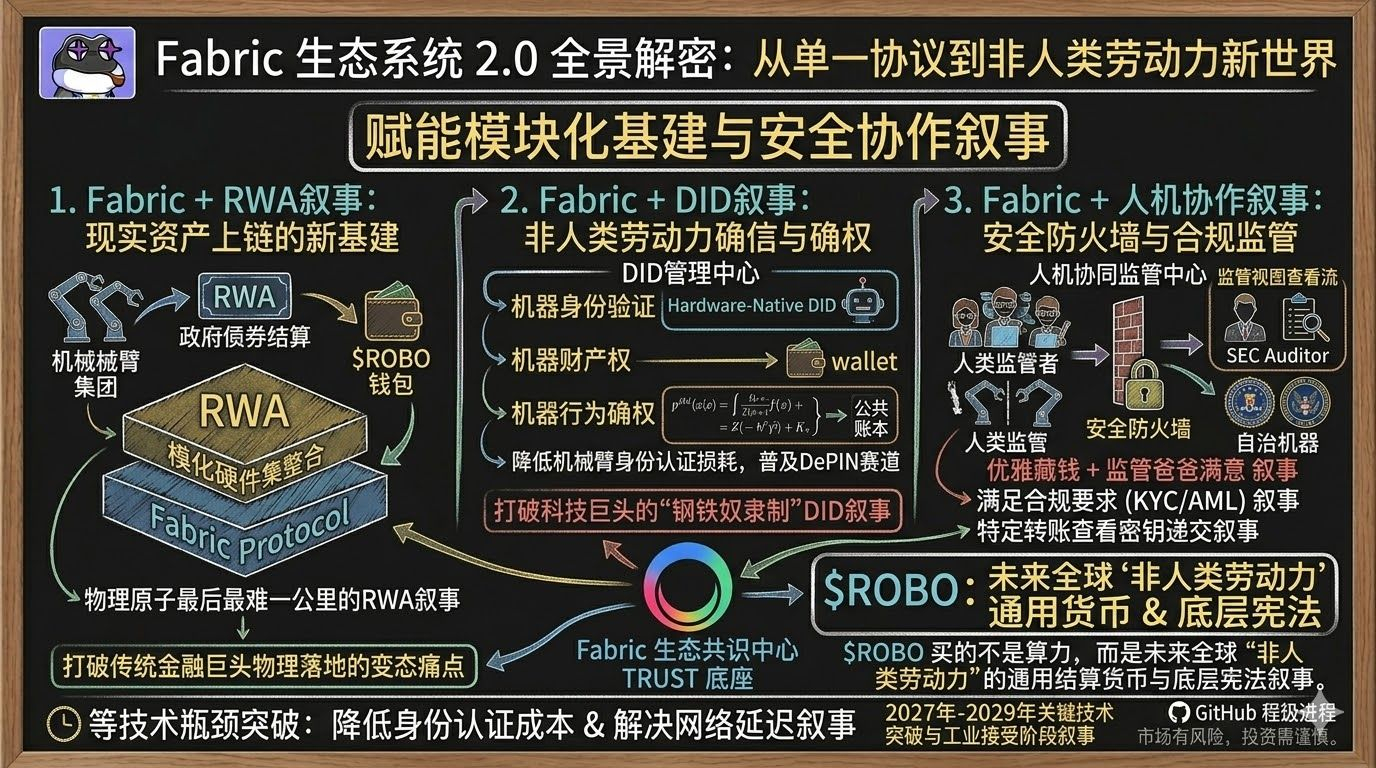
Now, at the position of 0.027, it seems to have dropped a lot, but before any substantial industrial-grade good news (like modifications to the economic model or updates that can reduce identity verification costs) comes out, there’s fundamentally no bottom.
Look less at the CX in the group and spend more time digging into the progress of its GitHub code. Let’s talk about bottom-fishing once the official team has reduced the hardware losses of 'verifiable computing' and written the 'human-robot collaboration' compensation disputes into a closed-loop smart contract.
Investments are made in certain cash flows and application scenarios, not to spend money fueling unimplemented white papers. I, for one, am watching from the sidelines. Let’s talk after this bubble has been cleaned out.