
Imagine that you are shopping online or transferring money to a friend using our usual bank card or Alipay. These transaction records are very clear to the bank or payment platform, right? In some cases, this is a good thing, like when tracking down a scammer.
However, there is now something called 'cryptocurrency' (like Bitcoin), and one of its main features is 'decentralization'. Although transaction records are also publicly available in a large ledger called 'blockchain', the addresses in this ledger are usually a string of unintelligible characters, rather than your real name. Sounds pretty anonymous, right?
Actually, it's not entirely so. If someone knows that a certain 'wallet address' is yours, they can follow the clues and check all the transaction records of that address — what you bought, how much you received, all of which could be tracked. It's like wearing a mask; if someone knows who is behind the mask, then everything you do while wearing that mask will also be known.
At this point, the 'mixer' (Coin Mixer or Tornado Cash) comes into play.
What is a mixer for?
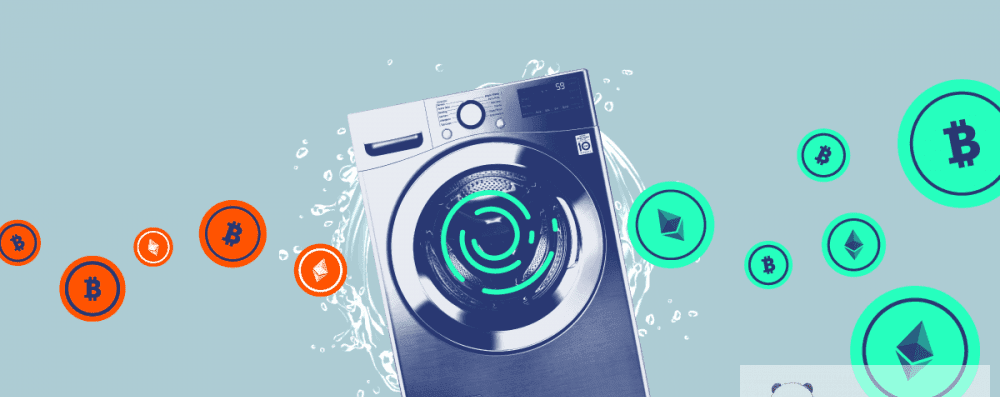
In simple terms, a mixer is like an 'intermediary' or a 'big pool'.
You want to transfer some cryptocurrencies (like 1 Bitcoin) from your A address to your B address, but you don't want others to know the relationship between A and B.
You just send this 1 Bitcoin to the designated address of the mixer.
At the same time, many others like you with the same needs are also sending their coins (for example, Zhang San's 0.5, Li Si's 2) to this mixer.
A mixer is like a big washing machine, mixing all these coins (your 1, Zhang San's 0.5, Li Si's 2, etc.) together, disrupting the order and source.
After a while (it could be a few minutes or a few hours, and some can set a delay), the mixer will send the equivalent amount of Bitcoin (minus a small fee) that you initially deposited from a pile of 'clean' addresses it controls to your specified B address.
So, what effect does this have?
To outsiders, they can only see:
Your A address sent 1 Bitcoin to the mixer.
The mixer received many different sources of Bitcoin.
The mixer sent Bitcoin to many different addresses (including your B address).
Since many people's coins are mixed together in the mixer, it's like adding a drop of ink to a basin of clear water and then scooping out a cup of water; it’s hard to tell exactly which drop of ink is in that cup. In this way, the direct connection between your A address and B address is severed or greatly obscured, thereby enhancing the 'anonymity' and 'privacy' of your transactions.
Why use a mixer?
Protecting privacy: This is the primary reason. For example, if you receive a large amount of cryptocurrency, you might not want others to know you have so much money, or you don’t want others to track what you buy with that money.
Business needs: Some companies may not want competitors to know about their capital flows.
Avoiding tracking: In certain situations, people may have specific reasons for not wanting their transactions tracked by certain institutions or individuals.
Do mixers have risks?
Of course there is, there is no free lunch in the world:
Trust risk: You need to first transfer your coins to the mixer service provider. If this provider is unreliable and a scammer, they might just run away with your funds, and your coins could be lost.
‘Contamination’ risk: If ‘dirty coins’ obtained through illegal means (like theft or extortion) get mixed into the mixer, and you happen to receive some of these ‘dirty coins’, even if you are unaware, on certain strictly regulated platforms, these coins might be flagged, leading to your account being frozen.
Not 100% anonymous: While mixers can increase the difficulty of tracking, they are not absolutely untraceable. Some very advanced analytical techniques, or if the mixer itself has design flaws or is infiltrated, may still trace back to clues.
Fees: Mixing services generally charge a certain percentage of fees, usually ranging from 1% to 3%, or even higher.
Legal risks: In some countries and regions, using a mixer may fall into a legal gray area and may even be viewed as suspicious behavior. Because mixers are often used for money laundering and other illegal activities.
To summarize
The mixer is like a double-edged sword. It provides an effective tool for users seeking privacy in cryptocurrency trading, helping them hide the true source and destination of their funds. But at the same time, it is also controversial because it may be used for illegal activities and carries certain risks.
So, if you plan to use a mixer, be sure to choose a reputable service provider that has been operating for a long time, and be clear about why you want to use it and the potential risks you may face. It's like putting an 'invisibility cloak' on your cryptocurrency transactions, but before putting it on, it's best to check the fabric and instructions for use.
I am (Jun Ge Crypto) with 7 years of deep involvement in the crypto space, where short-term strategies reveal the truth, and medium to long-term layouts have their own rules. Accurately capturing the optimal trading opportunities and providing you with empowered investment decisions with firsthand news. Choose the right direction, find the right rhythm, and here you have the professional perspective you need.$BTC

