


In our lifetime, we strive to earn money, save money, and buy a house, all in hopes of having a dignified and stable old age, where we can dictate the course of our own lives. However, the experience of this mother and daughter brutally exposes a harsh truth that each of us may face: when you grow old, become disabled or demented, and can no longer speak, the house, savings, and retirement plans you worked so hard to accumulate, along with the dignity and respect you desire, may not be under your control at all.
The ins and outs of the matter are even more heart-wrenching than the plot in the TV series.

Ms. Chen from Putuo District in Shanghai was 53 years old, single and childless, and lived with her elderly mother. Seven years ago, her mother was diagnosed with Alzheimer's disease, rapidly losing memory, gradually unable to recognize even people, and completely unable to care for herself. Ms. Chen had to quit her job and hire a live-in caregiver to take care of her mother's daily needs while she managed everything at home.

She thought she could always be her mother’s support, but no one expected the cruel blow of fate to come so quickly. Seven years later, Ms. Chen, who had just turned 60, was also diagnosed with Alzheimer’s disease.
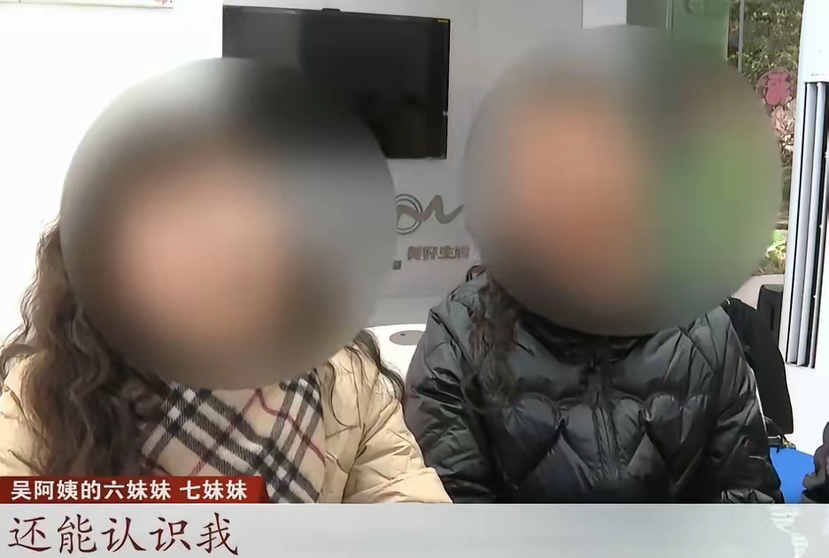
Overnight, this family completely collapsed. The mother had long lost her mental faculties, and now the only daughter who could make decisions also lost consciousness and self-care ability, leaving only a caregiver to take care of two completely demented elderly people. The combined retirement pension of the mother and daughter amounts to over 20,000 yuan per month, which was originally sufficient to pay for the caregiver's salary and daily expenses, but the physical and mental pressure of taking care of two elderly people with dementia has far exceeded the caregiver's capacity.
The caregiver repeatedly sought help from the community committee, saying she could no longer bear the burden and requested the community committee to take over the care of the mother and daughter. After multiple failed negotiations, the community committee had no choice but to apply to the court to appoint them as the legal guardians of the mother and daughter.
However, when the court intervened and thoroughly investigated the situation of this mother and daughter, it revealed far more serious and heartbreaking issues than just 'lack of care':
The bank account under her mother’s name, which originally held hundreds of thousands in retirement savings, has dwindled to almost nothing, with large amounts of unclear transfers; the property under her mother's name has been secretly mortgaged after both mother and daughter started showing symptoms of dementia, and the mortgage funds have long since disappeared. Even the monthly pensions of the mother and daughter show frequent unusual withdrawals, but because both elderly individuals have completely lost their mental faculties, they cannot clarify who made these transactions, nor can they prove whether the usage of this money aligns with the elderly's true wishes.
After the news spread, the whole internet exploded. Some people feel sorry for the plight of this mother and daughter, some criticize those who secretly misappropriate elderly property for being heartless, but more people see their own future shadow in this incident.
We always think that having enough pension and a house to live in when we grow old is enough to enjoy our later years. But this incident has given us a harsh wake-up call: when you lose consciousness and control over your body and life, no amount of money or size of a house can prevent others from viewing you as a target; you may even lose the ability to protect yourself.
Behind this matter lie four core pitfalls that each of us may face in our later years, and these are chronic problems that the traditional elderly care and guardianship system cannot resolve:
First, the pitfall of asset security: after becoming disabled or demented, your savings and property are all in others' hands. Even if they are misappropriated or encroached upon, you have no way of knowing and cannot provide evidence to protect your rights. The savings you worked hard for your whole life may ultimately end up in someone else's pocket.
Secondly, the pitfall of guardianship rights and responsibilities: the guardian you choose may either be overwhelmed and neglect their duties or may abuse their power for personal gain, lacking any rigid constraints and checks, relying solely on the other party's conscience, which has always been the most unreliable thing.
Third, the pitfall of implementing wishes: the elderly care method, medical plan, and asset disposal you thought about while clear-headed, even if you signed an agreement and made a will, the execution after losing your mental faculties relies entirely on others' self-discipline, leaving your life at the mercy of others.
Fourth, the pitfall of protecting rights and providing evidence: even if property encroachment and rights violations are discovered, elderly people with dementia have no ability to provide evidence or protect their rights. Even if a third party helps, it is difficult to obtain complete evidence, the cost of protecting rights is extremely high, and in the end, it is likely to be left unresolved.
These deadlocks cannot be resolved by relying on children, caregivers, community committees, or a piece of paper agreement. It was only by dissecting the core pain points of this case that I deeply studied the Fabric Foundation project and truly understood: what can protect our bottom line in old age is never children, relatives, or anyone's conscience, but a set of immutable, self-executing, absolutely neutral rules.
\u003cm-235/\u003e
Next, I will use over 70% of the content, without any speculative guidance or promotional inducement, to objectively, deeply, and accurately analyze Fabric Foundation — what it really is, what the underlying technical logic is, how it fundamentally addresses the core pain points we face in old age, what its core value is, and what the essential differences are between it and similar projects on the market. All information comes from the project’s official public technical white papers and compliance materials, ensuring no misleading content.
1. First, correct the cognitive misconceptions: what exactly is Fabric Foundation?
\u003ct-277/\u003e
Many people, upon hearing about distributed ledgers and blockchain, immediately think of virtual currencies and speculative trading, which is the stereotype created by most similar projects on the market. But Fabric Foundation is completely different; I must clarify the most core and accurate project positioning, ensuring there is absolutely no information bias:
\u003cc-92/\u003e
Fabric Foundation is an independent, non-profit, global governance organization for underlying trust infrastructure. Its core technology is based on Hyperledger Fabric, the most widely used enterprise-level distributed ledger framework worldwide, which has been used by millions of enterprises, financial institutions, and government departments for over a decade, having undergone comprehensive commercial verification, making it the most mature, secure, and stable trusted ledger technology system.
It is not a public chain, not a cryptocurrency project, nor any speculative financial or investment platform. Its core mission is to open this mature and trusted technology, originally serving large enterprises and closed commercial scenarios, to all ordinary personal users, allowing them to use this technology to protect their asset security, personal wishes, and legal rights.
More critically, its non-profit organizational independent structure fundamentally guarantees the platform's absolute neutrality. When ordinary people plan for elderly care and asset management, the greatest fear is the collusion between the platform and interested parties, altering our rules, leaking our privacy, and misappropriating our assets. Fabric Foundation, as a non-profit organization, has no profit motives and no shareholders to please; its only governance goal is to maintain the safety, neutrality, and trustworthiness of this underlying infrastructure.
All adjustments to its rules, technical iterations, and functional updates must be completed through voting by globally distributed consensus nodes. No individual or institution can unilaterally modify the rules or tamper with user data, fundamentally eliminating the possibility of opaque operations. All of its underlying code is open source, having undergone third-party audits by top global security agencies, with long-term technical and ecological support from leading global institutions such as Sequoia Capital, Coinbase Ventures, and Pantera Capital. The core team consists of senior experts with over 10 years of experience in distributed ledger and cryptography, without any gray areas or speculative design.
Its core positioning is to provide ordinary people with a set of low-cost, highly trustworthy, easy-to-operate, and privacy-focused decentralized trust tools. Its core capabilities include immutable distributed encrypted evidence, privacy-first programmable smart contracts, a trusted collaboration framework throughout the process, and a decentralized multi-signature guardianship system. There are no flashy gimmicks; all functions are designed to address the pain points of ordinary people's elderly care, guardianship, and asset security, fully aligning with the real-life scenarios of each individual.
2. In-depth analysis: The four core capabilities of Fabric Foundation, how do they safeguard our bottom line in old age?
Returning to the case of this mother and daughter with dementia in Shanghai, every deadlock they encountered can find solutions to fundamentally address the problem within the technical system of Fabric Foundation. Next, I will analyze the technical logic, implementation methods, and practical values of each core capability in conjunction with the real-life scenario of the case, making it clear what certainty it can bring to our later years.
1. Immutable distributed encrypted evidence + smart contract fund custody system: fundamentally eliminating the risk of property loss after dementia.
What is most heartbreaking for this mother and daughter is that their life savings accumulated in the later years have been inexplicably misappropriated, and their property has been secretly mortgaged, leaving them unable to trace where the money has gone. This is also the biggest risk faced by all elderly people with disabilities or dementia: when you lose control over your own accounts, your money and your house are completely exposed to others without any protection.
The first core capability of Fabric Foundation is the immutable distributed encrypted evidence + programmable smart contract fund custody system, which can lock all your assets with rules that only you can set while you are clear-headed. Even if you later become disabled or demented, no one can bypass the rules you set and touch a penny or a house.
Specifically, you can do these things while you are clear-headed and thinking normally to provide lifelong insurance for your assets:
First, generate complete asset files for all assets under your name, including real estate, savings, investments, and stocks, and encrypt and upload them to the Fabric Foundation's distributed network for evidence. Once these data are on-chain, they will be split into countless encrypted fragments, stored on tens of thousands of independent consensus nodes worldwide, permanently immutable, undeletable, and fully traceable. Even if the systems of banks or housing authorities are tampered with, the asset files on-chain will never change, serving as the most robust proof of your asset ownership.
Secondly, by using the standardized smart contract templates provided by the platform, which have been verified for compliance by top law firms, set your asset usage rules without needing to understand any code. Just select the corresponding options and fill in the values to generate an immutable smart contract. For example, you can clearly stipulate:
• On a fixed date each month, automatically transfer the agreed amount from my retirement account to the caregiver/elderly care institution’s account to pay for care costs.
• My medical expenses and daily expenditures will be automatically deducted from the designated account, with each expenditure being recorded on-chain in real time and permanently traceable.
• Any non-fixed expenditure exceeding 5,000 yuan must be jointly authorized by at least two of the three designated supervisors (such as trusted lawyers, community committees, or family and friends) to complete the payment; otherwise, funds absolutely cannot be transferred.
• My property, any form of transaction, mortgage, or rental, must undergo my live authorization or unanimous approval from three supervisors; otherwise, no property transfer operations can be completed, fundamentally eliminating the possibility of secretly mortgaging or selling the property.
Once this smart contract is deployed on-chain, it will be synchronously recorded by all global consensus nodes, permanently immutable and irrevocable, automatically executing once the triggering conditions are met, with no room for human intervention.
Even if you later become disabled or demented and lose consciousness, no one can bypass the rules you set and misappropriate your assets. Even if your guardian or caregiver holds your bank card or property certificate, they cannot access your large funds or dispose of your property. All fund transfers and property changes must comply with the rules in the contract; otherwise, the code will not execute.
More importantly, every flow of your funds will be recorded on-chain in real time, permanently traceable. Even if there are abnormal financial operations, your designated supervisors can receive early warnings immediately, export a complete evidence package that meets judicial standards with one click, report to the police, file lawsuits, freeze relevant assets, and recover your losses, ensuring that there will never be a situation where 'the whereabouts of the money cannot be clarified.'
At the same time, all asset information and contract content are fully end-to-end encrypted, only viewable by you and your authorized supervisors. Fabric Foundation itself cannot see any of your asset information, ensuring that there are absolutely no privacy leaks, thus protecting your asset security while safeguarding your personal privacy.
2. Decentralized multi-signature guardianship system + trusted collaboration framework: completely addressing the lack of constraints in guardianship rights to ensure that good individuals can fulfill their duties and bad individuals are deterred from crossing boundaries.
In this case, there is another helpless detail: the caregiver, overwhelmed, wants to give up, and the community committee can only passively apply for guardianship. However, even if the court designates a guardian, we must confront a reality: in the traditional guardianship system, the rights and responsibilities of the guardian rely entirely on self-discipline, with no rigid constraint mechanism.
The guardian you choose may sincerely take care of you or may take your money and provide perfunctory care, or even embezzle your property. You cannot predict when you are clear-headed, and after losing your mind, you cannot impose any constraints, ultimately leaving your fate to chance.
The second core capability of Fabric Foundation is the decentralized multi-signature guardianship system and the trusted collaboration framework throughout the process. It uses immutable smart contracts to transform the rights and responsibilities of guardians and supervisors from vague legal terms and verbal agreements into rigid rules that are automatically executed. This not only guarantees that guardians fulfill their duties but also imposes rigid constraints on their powers, fundamentally addressing the issue of 'guardian loss of control.'
You can establish a completely decentralized guardianship system that aligns with your own wishes and has checks and balances through the Fabric Foundation while you are clear-headed:
First, designate your guardian in advance, such as a trusted caregiver, elderly care institution, or friends and family, and also appoint 3-5 supervisors, such as community committees, lawyers, trusted friends, or NGOs, forming a checks and balances mechanism of 'the primary guardian is responsible for execution, and supervisors are responsible for supervision,' ensuring that there will never be a situation where 'one person has the final say.'
Secondly, write all the specific responsibilities, service standards, assessment rules, salary distribution, and accountability for negligence of the primary guardian into the on-chain smart contract without any ambiguity. For example, you can clearly stipulate:
• The primary guardian is required to upload daily records of the elderly’s diet, health monitoring data, and care videos, which must be recorded on-chain and cannot be tampered with.
• Supervisors are required to remotely confirm the elderly person's health status and care situation weekly, completing the confirmation signature on-chain.
• Complete all care responsibilities each month, and after confirmation by the supervisor, the contract will automatically disburse the monthly care salary without manual transfer.
• If the primary guardian fails to upload care records for three consecutive days, or if there are cases of abuse, negligence, or unauthorized use of funds, the contract will automatically trigger a warning, sending reminders to all supervisors, and automatically freeze care salaries and related funds. In severe cases, it will automatically revoke the primary guardian's authority and activate pre-set contingency plans to replace them with backup guardians.
The core value of this system is that it uses codes and rules to replace unreliable 'conscience.'
For guardians who take their duties seriously, as long as they fulfill the care responsibilities stipulated in the contract, they can receive their salaries on time without worrying about being owed or cheated, ensuring job security; for guardians with ulterior motives, all their actions must be recorded on-chain, monitored by multiple supervisors throughout the process. As long as there is any violation, the contract will automatically trigger accountability mechanisms, giving them no chance to embezzle, let alone encroach on the elderly’s property.
More importantly, you can set up emergency plans in advance in the contract, for instance, if the primary guardian suddenly falls ill and cannot fulfill their duties, the contract will automatically activate backup guardian protocols and notify all supervisors, ensuring that situations like 'the caregiver can't hold on, and the elderly are left unattended' never happen.
Throughout the entire process, all care records, supervisory confirmations, and fund transfers are stored on-chain as evidence, permanently immutable. If a dispute arises, you can export a complete evidence chain with one click, whether coordinating with the community committee or filing a lawsuit in court, having solid evidence without needing to argue or provide evidence, making the cost of protecting rights nearly zero.
3. Privacy-first programmable designated guardianship smart contracts: ensuring your elderly care wishes are executed 100%, and not subject to others' control after losing mental faculties.
This mother and daughter in Shanghai must have thought about how they wanted to spend their later years when they were clear-headed: wanting to age in the house where they have lived their whole lives, wanting to hire a familiar caregiver, wanting a particular medical plan, and not wanting to be sent to a strange nursing home.
But when they lose their mental faculties, all those wishes become null and void. Their lives can only be arranged by the community committee, the court, and guardians, even if it goes against their original wishes, there is nothing they can do. This is also the greatest fear we each face in our old age: when you cannot speak or act, your life can only be at the mercy of others.
The third core capability of Fabric Foundation is the privacy-first programmable designated guardianship smart contract, which can lock all your wishes while you are clear-headed into immutable code. Even if you later become disabled or demented, your wishes can still be fully executed, ensuring they will not be arbitrarily changed by anyone.
Our country (Civil Code) has long stipulated a designated guardianship system, allowing you to appoint your guardians while you are clear-headed and agree on matters concerning your old age, medical care, and property disposal. However, in reality, the execution of most designated guardianship agreements relies entirely on the guardian's self-discipline. After elderly people lose their mental faculties, they have no capacity to supervise the execution of the agreement, and even if the guardian violates the agreement, it is difficult to hold them accountable.
Fabric Foundation's intelligent contracts completely resolve this issue. You can write all your wishes regarding elderly care, medical treatment, property, and end-of-life care into the on-chain smart contract while you are clear-headed, such as:
• My method of aging prioritizes home care; without my prior authorization or unanimous approval from all supervisors, I cannot be sent to a nursing home.
• After I become disabled or demented, the medical plan prioritizes conservative treatment to alleviate pain and does not accept unnecessary aggressive resuscitation or invasive treatments. Specific medical decisions will be executed by the medical decision-making supervisor I designate, according to this contract.
• After my death, my estate will be distributed according to the plan I set in advance, donated to designated public welfare organizations, or left to specified relatives and friends. The contract will automatically execute after my death without needing anyone's consent.
• My personal privacy and images should be handled according to my wishes after my death, and no one may leak or disseminate them at will.
Once this contract is deployed on-chain, it becomes permanently immutable and irrevocable and will be automatically executed strictly according to the rules you set.
Even if you later become disabled or demented, unable to speak or act, no institution or person can violate the agreements in the contract, change your method of aging, medical plan, or dispose of your estate. Because the execution of the contract is automatically completed by code verified by globally distributed nodes, there is no room for human intervention, and no one can tamper with your wishes.
More importantly, all contract content is fully end-to-end encrypted, viewable only by you and your authorized supervisors, ensuring that your personal wishes and property status will never be leaked, thus safeguarding your autonomy in life while protecting your privacy.
4. A fully linked judicially recognized evidence system: making it easier for elderly people with dementia to protect their rights.
In this case, the most helpless point is: even though everyone knows that the mother and daughter’s property has been encroached upon, both elderly people have already lost their minds and have no ability to provide evidence to protect their rights. Even if the community committee wants to help them, they cannot obtain complete evidence and cannot clarify the whereabouts of the funds, and in the end, it is likely that it will just be left unresolved.
In reality, the vast majority of elderly individuals with disabilities or dementia face significant challenges in protecting their rights, primarily due to the difficulty of providing evidence. Bank statements, transfer records, and property change documents are all controlled by the infringers. Even if they engage in legal proceedings, they must navigate numerous departments to gather materials, which can take months or even years, leading to exorbitant costs for protecting their rights. Ultimately, even if they win the lawsuit, they may not be able to recover their losses.
The fourth core capability of Fabric Foundation is its immutable evidence system recognized by the entire judicial system, which completely breaks the barriers for elderly people with dementia to protect their rights, making the process simple, efficient, and cost-free.
Firstly, the on-chain evidence of Fabric Foundation fully complies with our country's (electronic data regulations) (blockchain judicial evidence application standards) and is recognized as valid electronic evidence by courts and judicial agencies at all levels across the country. The Supreme People's Court has long issued clear regulations stating that electronically fixed, immutable data via blockchain technology can serve as a basis for determining case facts.
This means that the asset files, financial flows, care records, and designated guardianship contracts you store on-chain in advance are complete legal evidence, so you don’t need to go to a notary office or seek third-party verification. The court will directly recognize their legal validity.
Secondly, all evidence data are distributed and permanently traceable. Even if your bank transaction records are deleted or the housing authority's records are tampered with, the on-chain evidence records will never change, and you can export a complete evidence package that meets judicial standards with one click without having to run around banks, housing authorities, or tax departments for materials. All evidence is on-chain, clear, complete, and immutable.
More importantly, you can set up rights protection authorization in advance in the contract: when you become disabled or demented, if your designated supervisor discovers that your rights are being infringed, they can directly obtain your rights protection authorization, take the complete evidence package on-chain to report to the police or file a lawsuit, helping you recover your losses without needing to navigate complex guardianship authorization processes, ensuring they can protect your rights immediately.
Even if you have completely lost your mental faculties and cannot speak or act, there is a complete and legally effective system to help you safeguard your rights and seek justice, ensuring that there will never be a situation where 'you are bullied but have no ability to protect your rights.'
3. The essential differences between Fabric Foundation and similar projects: why can only it truly safeguard our later years?
There are many institutions and platforms for elderly care planning, designated guardianship, and asset management on the market, but why can only Fabric Foundation fundamentally address these pain points? After in-depth analysis, I summarized four core advantages that cannot be replicated, which are key to its successful implementation in ordinary people's elderly care scenarios:
1. Non-profit independent structure, absolutely neutral without bias: this is its most core differential advantage. Most elderly care and asset management platforms on the market are profit-making companies, whose core goal is to make money, inevitably leading to conflicts of interest with users, and may even collude with guardians or third-party institutions to harm users' interests. Fabric Foundation is an independent non-profit organization without profit motives, needing to please no shareholders or partners. Its sole purpose is to maintain the platform's security, neutrality, and trustworthiness, fundamentally eliminating the possibility of conflicts of interest, making it a truly reliable underlying infrastructure for users.
2. The underlying technology is mature and reliable, having undergone large-scale commercial validation globally: its core technology is based on Hyperledger Fabric, which has been used by millions of enterprises, financial institutions, and government departments for over a decade and has undergone comprehensive commercial verification, being safe, stable, and mature. In contrast, most similar projects on the market are developed by small startup teams, with unaudited code frequently showing security vulnerabilities, leaving users' assets, data, and privacy unprotected; the maturity of their technology is not on the same level.
3. Extremely inclusive, affordable and usable for ordinary people: Many high-end elderly care planning and asset management services have high thresholds, often costing hundreds of thousands, which only wealthy individuals can afford. Fabric Foundation has made the trusted technology, originally accessible only to large enterprises and the wealthy, extremely inclusive: the cost of storing evidence on-chain is less than a few cents, and deploying a standard designated guardianship smart contract costs almost negligible, allowing even ordinary retirees to use it without pressure. Additionally, its operating interface has undergone extreme lightweight optimization, requiring no knowledge of coding or blockchain; as long as you can use a smartphone, you can follow the guidance to complete all operations, truly achieving inclusivity for all ordinary people.
4. Fully compliant, recognized by the entire judicial system: all its functional designs strictly adhere to our country's (Civil Code) (Elderly Rights Protection Law) (Personal Information Protection Law) and its on-chain evidence and smart contracts possess full legal validity in courts nationwide. They are not tools operating in gray areas; they are completely legal and compliant elderly care protection tools. Many similar projects on the market are either non-compliant and cannot be recognized by the judiciary or completely sacrifice user privacy, making it impossible to implement them in real elderly care scenarios.
4. The true value of Fabric Foundation: giving us the confidence to age with dignity.
Returning to the case of this mother and daughter with dementia in Shanghai, the whole internet feels sorry for their plight, but we all know in our hearts that such tragedies are staged in different cities every day.
We work diligently our entire lives, saving money, and buying houses, just to live with dignity and make our own choices in our later years. But the reality is that when you become disabled or demented and lose control of your life, all your efforts may end up benefiting someone else.
We always say, 'raising children to prevent aging,' thinking that relying on children, relatives, or caregivers can ensure a peaceful old age. But this case teaches us that what can safeguard your bottom line in old age is never anyone's conscience, because conscience is the most unreliable thing in this world.
What truly provides you with a safety net is a set of immutable, automatically executed, absolutely neutral rules, which can be fully executed according to your wishes even if you lose consciousness, cannot speak, and cannot act.
The true value of Fabric Foundation has never been about creating wealth myths or high-minded technical concepts; it provides us with the confidence to safeguard our bottom line in life as we age. It allows us to be certain that even if we become disabled or demented, our property will not be encroached upon, our wishes can be fully executed, and our lives will not be arbitrarily manipulated by others, enabling us to age with dignity.
The true charm of technology has never been how profound or flashy it is, but whether it can truly impact ordinary people's lives, solve our most genuine and anxiety-inducing pain points, and provide every individual with a sense of security.
Finally, I want to ask everyone, after reading about the experiences of this mother and daughter, have you thought about your own elderly care planning? Have you made preparations in advance to safeguard your life's bottom line? Let’s discuss your views in the comments.