"The Future of Finance: How Cryptocurrencies Are Redesigning the World"
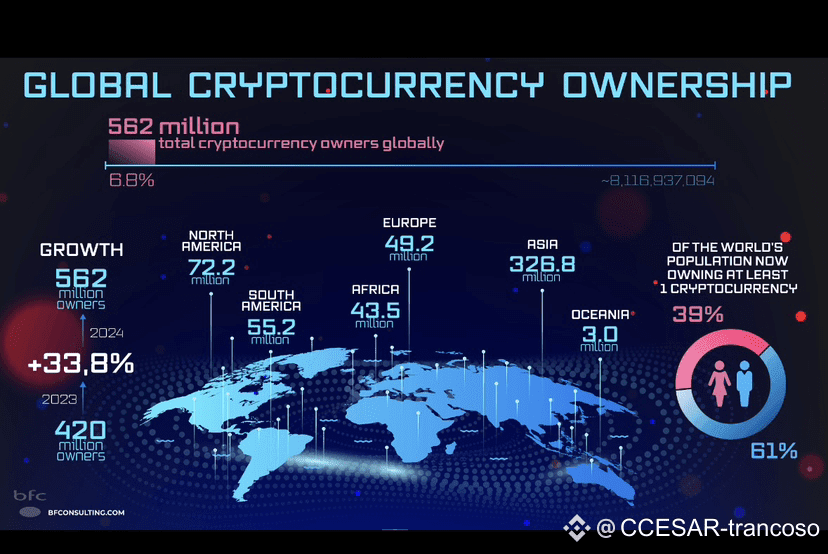
We are experiencing an accelerated transformation in the financial system. Cryptocurrencies, once viewed with suspicion or curiosity, are becoming an essential part of the global economic ecosystem. Blockchain, smart contracts, decentralized finance (DeFi), tokenized digital assets — all these components point towards a new paradigm in the coming years.
📌 Trends we can already observe:
• Greater institutional adoption: large companies and investment funds recognize cryptocurrencies as a store of value or hedge against inflation.
• Expanding regulation: countries are creating regulatory frameworks to bring security, transparency, and protection to the investor.
• Integration with traditional financial services: banks, payment methods, financial applications incorporating cryptoassets.
• Technological innovation: improvements in scalability, energy efficiency, and privacy.
• Tokenization of real assets: real estate, artworks, equity stakes in companies can become tradable tokens.
⚠️ Persistent challenges: volatility, security, regulatory risks, mass adoption (education and trust), environmental impact (in the case of certain networks).
🔮 Future outlook: we can expect that in 5 to 10 years (or even less in some markets) cryptocurrencies will cease to be a novelty and become common instruments for payments, investments, international exchanges, and part of conventional financial products. The convergence between crypto, fintechs, and public policies will be key to ensuring a sustainable and inclusive future.