


The Middle East has returned to the center of the board, but this time the game is not regional, it is systemic. What seems to be ‘just’ another round of missiles and drones is, in practice, a stress test for the global economic order and for the energy architecture that sustains the price of fuel at your gas station and the liquidity in your crypto portfolio.
Under the smoke of explosions, what is at stake is who controls physical chokepoints – like the Strait of Hormuz, through which about one-fifth of the world's oil passes – and who dominates the new intangible weapons, swarms of cheap drones, military AI algorithms, and prediction markets that try to anticipate the mood of the White House. Understanding why this conflict is not just about Iran, but about the next decade of the economy – including that of crypto assets.
The paradox of the heir, the revolution that became a dynasty
The confirmation of Mojtaba Khamenei as the new Supreme Leader is a historical irony; the revolution that overthrew a hereditary monarchy is now anchored in a blood succession to survive. By adopting the dynastic logic it claimed to reject, the regime admits, in practice, that ideology is negotiable; continuity of power is not.
Mojtaba does not carry the clerical weight of his father, but the system has filled this gap with something more potent than any religious diploma, the narrative of absolute martyrdom. He is presented as a "living martyr", the man who lost his father, mother, wife, and child in the conflict – a symbolic capital that cements the support of the religious elite and the Revolutionary Guard, uniting faith, trauma, and revenge into a single political persona. The message to Washington, Tel Aviv, and the markets is crystal clear, the Revolution is not in transition, it is in bunker mode.
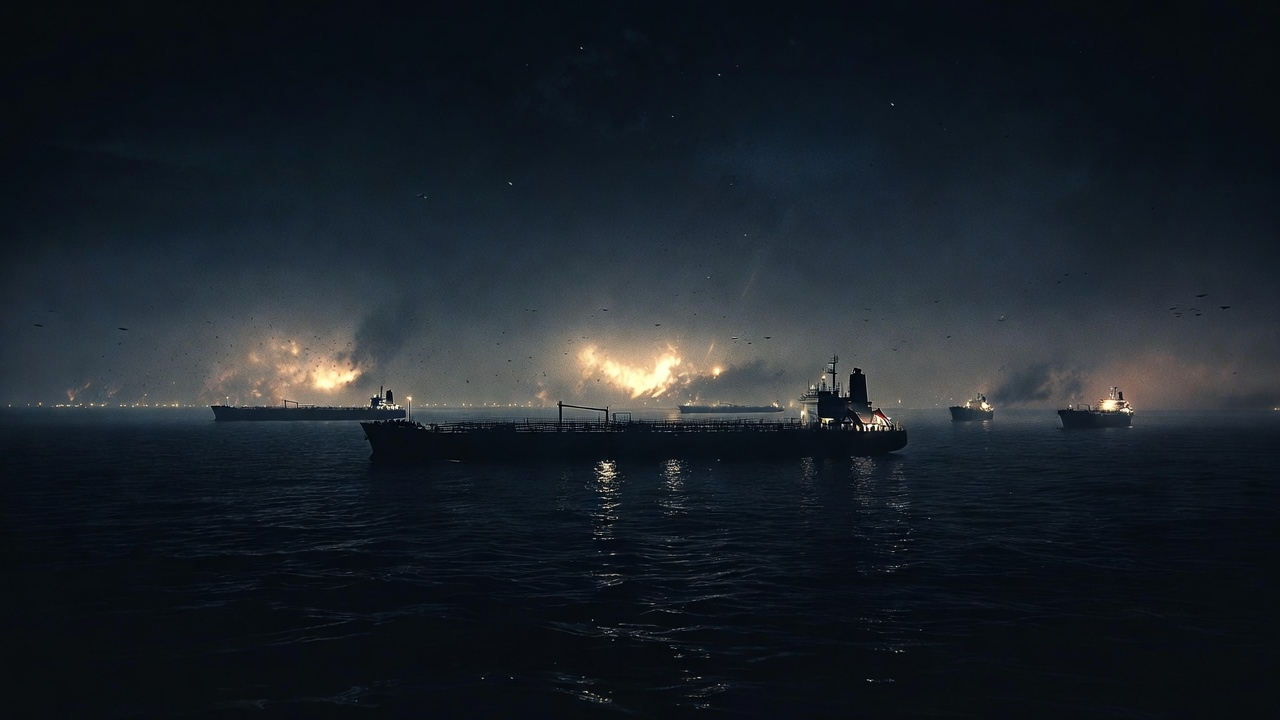
Geography as a weapon, the elegant strangulation of Hormuz
In geopolitics, the real estate mantra remains unbeatable: location, location, location. Iran has transformed the Strait of Hormuz – through which about 20% of the world's consumed oil and a significant portion of liquefied gas flows – into an instrument of asymmetric resistance with global side effects.
The U.S. can destroy ships, batteries, and depots, but cannot redraw the map. Neutralizing Iran's ability to strangle would require a large-scale ground campaign against a country of over 90 million inhabitants – something no president in an election year wants to sign. Meanwhile, the Gulf kingdoms remain as geographical hostages: they depend on the route that Tehran can threaten and have neither military culture nor political will to put boots on Persian soil.
For those following crypto, the subtext is simple: any conflict touching Hormuz is, by definition, a structural generator of volatility – both for the barrel and for BTC.
Ukraine, $20,000 drones against AI shields
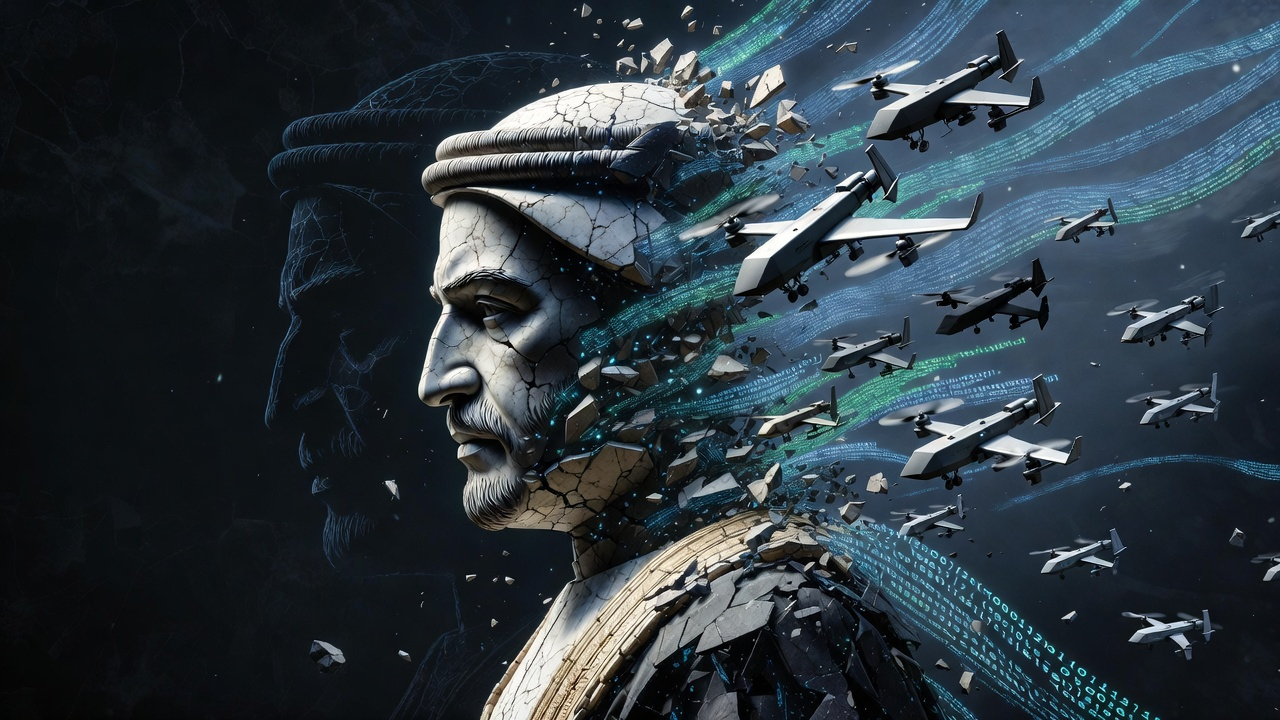
The current conflict consolidates an uncomfortable asymmetry: the "Axis of Dictatorships" – Russia, Iran, China – has learned to manufacture cheap drones on an industrial scale, while the West still burns missiles worth millions of dollars to shoot them down. Each swarm launched is an attack on the opponent's balance sheet even before it is a military attack.
The Western response is not only in arsenals but in algorithms. Israel and the U.S. lead the use of AI to select targets, integrate dispersed radars, and reduce the time between detection and elimination of a threat. The new grammar of war rests on three pillars:
Asymmetric production: saturating defenses with an absurd volume of cheap drones.
Decision automation: AI shortening the "detect-decide-destroy" cycle.
Depletion of arsenal: forcing the enemy into logistical bankruptcy before military defeat.
In markets, this translates to an old acquaintance of the crypto investor: whoever scales faster wins.
The "second flank", Iran as an asset of Moscow and Beijing
It is not an isolated trigger for a Third World War, but the consolidation of a second regional theater that drains attention, money, and munitions from the U.S. While Ukraine consumes resources in Europe and Taiwan remains a post-dated check in the Indo-Pacific, Iran offers Moscow and Beijing a perfect flank, cheap for them, expensive for Washington.
Every missile fired over the Gulf is one more ship that needs to be displaced, an aircraft carrier that cannot be in Taiwan, a military budget that needs to be renegotiated with a Congress saturated with debt and high interest rates. In portfolio language, it is as if Russia and China had bought an option with a low premium that forces the U.S. to carry an extremely expensive hedge on three fronts at the same time.
The TACO factor, when the "legacy of strength" meets the market
The duration of the conflict has ceased to be solely a military question and has become a psychological bet, how much pain Donald Trump can endure from the markets. Analysts speak of the TACO factor – Trump Always Chickens Out – a label created to describe the president's pattern of retreating from his most aggressive threats when actions plummet and oil spikes.
Prediction markets and political betting platforms today price, in real-time, Trump's risk appetite – and, by extension, the price of everything, from maritime freight to the mood of BTC. The quotes indicate a relevant probability of regime change in Tehran, while also leaving a window open for a typical "mission accomplished" move, declaring victory early, ending the operation before economic costs contaminate the electoral calendar.
If the TACO factor prevails, Iran exits the episode with a practical sense of impunity and a brutal leverage over global energy flow. If not, we will see how far a theocratic regime can resist a president willing to trade volatility in the markets for an epitaph of "strong man".
Geopolitics, gasoline, and BTC on the same spreadsheet
The Iranian regime has shown that geography, asymmetric persistence, and cheap technology can still challenge military coalitions that are incomparably richer. Economic stability has ceased to be an assumption and has become a dependent variable of the ability to contain low-cost threats in strategic choke points.
The question left for investors, governments, and crypto holders is straightforward: can the global financial system coexist with an Iran that has discovered, in practice, how strong its hand is over the planet's main energy choke point? The answer – whether a tactical retreat or a prolonged escalation – will not only fill headlines; it will write the trend line of the next decade, including in the candle charts you open every day.