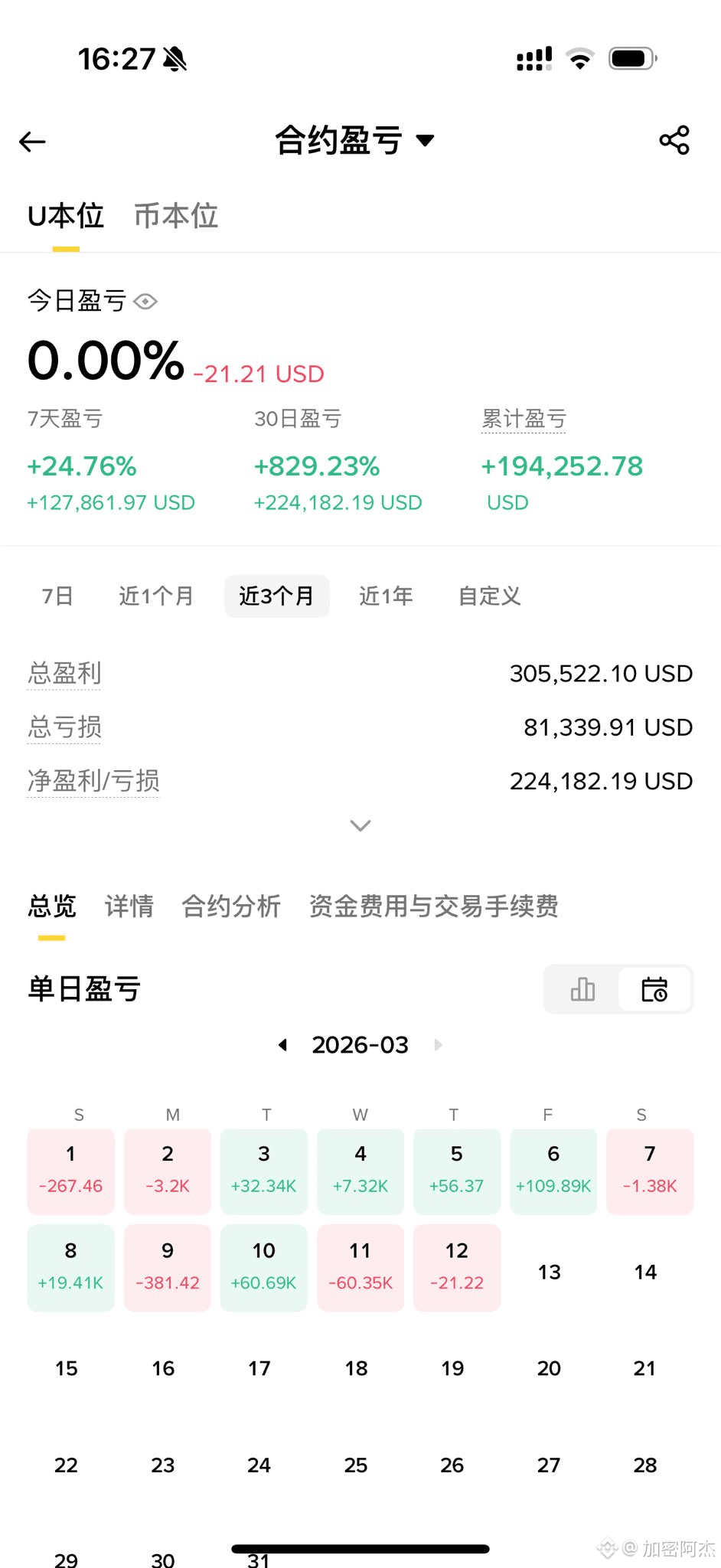
Having been in the cryptocurrency space for so many years, to be honest, I almost got carried away by the market in the first two years.
My account plummeted from its peak, down to less than half. It was no exaggeration during that time; I suffered from insomnia, and the first thing I did when I woke up in the middle of the night was to check my phone for market updates.
Later I realized that losing everything wasn't because I didn't work hard, it was because I was always operating in a counterproductive way.
Most retail investors have a common problem:
When the market drops, they stubbornly hold on, with only one thought in their mind: just wait a bit longer and I’ll break even.
When it rises a little, they run immediately, afraid that the money they’ve earned will vanish.
But the market never coddles you.
The right approach is actually the opposite: when the trend is strong, you should dare to hold; when it breaks down, you should dare to admit defeat.
Just this one action, trying to maximize profits and minimize losses, can really save you.
It’s not about making you rich, it’s about preventing you from being carried away.
There’s also something that many people watch every day but don’t know how to use: volume.
Volume is the market's breathing.
You will find that some cryptocurrencies can still slowly rise even with low volume.
This often indicates that there’s still potential ahead.
When it breaks a key level and moves sideways with low volume, it’s often giving you a second chance.
On the contrary, if the volume increases but the price doesn't move, you need to start being alert.
Those massive volume spikes that shoot up look great, but they often lead to corrections or even losses later on.
I’ve also stumbled into countless pitfalls regarding position size.
I used to think that holding more assets was safer.
Later I understood that the more you hold, the more chaotic your mindset becomes, and the more reckless you get.
Two or three assets are enough; if you really can’t control your hands, the problem isn’t the market, it’s you.
Short-term trading isn’t just random hitting.
After a sharp drop, there’s often a rebound.
When there’s a sudden surge just before the close, it often leads to a loss the next day.
These things, when you break them down, are quite simple, but you have to live long enough to understand them.
And there’s one especially important thing: after making a big profit, you must take a break and hold no positions.
The most ruthless part of the market is when you feel like you’ve “got it.”
That little inflated mindset is more deadly than any bad news.
When losing, don’t be stubborn.
The more anxious you are, the more chaotic it gets, and the easier it is to make consecutive mistakes.
Wait for your emotions to settle, wait for the rhythm to become clear, then take action; it’s never too late.
There are always opportunities in both bull and bear markets.
The real challenge is never the market, but whether you can control that hand that wants to place random orders.
If you’re feeling a bit lost or need more guidance, feel free to reach out and chat with me at @交易员杰哥 .
My account plummeted from its peak, down to less than half. It was no exaggeration during that time; I suffered from insomnia, and the first thing I did when I woke up in the middle of the night was to check my phone for market updates.
Later I realized that losing everything wasn't because I didn't work hard, it was because I was always operating in a counterproductive way.
Most retail investors have a common problem:
When the market drops, they stubbornly hold on, with only one thought in their mind: just wait a bit longer and I’ll break even.
When it rises a little, they run immediately, afraid that the money they’ve earned will vanish.
But the market never coddles you.
The right approach is actually the opposite: when the trend is strong, you should dare to hold; when it breaks down, you should dare to admit defeat.
Just this one action, trying to maximize profits and minimize losses, can really save you.
It’s not about making you rich, it’s about preventing you from being carried away.
There’s also something that many people watch every day but don’t know how to use: volume.
Volume is the market's breathing.
You will find that some cryptocurrencies can still slowly rise even with low volume.
This often indicates that there’s still potential ahead.
When it breaks a key level and moves sideways with low volume, it’s often giving you a second chance.
On the contrary, if the volume increases but the price doesn't move, you need to start being alert.
Those massive volume spikes that shoot up look great, but they often lead to corrections or even losses later on.
I’ve also stumbled into countless pitfalls regarding position size.
I used to think that holding more assets was safer.
Later I understood that the more you hold, the more chaotic your mindset becomes, and the more reckless you get.
Two or three assets are enough; if you really can’t control your hands, the problem isn’t the market, it’s you.
Short-term trading isn’t just random hitting.
After a sharp drop, there’s often a rebound.
When there’s a sudden surge just before the close, it often leads to a loss the next day.
These things, when you break them down, are quite simple, but you have to live long enough to understand them.
And there’s one especially important thing: after making a big profit, you must take a break and hold no positions.
The most ruthless part of the market is when you feel like you’ve “got it.”
That little inflated mindset is more deadly than any bad news.
When losing, don’t be stubborn.
The more anxious you are, the more chaotic it gets, and the easier it is to make consecutive mistakes.
Wait for your emotions to settle, wait for the rhythm to become clear, then take action; it’s never too late.
There are always opportunities in both bull and bear markets.
The real challenge is never the market, but whether you can control that hand that wants to place random orders.
If you’re feeling a bit lost or need more guidance, feel free to reach out and chat with me at @交易员杰哥 .