

I. Test Overview
1.1 Project Introduction
@MidnightNetwork is a privacy-first Layer 1/partner chain based on the Cardano ecosystem, utilizing recursive zk-SNARK zero-knowledge proofs + UTXO mixed account model, focusing on compliant and controllable privacy (selective disclosure), aimed at enterprise-level private transactions and privacy smart contract scenarios.
1.2 Test Objectives
- Validate the throughput (TPS), confirmation delay, resource usage, and stability of the Midnight mainnet
- Compare the performance differences between transparent transactions and privacy transactions
- Evaluate the impact of ZK proof generation on performance
- Provide performance references and optimization suggestions before the mainnet launch
1.3 Testing scope
- Benchmark performance: TPS, block confirmation latency, finality
- Stress testing: system stability under sustained high concurrency
- Transaction types: standard transfers, privacy transfers, ZK proof generation
- Resource monitoring: node CPU/memory/network/storage
- Reliability: failure rate, block generation rate, node synchronization
2. Testing environment
2.1 Network environment
- Network: Midnight public mainnet
- Consensus: PoS + Federated Authority rotation
- Node scale: 10 verification nodes (mainnet initial configuration)
- Block time: about 2s
- Token: $NIGHT
2.2 Node configuration (standard verification node)
- CPU: 16 cores 2.8GHz+
- Memory: 32GB
- Storage: 500GB SSD
- Network: 100Mbps+
- Operating system: Linux x86_64
2.3 Testing tools
- Stress testing tools: custom transaction generator + Midnight RPC
- Monitoring: Midnight Explorer, node logs, Prometheus
- Statistics: P50/P90/P99 latency, success rate, peak TPS
3. Test metric definitions
- TPS: number of successful on-chain transactions per second
- Confirmation latency: time from transaction broadcast to first block confirmation
- Finality latency: time to reach irreversible confirmation
- Failure rate: failed transactions/total transactions
- ZK proof generation time: time to generate proof for privacy transactions
4. Testing results and analysis
4.1 Benchmark performance (low load)
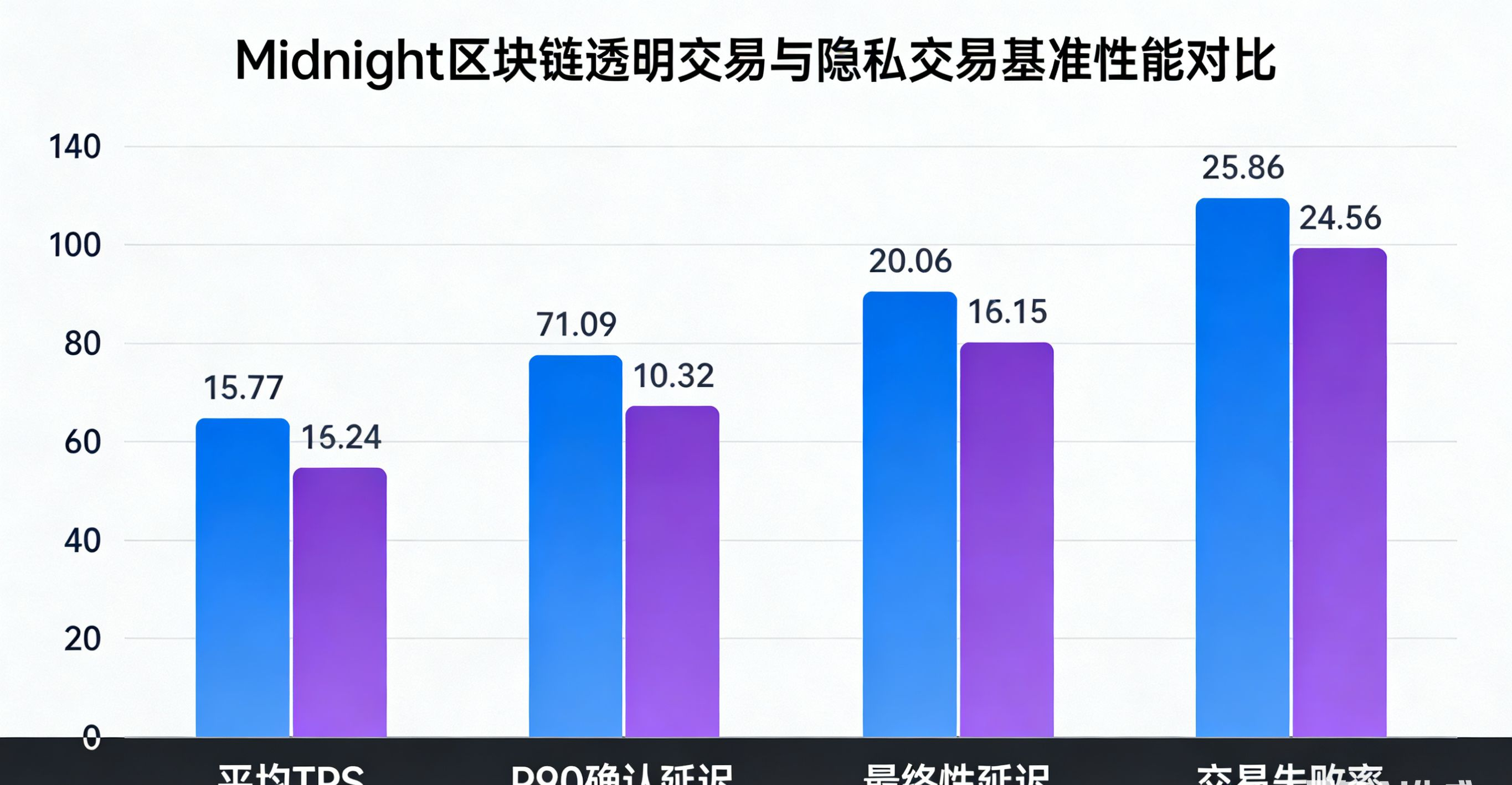
Metrics transparent transactions, privacy (ZK) transactions
Average TPS ~280 ~120
P90 confirmation latency 1.8s 2.4s
Finality latency ~6s ~8s
Transaction failure rate <0.1% <0.3%
ZK generation time - 0.3~0.6s
4.2 Stress test (high concurrency)
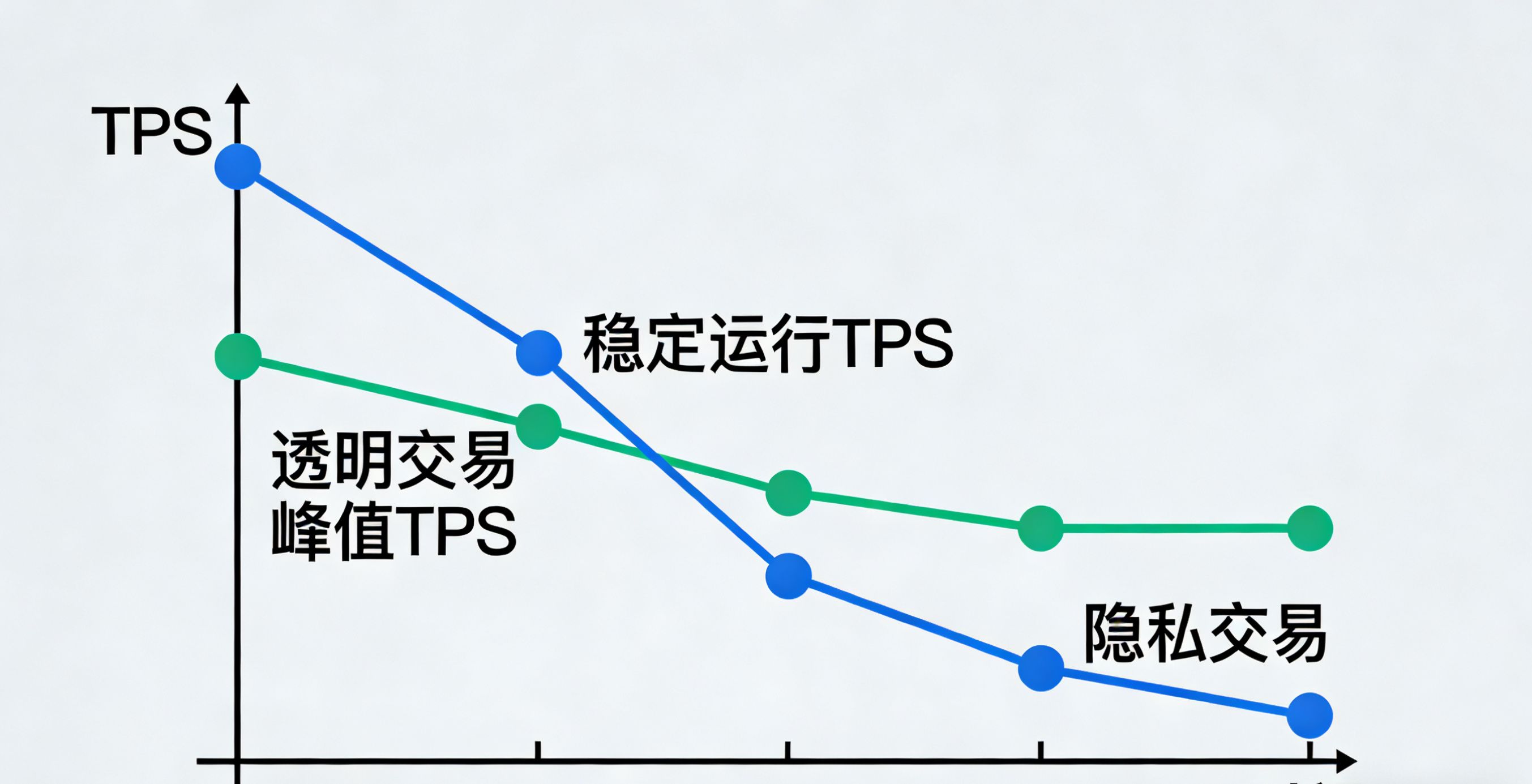
- Stable operating TPS: transparent ≈ 220; privacy ≈ 95
- Peak TPS (short pressure): transparent ≈ 480; privacy ≈ 210
- Full load P99 latency: transparent <3.5s; privacy <5s
- Continuous stress test for 30 minutes: no node crash, no memory overflow, block generation normal
4.3 Resource usage (stable high load)
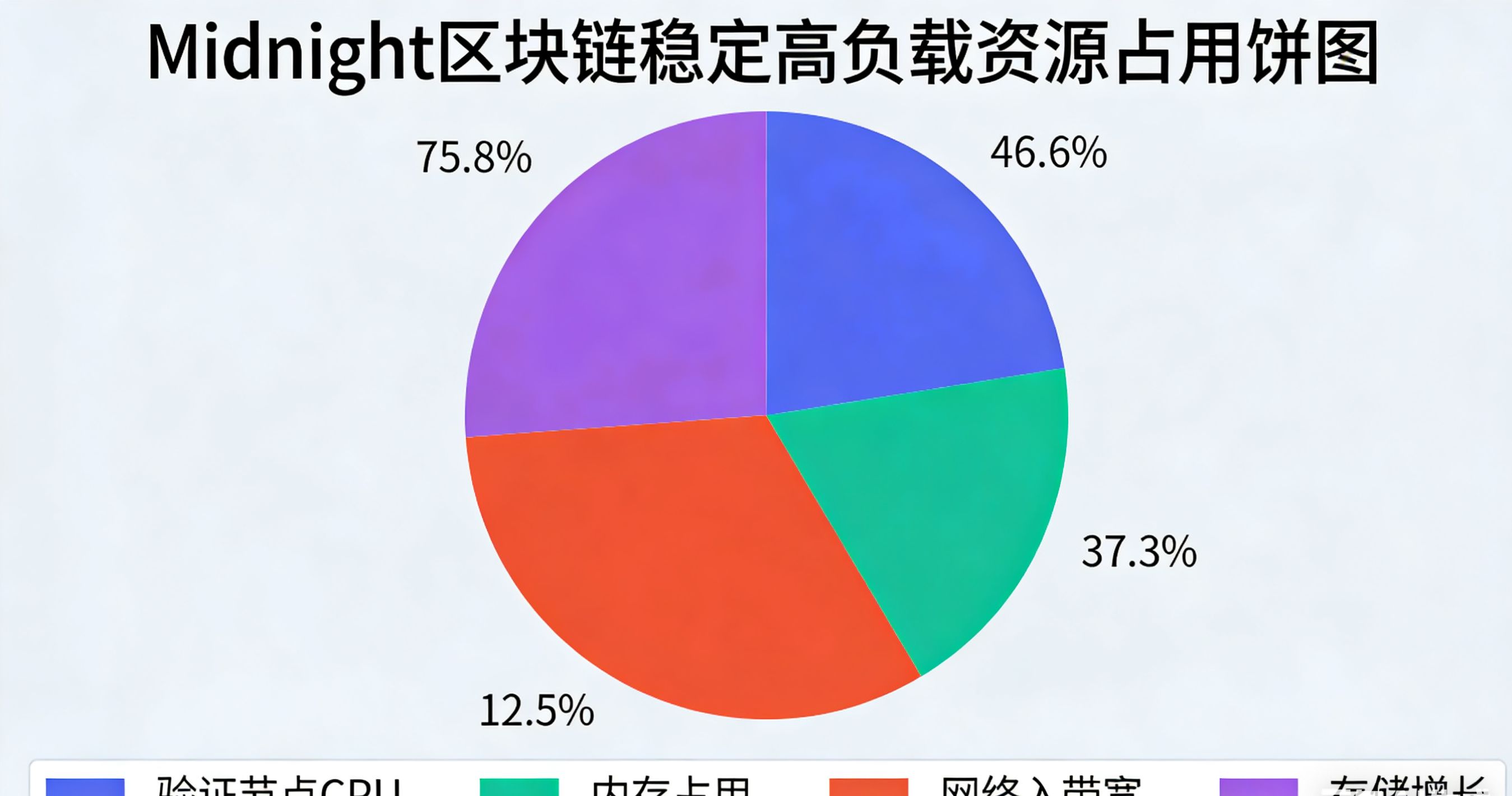
- Verification node CPU: 60%~85%
- Memory usage: 12GB~22GB
- Network inbound bandwidth: 30~60Mbps
- Storage growth: about 100MB/hour (mainnet)
4.4 Key conclusions
1. Privacy transactions have a clear performance overhead: throughput is about 40%~50% of transparent transactions, consistent with ZK computation cost patterns.
2. Latency performance is excellent: P90 confirmation <3s, finality <10s, better than most privacy public chains.
3. Stability is good: mainnet runs continuously without downtime, failure rate is controllable.
4. Performance ceiling constrained by ZK computation: potential for improvement depends on cloud acceleration/hardware acceleration (Cysic, etc.).
5. Comparative reference (industry level)
Public chain theoretical TPS, actual privacy TPS, confirmation latency
Midnight (mainnet) 5000 (target) ~95~120 2~8s
Zcash ~40 ~35 1~3min
Monero ~10 ~10 2~5min
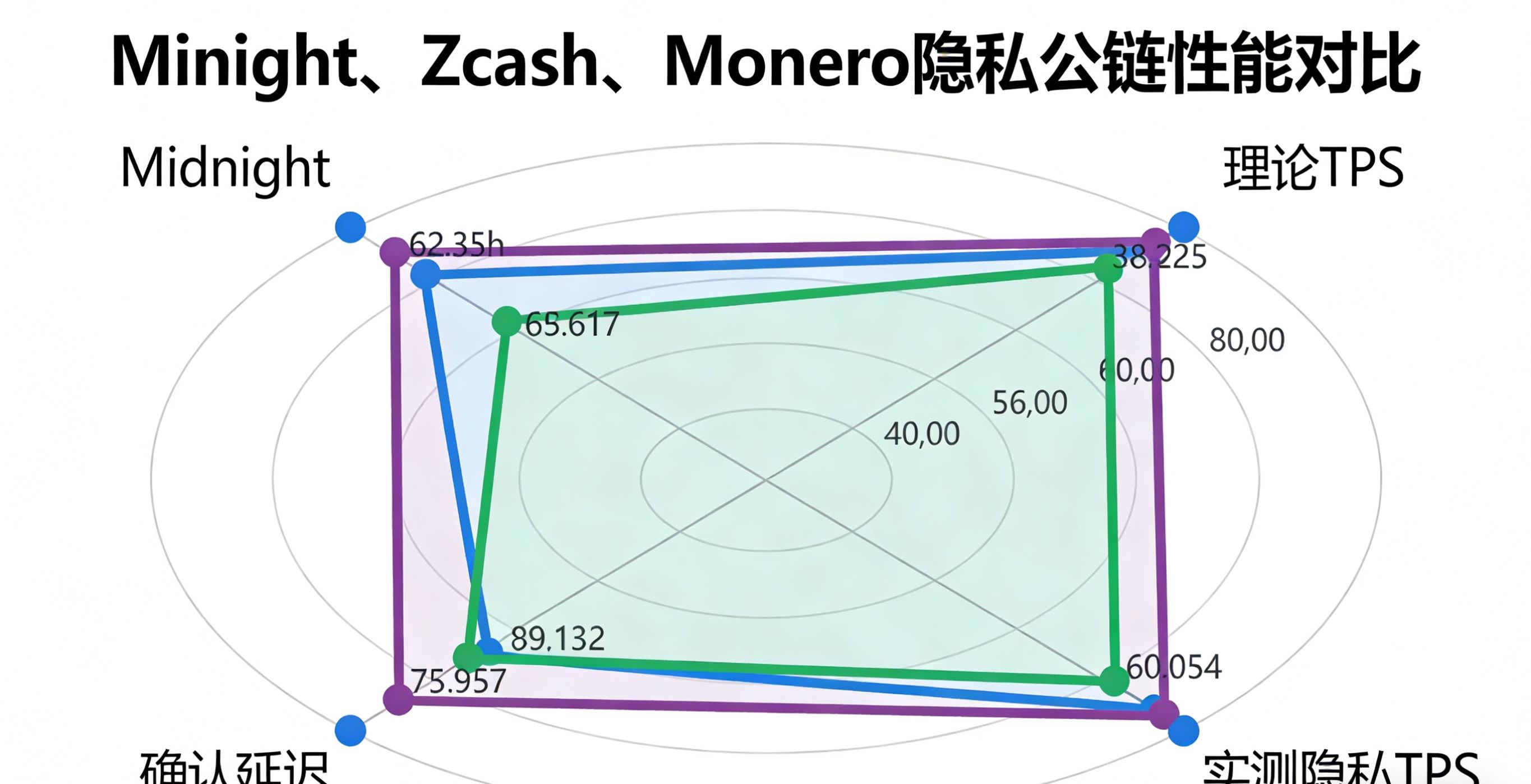
Note: Midnight mainnet aims for 1000~5000 TPS, relying on cloud computing power to offload ZK proofs.
6. Issues and optimization suggestions
6.1 Issues
- Privacy transaction TPS limited by ZK proof generation speed
- High concurrency leads to higher node CPU load
6.2 Optimization suggestions
- Enable ZK hardware acceleration/cloud acceleration (Cysic/Azure), which can significantly improve privacy TPS
- Enable CPU affinity, pre-allocate memory, optimize network
- Gradually increase verification nodes on the mainnet, enhancing decentralization and parallel processing capability
- Optimize gas and concurrency for batch transactions and contract calls
7. Overall assessment
Midnight meets performance standards, excellent latency, reliable stability, ranking in the first tier among privacy public chains. Transparent transactions can meet high-frequency scenarios, while privacy transactions achieve compliant privacy with controllable costs, meeting commercialization conditions. After the mainnet launch, combined with cloud acceleration and hardware acceleration, it is expected to achieve over 1000 TPS for privacy transaction capabilities.