
When I saw this news from Hubei, a chill instantly ran down my back. That suffocating feeling, I think everyone who has rented a house or stayed in a hotel understands.
Let me explain the ins and outs of this matter clearly, without any exaggeration; every detail strikes at the deepest anxieties of ordinary people.
A young woman in Hubei, after taking a shower in her rental apartment, lay on her bed bare-chested to rest, with the door locked securely. She thought this was her absolutely safe private space. But no one expected that a stranger suddenly pushed open the door and barged in, exposing the defenseless woman completely.
When the woman reacted and screamed at him, the man hurriedly retreated — later it was discovered that he was a maintenance worker arranged by the property management who had entered the wrong room, without knocking or verifying, directly using a universal key card to unlock the door.
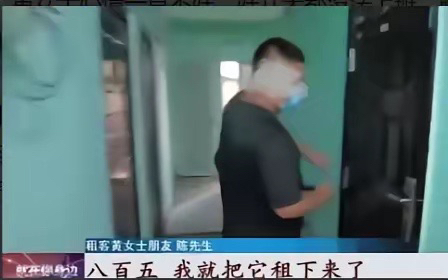
The frightened woman proposed a compensation request of 5000 yuan. What she wanted was never a windfall, but the privacy that was violated, the security that was shattered, and the control over her personal space that was forcibly taken away.
But the man who barged in confidently refused, saying: 'I didn’t even touch you, so why should I compensate you 5000?'
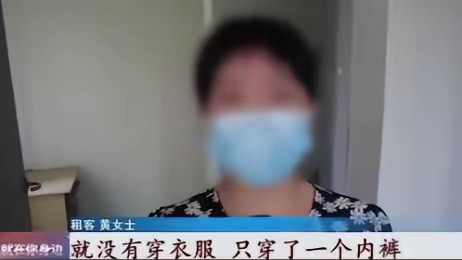
When this statement came out, the internet erupted. Some criticized the man for lacking boundaries, some said the woman's compensation claim was reasonable, and others thought 5000 yuan was too much.
But I searched through all the comments, and very few mentioned the core essence of this matter:
What we have been arguing about is not whether the 5000 yuan compensation is reasonable, but whether an ordinary person has the right to completely control their own space, body, and life without being arbitrarily intruded upon or deprived by anyone.
The man thought, 'I didn’t touch you, so I didn’t cause any harm', but he didn’t know that the most fatal harm is never physical contact, but the complete shattering of a person's absolute control over their own life.
What chills me even more is that this incident is not an isolated case. Each of us is actually experiencing this 'loss of control'.
The boundaries of the body and space being broken is just the most intuitive and extreme manifestation. More concealed and lethal is that in this digital and intelligent age, the control over assets, privacy, and wealth has long been out of our hands.
The money you have in the bank may be frozen because of a phrase like 'risk control'; the savings you have on wealth management platforms may be wiped out overnight due to platform collapse; the digital assets you hold in exchanges may be lost if the platform goes bankrupt; the smart devices and cameras in your home are constantly collecting your data, while the ownership of this data has never been in your hands; even the stocks and funds you buy can be manipulated at will by insiders, leaving you to passively accept losses.
Throughout our lives, we are in pursuit of a sense of security, but in the end, we find that there is not a single aspect of our lives, wealth, and privacy that is entirely under our control.
It was only after seeing through the core dilemma of ordinary people that I spent a full 8 months conducting complete due diligence and analysis on the Fabric Foundation project, from the underlying technical architecture, core product logic, industry landing progress, to governance structure and ecological loop.
The reason I wrote this article today is not to promote any product, nor to encourage speculation, but to discuss with all ordinary people: what truly gives us the sense of security of 'self-determination'; how does Fabric Foundation, referred to in the industry as the 'Android of the robot world', fundamentally reconstruct our absolute control over assets, digital life, and the intelligent era from the ground up.
The following content contains no exaggeration; all information comes from official white papers, public cooperation announcements, and verifiable data. I will use plain language that ordinary people can understand to clearly break down the essence of this project.
1. The underlying core of Fabric Foundation: using decentralized technology to completely return 'control' from the platform to ordinary people.
Many people's first impression of Fabric Foundation is that 'it has created a universal operating system for robots', but few know that the underlying system is a complete decentralized value network based on blockchain, which fundamentally addresses the core pain point of ordinary people: the 'loss of control'.
Let's first clarify a question: why are our assets and data always subject to arbitrary infringement and misappropriation?
The root cause is that all our digital assets and personal information exist on centralized platform servers. Your money is in the bank's database, your data is in the APP’s backend, and your assets are in the accounts of exchanges. The control of these things has never been in your hands; the platform can freeze, misappropriate, or leak them at will, leaving you powerless to resist.
Just like the woman whose room was intruded upon, she thought the door being locked meant safety, but the property management's universal key card could open her door at any time, meaning she never truly had absolute control over her space.
And the first thing Fabric Foundation did was use blockchain's asymmetric encryption technology + decentralized identity DID system to create a 'lock that only you can open' for every user and every device connected to the ecosystem.
Specifically, Fabric Foundation will generate a globally unique, on-chain verifiable decentralized identity (DID) for every ecosystem user. This DID is not bound to any centralized institution, only corresponding to the unique private key in your possession. All your digital assets, device control rights, and data ownership within the ecosystem will be encrypted on-chain through this DID, permanently recorded on the blockchain, immutable, irretrievable, and unmisappropriable.
What does this sentence really mean? Let me break it down for you even more clearly:
First, your assets can only be controlled by you. The ecological native assets you hold are all stored on-chain and encrypted with a private key. Without your private key authorization, even Fabric Foundation itself, top hackers, or regulatory agencies cannot touch a penny of your assets, let alone freeze or misappropriate them. You no longer have to fear platform collapses or institutions absconding with funds; your wealth is entirely determined by you.
Secondly, your data can only be decided by you on who can use it. In the future, all user data generated by intelligent robots and devices connected to the OM1 system will completely belong to the users themselves. Without your DID authorization, no manufacturer or institution can access or collect your data. If a commercial entity wants to use your data, they must get your authorization and pay you corresponding benefits, fundamentally breaking the industry’s unspoken rule of 'platforms freely collecting user data for profit'.
Third, your devices can only be controlled by you. The control rights of the service robots and smart devices in your home are all tied to your DID identity. Without your authorization, even the device manufacturers cannot remotely control your devices, fundamentally eliminating the risks of privacy breaches and remote control of smart devices, ensuring that your private space is genuinely 'decided only by you'.
This is not an airy concept; it is a technical architecture that has already been implemented. The underlying chain network of Fabric Foundation has completed adaptation testing for tens of millions of user DID identities, with transaction confirmation speeds reaching milliseconds, while ensuring the absolute safety of assets.
What it addresses is never simply the 'asset storage' issue, but the core pain point of ordinary people: in this digital age, we can finally possess something that is completely in our control, something that cannot be taken away by anyone, finally equipping our lives with a lock that only we can open.
2. The core barrier of Fabric Foundation: the OM1 universal robot operating system is not a speculative air project, but the foundational infrastructure of the intelligent era.
Many people will ask: even if there is absolute asset control, if this asset lacks long-term value support and only depreciates slowly, how can it become the trump card of our lives?
This is precisely the fundamental difference between Fabric Foundation and all speculative projects on the market: its asset value is never supported by community hype or concept speculation, but is based on the real commercial demand and realistic landing scenarios of the trillion-dollar AI robot sector.
Let's first look at an undeniable industry trend: according to McKinsey’s latest industry report released in 2026, by 2030, the global AI robot market size is expected to exceed $26 trillion. In the next 20 years, AI robots will permeate every corner of industrial manufacturing, food service, logistics storage, and family life, marking the next undeniable super trend in human society.
However, this trillion-dollar sector has a fatal bottleneck that has plagued the industry for over a decade — system fragmentation.
Just like the mobile market 20 years ago, every brand, such as Nokia, Motorola, and Samsung, had its own closed system that was incompatible with one another. The current robot industry is similar: factory robotic arms, restaurant delivery robots, and household vacuum robots all have their own exclusive systems, which are incompatible. For a company to develop a robot application, it must repeatedly develop dozens of systems for different hardware, with development costs running into millions, which small and medium enterprises simply cannot afford, effectively stalling the growth of the entire industry.
The OM1 universal robot operating system developed by Fabric Foundation is the ultimate solution specifically designed to address this industry pain point, and it is also referred to within the industry as the 'Android system for robots'.
Let me explain the core value of the OM1 system in plain language: it is the world's first universal operating system for robots that has achieved full hardware compatibility and full scenario compatibility. Downwards, it can be compatible with all mainstream robot hardware chips, sensors, and actuators worldwide. Regardless of the brand or type of robot, it can seamlessly connect; upwards, it provides developers with standardized development interfaces, a full range of AI model libraries, and all-scenario solutions. Developers no longer need to develop separately for different hardware, allowing them to directly build applications on the OM1 system.
According to the official test data released by Fabric Foundation, the OM1 system can reduce the development cycle of robot applications from an average of 6 months to 2 weeks, with development costs directly reduced by over 90%. Previously, enterprises had to spend millions to create a robot system, but now with OM1, it can be done for just tens of thousands.
What does this mean? It means that the OM1 system will become the underlying infrastructure for the entire AI robot industry in the future, just as Windows is to PCs and Android is to smartphones. In the future, all robot manufacturers and application developers around the world will connect to the OM1 ecosystem, which will become the universal underlying system of the entire intelligent era, with the ceiling of this sector being the entire $26 trillion global robot market.
More importantly, these are not empty words written in the white paper; they are already implemented, verifiable real progress. As of the first quarter of 2026, the OM1 system has completed adaptation cooperation with 12 mainstream robot hardware manufacturers worldwide, covering real-world scenarios in four core fields: industrial manufacturing, food service, logistics storage, and household services, with over 150,000 commercial and household robot devices connected; in 2025, Fabric Foundation was selected as one of the top 50 global robot innovation companies by MIT Technology Review, and the global chip giant NVIDIA has included the OM1 system in its official cooperation plan for the robot ecosystem, providing chip-level technical support.
The entire value flow of the OM1 ecosystem forms a completely closed-loop, continuously growing commercial system, where all commercial activities within the ecosystem are completed through the native token ROBO:
• Developers creating robot applications within the ecosystem need to pay ROBO as on-chain gas fees;
• Robot manufacturers and enterprises connecting to the OM1 system need to pledge ROBO to obtain commercial authorization;
• The leasing, revenue settlement, data services, and AI model invocation of robot devices are all completed through ROBO to form a transaction loop.
This means that the value of ROBO is not propped up by speculation or hype, but is supported by the real commercial demand, actual transaction flow, and real landing scenarios happening every day within the entire ecosystem. Holding ROBO not only grants you a completely self-controlled on-chain asset but also provides you with long-term dividends from the development of the entire trillion-dollar AI robot sector.
What it offers you is not a speculative opportunity for overnight wealth, but a long-term asset that can withstand economic cycles and is fully controlled by you, which is the true trump card ordinary people have to combat life’s risks and maintain control over their lives.
3. The governance structure of Fabric Foundation: a non-profit foundation + decentralized community governance, fundamentally eliminating the possibility of 'control being taken away'.
I know that many ordinary people have the greatest concern about emerging projects, which is the fear of being exploited, the fear that the project party will abscond with funds, and the fear of being controlled and harvested by capital. After all, we have seen too many projects where teams manipulate, arbitrarily increase supply, and manipulate prices, with the control of the assets in the hands of retail investors never being theirs, only passively harvested.
And this is also the most important aspect I valued during my due diligence on Fabric Foundation — its governance structure fundamentally eliminates this possibility, completely handing over project control to every ordinary participant.
Firstly, Fabric Foundation is a non-profit foundation registered in Singapore. The sole function of the foundation is to be responsible for the technical research and development, ecological implementation, and daily operations of the project, with no rights to issue or misappropriate any tokens, nor can it intervene in transactions and asset flows within the ecosystem. All financial uses and financial reports of the foundation are regularly made public to the community for oversight, with every cent's destination being traceable and verifiable.
Secondly, the ultimate governance of the entire project does not belong to the team or any capital, but to all ROBO holders and community nodes. Fabric Foundation adopts a fully decentralized DAO governance model, where all major decisions of the project, including technical iteration direction, ecological cooperation planning, economic model adjustments, and fund usage plans, must be decided through decentralized voting by the community. Only if over 80% of nodes vote in favor can the proposal be implemented.
Even if the foundation proposes a technical upgrade plan, if it does not pass community voting, it cannot be executed. No individual or capital can single-handedly control the project’s development direction, let alone make decisions that harvest retail investors and harm community interests for personal gain.
What does this really mean? Let me give you the most straightforward example:
Most projects on the market are like the house rented by that woman; you think that once you move in, it’s yours, but the landlord and property management have keys and can intrude at any time, disposing of your belongings at will. Fabric Foundation’s governance model is akin to building you your own house, where only you have the key. The decoration, renovation, and use of the house are all decided by you and all the residents together through voting, with no one able to intrude at will, and no one able to take away your house.
From the very rules, it eliminates the possibility of project parties and capital arbitrarily manipulating projects and harvesting retail investors, completely returning the project's control and asset control to every ordinary participant.
As I write this, I look back at the incident involving the woman in Hubei and feel completely different.
The debate over whether the 5000 yuan compensation is reasonable is essentially a debate over whether an ordinary person has the right to possess absolute and unimpeded control.
The answer is affirmative. What we want has never been those thousands of yuan in compensation, but the confidence of 'my life, I have the final say'.
What we want is our own private space that will not be arbitrarily intruded upon by strangers; we want the money we have worked hard to earn to not be frozen arbitrarily by platforms or harvested at will by project parties; we want to fully control our own data, devices, and assets in this intelligent era, without needing to look at anyone's face or fearing any sudden 'intrusion'.
What Fabric Foundation provides us is precisely this kind of 'self-determination' confidence. It is not a speculative tool for quick profits, but a foundational infrastructure that allows us to truly control our assets, our data, and our life in the upcoming intelligent era.
It uses decentralized technology to give us absolute asset control; using the OM1 operating system, it provides us with long-term value support for our assets; through a decentralized governance model, it gives us a voice in the project's development. It addresses the core dilemma of 'loss of control' that ordinary people face throughout their lives.
Finally, I want to say to all ordinary people: the greatest sense of security in life has never come from others, but from oneself. Only when you truly grasp the control over your life can you genuinely possess the confidence of not being infringed upon.
If you are also interested in the future of AI robots and want to have a long-term asset completely controlled by yourself, you might want to delve deeper into the official white paper and technical documents of Fabric Foundation. You will find that what it offers us is far more than you can imagine.