

In 2026, where Web3 and AI are deeply integrated, computing power has become the core production resource of the intelligent economy. Traditional centralized cloud service providers like AWS and Azure have long held the dominant pricing power of computing power, with the unit price of H100 computing power remaining high. The cost pressure for enterprise AI training is enormous, while the global GPU resource idle rate generally exceeds 60%, highlighting significant resource mismatch issues. The Fabric Foundation leverages the DePIN architecture to aggregate idle global GPU computing power, using $ROBO to achieve node staking, computing power trading, and value settlement, directly reducing AI training costs by 50%. With real application scenarios as the foundation, it disrupts traditional cloud computing, and its implementation scenarios cover multiple core fields such as AI research and development, embodied intelligence, robotic economy, and enterprise services.
In the AI large model training and inference scenarios, the $ROBO computing network provides cost-effective computing support for large models, multi-modal models, and industry-specific vertical models. Through distributed scheduling, GPU utilization is increased from 30% to 90%, significantly reducing training costs, allowing small and medium developers and institutions to conduct model development at low costs, breaking the computing power barriers set by tech giants.
In the context of embodied intelligence and robotic application scenarios, $ROBO provides real-time model deployment, cloud computing scheduling, and hardware instruction collaboration for physical robots, supporting the intelligent operation of robots throughout perception, decision-making, and execution processes, which is a key infrastructure for robots to transition from the laboratory to commercial implementation.
In the Web3 and DePIN ecological scenarios, $ROBO, as the only value token of the ecosystem, completes functions such as computing power transaction settlement, node staking admission, and community governance voting, building a closed loop of decentralized computing power economy. The number of on-chain computing transactions, the scale of computing orders, and the number of online nodes become the core support for ecological value, achieving a deep binding of value and real demand.
In the enterprise-grade AI and developer service scenarios, distributed computing can be supplied flexibly on demand, effectively lowering the R&D threshold for entrepreneurial teams and promoting the rapid popularization of AI technology in fields such as intelligent manufacturing, digital content, and intelligent interaction.
With the continuous expansion of ecological nodes and the ongoing optimization of technical algorithms, the cost advantage of the ROBO computing network will be further amplified, and the price of computing power still has considerable room for decline. Centered around real-world scenario demands, industrial application implementation, and on-chain data, ROBO is reconstructing the global AI computing power supply landscape, promoting the democratization and inclusivity of computing power, providing underlying infrastructure for embodied intelligence, the robotic economy, and the Web3 ecosystem, and ushering in a new era of decentralized computing power economy.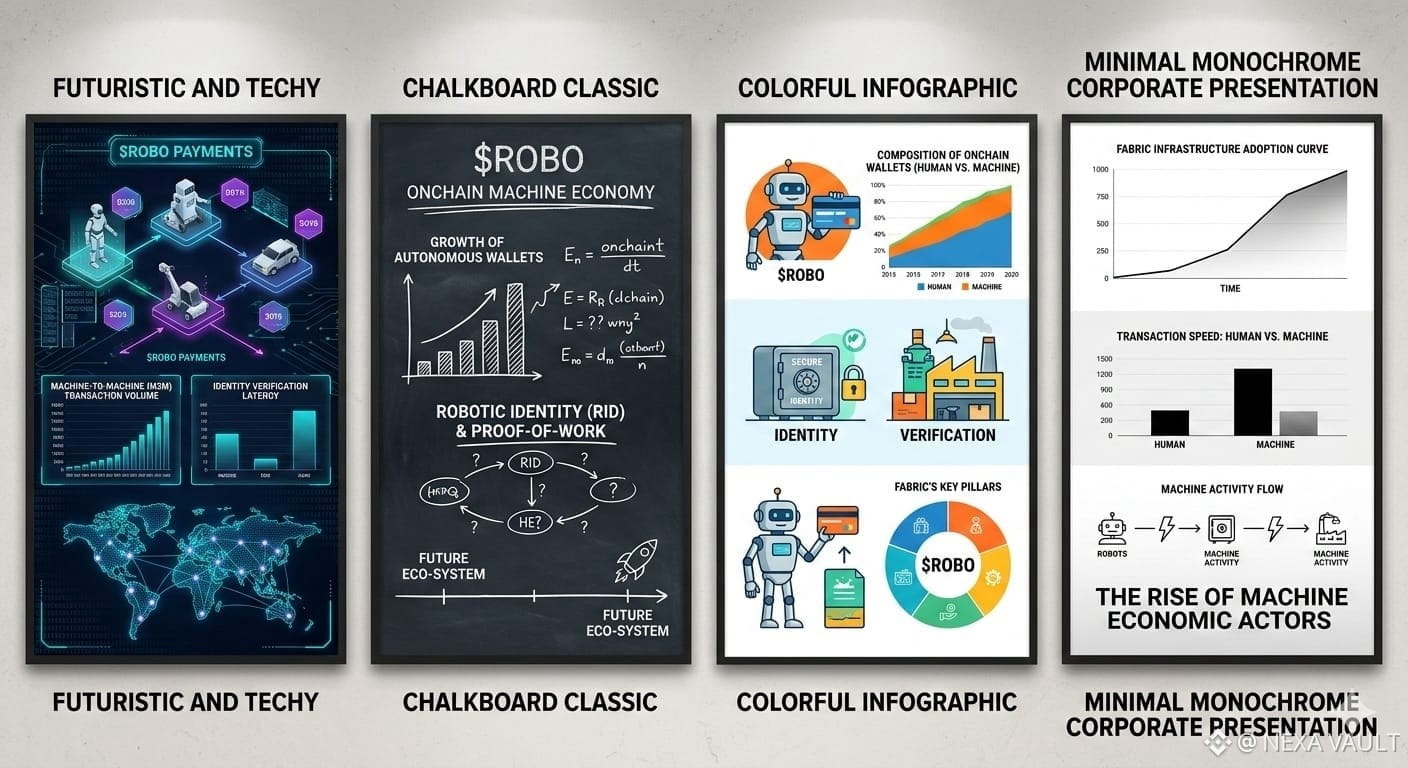
#ROBO #FabricFoundation #BinanceSquare #Web3 #AI #DePIN