
Discover the reasons and mechanics behind stablecoins depegs.

A stablecoin is a cryptocurrency that is designed to have a stable value relative to a specific asset or basket of assets, typically a fiat currency such as the U.S. dollar, euro, or Japanese yen.
Stablecoins aim to provide a “stable” store of value and medium of exchange compared to more traditional cryptocurrencies such as Bitcoin
Bitcoin and Ethereum $1,597
, which can be highly unstable.
Fiat currencies, cryptocurrencies, and commodities like gold and silver are examples of assets used to collateralize or “back” stablecoins. tether
Tether USD 0.99
There are several examples of stablecoins pegged to the US dollar.
Stablecoins can also be algorithmically stable through smart contracts and other mechanisms that automatically adjust the stablecoin supply to maintain its peg to the underlying asset.
Despite their potential benefits, stablecoins are not without risks. The biggest risk of any stablecoin is that its peg could break, causing it to lose value relative to the underlying asset.
Depegging is where the value of a stablecoin deviates significantly from its pegged value. This can happen for a number of reasons, including market conditions, liquidity issues, and regulatory changes.
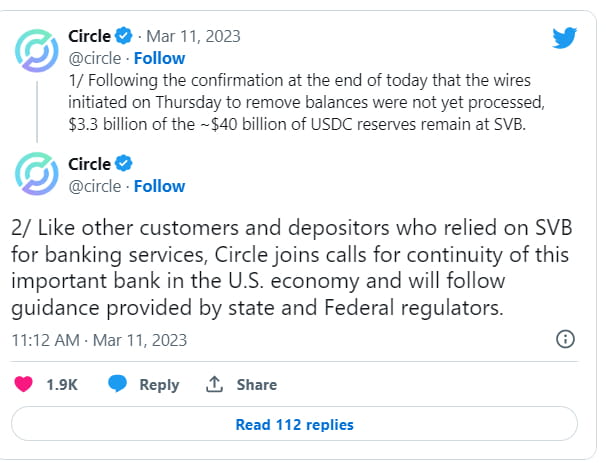
USDC is a fully reserve-backed stablecoin, meaning that each USD coin is backed by actual cash and short-term U.S. Treasuries. Nevertheless, USDC issuer Circle announced on March 10 that USDC had decoupled from the U.S. dollar, with approximately $3.3 billion of its $40 billion USDC reserves stored at the now-defunct Silicon Valley Bank. The 16th largest bank in the United States collapsed on March 10, becoming one of the largest bank failures in U.S. history. Given the collateral effects of USDC, other stablecoins followed suit and decoupled from the U.S. dollar.
USDC depegs as Circle confirms $3.3B trapped at Silicon Valley Bank
MakerDAO — a protocol built on the Ethereum blockchain — issues DAI, an algorithmic stablecoin designed to maintain a precise 1:1 ratio with the U.S. dollar. However, DAI also fell off its peg due to the collapse of Silicon Valley Bank, largely due to the contagion effect of USDC’s depeg. More than 50% of the reserves backing DAI are held in USDC.
Tether issues USDT, and each USDT token is equivalent to the corresponding fiat currency at a 1:1 ratio and is fully backed by Tether's reserves. However, USDT also experienced a decoupling in 2018, raising concerns about the overall stability mechanism of stablecoins.
The Importance of Stablecoin Pegs
The importance of a stablecoin peg is that it provides a stable and predictable value relative to an underlying asset or basket of assets — typically a fiat currency such as the U.S. dollar. Due to their stability and predictability, stablecoins are ideal alternatives for a variety of use cases, including cryptocurrency trading, payments, and remittances.
With stablecoin pegs, traders can enter and exit positions without being affected by price fluctuations in cryptocurrencies like BTC or ETH. This is important for institutional investors and companies that rely on a reliable store of value and medium of exchange to conduct their business.
Using a stablecoin peg can also make cross-border transactions easier, especially in countries with volatile currencies or limited access to traditional financial services. Stablecoins can provide a more efficient and affordable way to pay and transfer value across borders than more traditional methods such as wire transfers or remittance services.
Stablecoin pegs can also increase financial inclusion, especially for individuals and businesses that do not have access to traditional financial services. Stablecoins can be used to make digital asset payments and transactions without the need for a bank account or credit card, which is critical in developing and emerging markets.
Why do stablecoins decouple?
Stablecoins can decouple due to a combination of micro and macroeconomic factors. Micro factors include changes in market conditions, such as a sudden increase or decrease in stablecoin demand, liquidity issues, and modifications to the underlying collateral. Macro variables involve changes in the overall economic landscape, such as rising inflation or interest rates.
For example, if increased cryptocurrency trading activity leads to a surge in demand, the price of a stablecoin could temporarily exceed its pegged value. However, if insufficient liquidity matches the increased demand, the price of a stablecoin could fall below its pegged value.
On the macroeconomic side, if high inflation occurs, the purchasing power of the underlying assets that support stablecoins may decline, triggering a decoupling event. Similarly, adjustments in interest rates or other macroeconomic measures may affect the demand for stablecoins.
Regulatory changes or legal issues can also cause stablecoins to depeg. For example, if a government bans the use of stablecoins, the demand for stablecoins will decrease, causing their value to fall. Depegging events can also be caused by technical issues such as smart contract vulnerabilities, hacker attacks, and network congestion. For example, a smart contract flaw could cause the value of a stablecoin to be improperly calculated, causing a significant deviation from the exchange rate it is pegged to.
How do stablecoins decouple?
Stablecoin decoupling typically requires several steps, which may vary depending on the specific stablecoin and the circumstances leading up to the decoupling event. Here are some general characteristics of a decoupling event:
Stablecoin value deviates from its peg
As mentioned earlier, many factors such as market turmoil, technical issues, lack of liquidity and regulatory issues can cause stablecoins to depeg. The value of a stablecoin relative to its pegged asset or basket of assets can change dramatically.
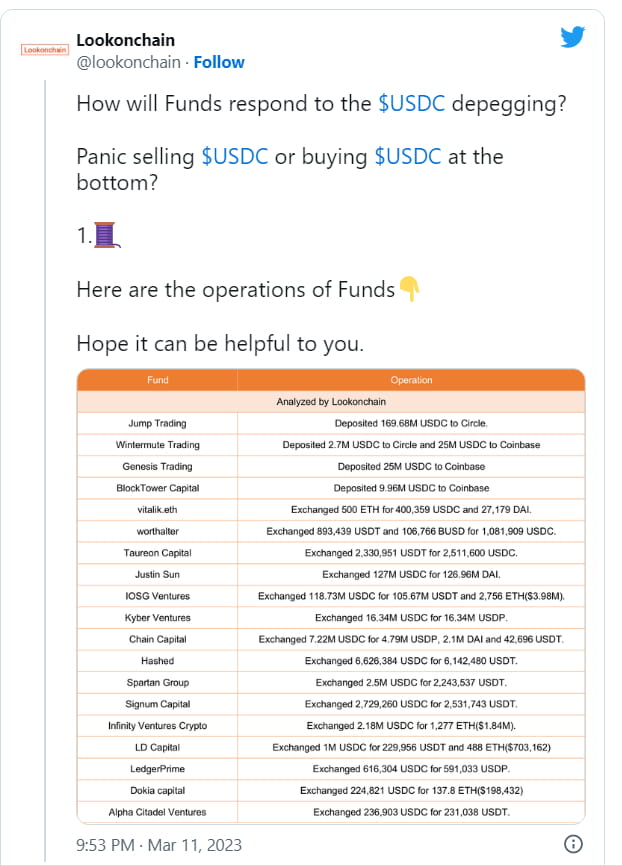
Traders and investors react to decoupling event
Whether they believe the stablecoin’s value will eventually return to its peg or continue to deviate from it, traders and investors may buy or sell the stablecoin when it deviates significantly from its peg.
Arbitrage opportunities emerge
If the value of a stablecoin deviates from its peg, arbitrage opportunities may arise. For example, if the value of a stablecoin is higher than its peg, traders may sell the stablecoin and buy the underlying asset to make a profit.
Stablecoin issuers take action
If the value of a stablecoin continues to deviate from its peg, the stablecoin issuer may take action to correct the problem. This may require changes to the stablecoin’s supply, collateralization ratio, and other actions to enhance trust in the stablecoin.
The value of stablecoins tends to be stable
If traders and investors adjust their positions and the stablecoin issuer responds to the depegging event, the value of the stablecoin may stabilize. If the stablecoin issuer succeeds in winning back public trust, the value of the stablecoin may return to the peg.
Risks and challenges associated with decoupling stablecoins
Decoupling from stablecoins presents several risks and difficulties for investors, traders, and the larger cryptocurrency ecosystem:
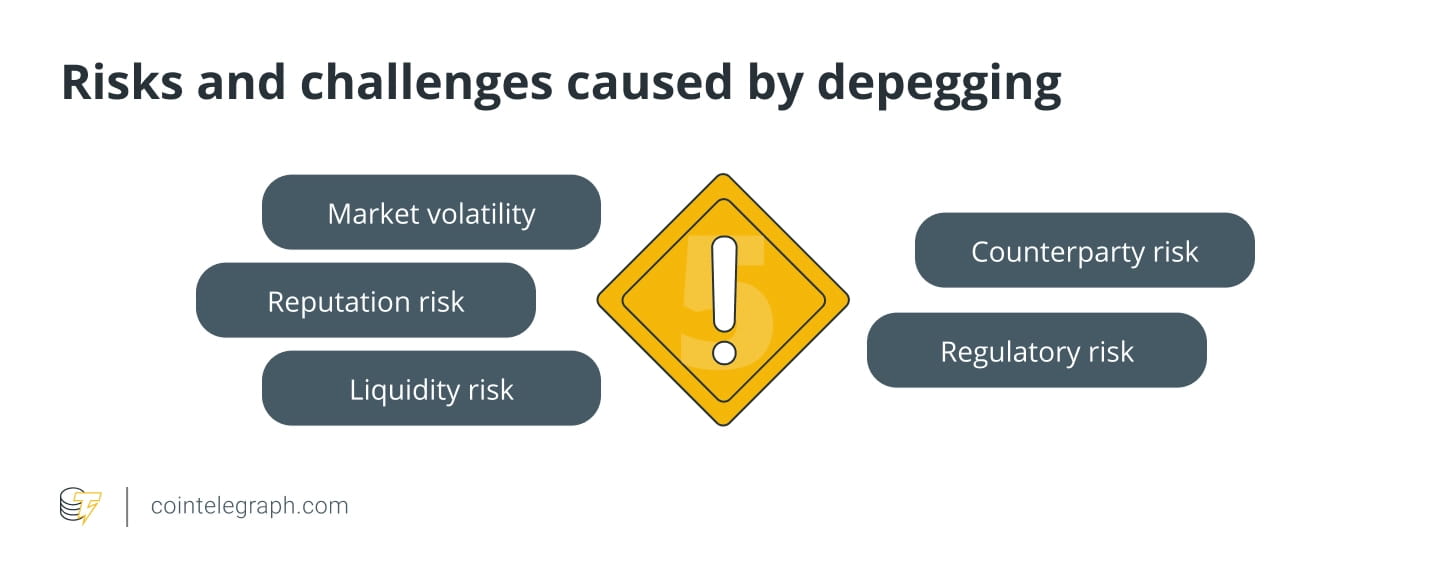
Market volatility: When stablecoins decouple, the market may experience significant volatility as traders and investors change their holdings in response to the decoupling event. This can lead to market uncertainty and increase the potential for losses.
Reputational risk: Decoupling from stablecoins poses reputational risk to issuers and the larger cryptocurrency ecosystem. This could make it more difficult for stablecoin issuers to attract new users and investors and reduce the total market value.
Liquidity risk: If a stablecoin depegs due to traders and investors selling a large amount of stablecoins, liquidity issues may arise. As a result, the value of the stablecoin may decline, making it challenging for traders and investors to liquidate their holdings.
Counterparty risk: Due to a decoupling event, traders and investors may face the risk of default by the stablecoin issuer or other parties involved in the stablecoin operation.
Regulatory risks: Depegging stablecoins also raises regulatory issues. Governments and authorities may impose restrictions on stablecoins if they believe the assets threaten the stability of the broader financial system.
Related: Circle’s USDC instability creates domino effect on DAI, USDD stablecoins
Given the risks outlined above, investors and traders alike should keep a close eye on the performance of stablecoins in their portfolios. Research stablecoin issuers and their collateral, and keep an eye out for any signs of decoupling or other issues that could affect the value of stablecoins. They may also consider diversifying their holdings by using a variety of stablecoins or other assets. This can reduce the chances of suffering losses in the event of a stablecoin decoupling.