

The cryptocurrency market fluctuates in waves — rising, falling, and recovering according to patterns that many investors are still struggling to explain. Unlike traditional markets, where cycles are driven by broad macroeconomic events, cryptocurrency cycles are profoundly influenced by innovation, speculation, regulation, and sentiment. This continuous volatility can make the market chaotic. But if you know how to observe, there will be a hidden pattern in the major fluctuations.
Understanding the cryptocurrency cycle is crucial for anyone involved in the field, whether you are a long-term holder, a day trader, or building a Web3 ecosystem. Recognizing where you are in the cycle can help manage risk, time your participation, and avoid emotional decisions driven by hype or fear.
This article analyzes what a cryptocurrency cycle is, how it unfolds through different phases, how long it typically lasts, and why closely monitoring it can give you an advantage in this volatile space.
What is a cryptocurrency cycle?
The cryptocurrency cycle refers to the repeating pattern of market behavior observed in the cryptocurrency space, often going through rapid bull phases, corrections, prolonged downtrends, and ultimately recovery. While the exact timing of these cycles varies, the core structure remains consistent, similar to economic or stock market cycles.
Investor sentiment is at the core of the cryptocurrency cycle. Optimism and greed dominate bull markets, while fear and capitulation govern bear markets. Technological advancements, token momentum, halving events, and macroeconomic conditions all contribute to pressures or barriers at various points.
Unlike traditional markets that rely on quarterly earnings data or GDP, cryptocurrency markets react quickly to developments. Just one protocol upgrade or ETF approval can spark a bull run, as can a hack or regulation that may lead to a sharp decline. This makes the cycle more volatile and driven by market sentiment compared to traditional finance.
While not all assets fluctuate at the same rate, most follow a macro pattern: enthusiasm increases, prices rise, corrections follow, and finally, innovation leads to a new cycle. Recognizing these patterns does not mean accurately predicting peaks or troughs, but it helps adjust expectations and strategies.
Four phases of the cryptocurrency market cycle
Most cryptocurrency cycles can be divided into four distinct phases, each with its own mood, momentum, and opportunities:
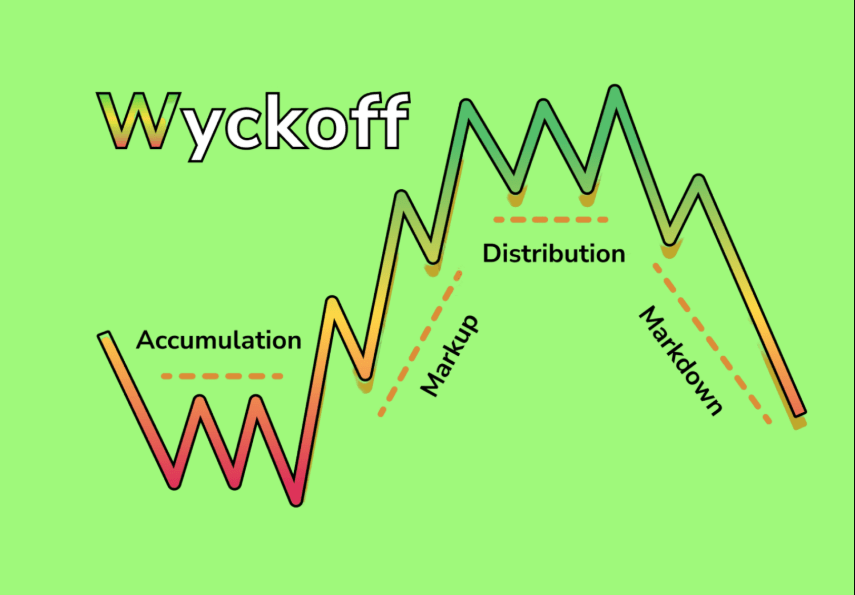
1. Accumulation phase
This phase begins after a prolonged bear market, when prices have bottomed out and sentiment remains low. Most have exited the market, and media headlines are still quiet. Smart money - long-term believers, investment funds, and investors - begin to quietly accumulate quality assets.
Prices remain stable or rise slightly
Low volatility
Retail interest rates are at a minimum
Fundamentals begin to improve quietly
This is the preparation phase. Projects are built, upgraded, and repositioned quietly. For savvy investors, this is often the most strategically opportune entry point.
2. Expansion phase / Marking
Momentum starts to build as confidence returns. The market witnesses higher highs and lower lows. More participants return, and stories like Layer 2 scaling, AI tokens, or resting are attracting attention.
Increased volume
Demand from institutions and retail rises
Media attention begins to return
Token launches and funding rounds increase
This is when altcoins often outperform Bitcoin. Growth occurs broadly, and sentiment ranges from cautious optimism to extreme excitement.
3. Distribution phase
Eventually, the excitement comes crashing in. Prices skyrocket. "Cryptocurrency is the future" floods the headlines. Valuations often detach from fundamentals. Everyone wants in—from retail, celebrities, to governments.
Parabolic price action
Meme coins and low-cap tokens rise in price
New retail capital reaches a peak
Projects launching without clear utility
This is the phase where smart money begins to sell or shift to stable assets. The peak of the cycle is forming, although most will not see it until looking back.
4. Capitulation/Decline phase
When the hype can no longer sustain valuations, a collapse or continuous decline will begin. Negative news exacerbates losses. Projects disappear. Sentiment flips.
Sudden or prolonged corrections
Panic sell-offs
Exit scams and failed projects
Investors leave or go silent
This is when losses are locked in and confidence is shattered. However, it also sets the stage for the next accumulation.
Each of these phases influences the next, creating the rhythmic movement we call the cryptocurrency cycle.
How long does a cryptocurrency cycle last?
Although there is no fixed timeline, most complete cryptocurrency cycles typically last about 3 to 4 years, heavily influenced by Bitcoin halving events - an event that occurs every four years and halves the Bitcoin mining reward. Historically, these halving events often trigger the start of a bull market about 6–12 months later.
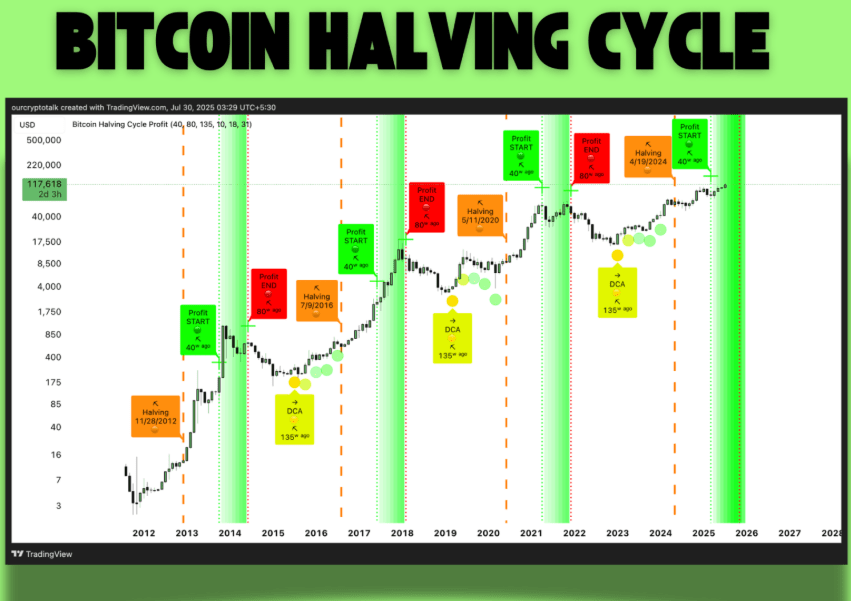
A typical cryptocurrency cycle may unfold like this:
Year 1: Bear market and accumulation
Prices drop, builders stay, speculators leave.Year 2: Early recovery and Silent Growth
Projects improve, layer 1 stabilizes, and signs of initial adoption appear again.Year 3: Bull market
strong Altcoins and NFTs surge, retail profits and FOMO peak.Year 4: Collapse and Reset
Over-leveraged positions will be liquidated and weak tokens will collapse.
However, the current cycle is not only influenced by the halving. Macroeconomic conditions, such as interest rate changes, inflation, or geopolitical events, also play an increasingly important role. Additionally, the growing participation of institutions may extend or shorten the cycle compared to previous years.
It is essential to understand that different assets can peak and bottom at different times. Bitcoin often leads, followed by Ethereum, and then altcoins. Understanding this interwoven volatility in the broader cycle can help define clearer positioning in each phase.
Key factors driving a new cycle
Cryptocurrency cycles do not begin randomly—they are sparked by clear catalysts. While the market often seems chaotic, the start of a new cycle usually depends on several macro and industry-specific events.
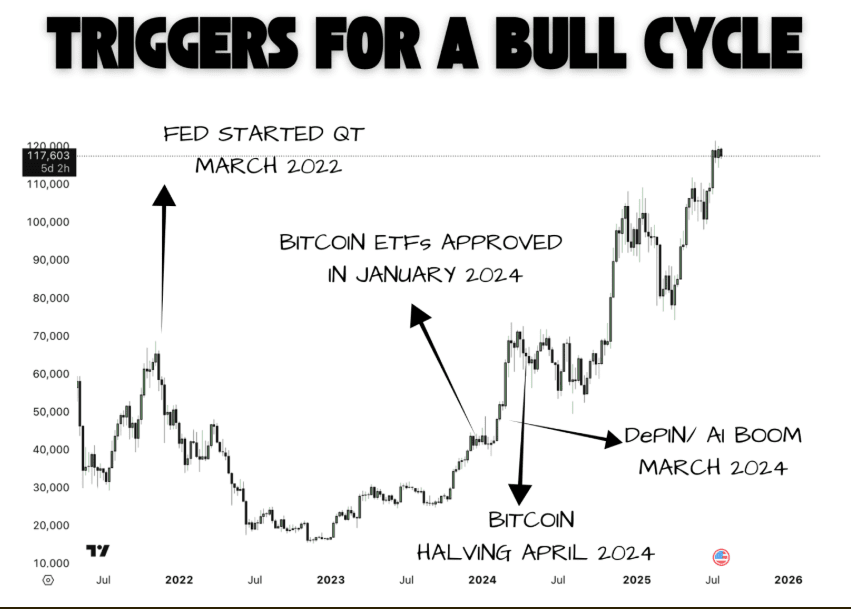
1. Bitcoin Halving Event
Historically, the strongest bull runs in cryptocurrency markets often begin 6–12 months after a Bitcoin Halving. These events reduce the supply of new BTC entering circulation, making it scarcer. Lower supply and sustained or increased demand often act as a launchpad.
2. Monetary policy and liquidity conditions:
Global macroeconomic policies can kickstart a new cycle. When central banks lower interest rates or pump liquidity into the market, investors will seek higher-yielding, lower-risk assets. Cryptocurrency becomes attractive under such conditions.
3. Breakthroughs and Technology Upgrades
Major upgrades such as Ethereum's transition to Proof-of-Stake and the rise of Layer 2 create new stories and excitement in the market. These moments attract both developers and investors, helping the market shift from stagnation to growth.
4. Institutional acceptance or regulatory clarity
When major companies or governments show openness to cryptocurrency - through ETF approvals, clear regulations, or custody solutions - confidence will return. That confidence often becomes the momentum for a strong bull run.
5. User growth and real-world use cases
Sometimes, the market reverses simply due to an increased rate of user acceptance. The DeFi summer, the NFT boom, or new use cases like decentralized AI or DePIN can change sentiment and capital flow.
Although no single event can reverse the market overnight, often a combination of the above factors can create a spark. Recognizing these early will give investors a significant advantage.
How long does a cryptocurrency cycle last?
Cryptocurrency cycles are shorter and more volatile than traditional market cycles. However, they still follow a certain rhythm - booming due to liquidity and innovation, followed by recessions due to speculation and leverage.
Typical length: 3–4 years.
The average cryptocurrency cycle lasts about 3 to 4 years. This cycle includes one year of accumulation, one to two years of bull market, a few months of distribution, and one year of decline. The Bitcoin halving every four years aligns well with this rhythm.
For example:
Cycle 2013: Peak in December 2013, correction lasting until 2014–2015
Cycle 2017: Peak in January 2018, bottoming out at the end of 2018, upward trend starting in 2020
Cycle 2021: Peak in November 2021, bear market lasting until 2022–2023
Cycle 2025: Halving occurs in April 2024, the market traditionally peaks in Q4 2025
Why does it feel shorter than it actually is?
High volatility and the 24/7 nature of cryptocurrency result in price compression. Weeks can feel as long as years, and parabolic uptrends can last only a few months. This leads to extreme emotional reactions that can distort long-term plans.
Exceptions and macro shocks:
Cycles are not guaranteed to last for a certain period. "Black swan" events like the COVID-19 crisis or regulatory tightening can shorten or lengthen phases. Similarly, global liquidity events can overshadow natural flows.
Timing is crucial, but context is also important. Understanding both will help you avoid getting stuck at the wrong end of the cycle.
Investor sentiment in different stages
Cryptocurrency cycles are driven by emotions as much as data. Fear, greed, skepticism, and hope are the silent drivers behind every bull run and sell-off. Recognizing how sentiment fluctuates is crucial to navigating the volatility.
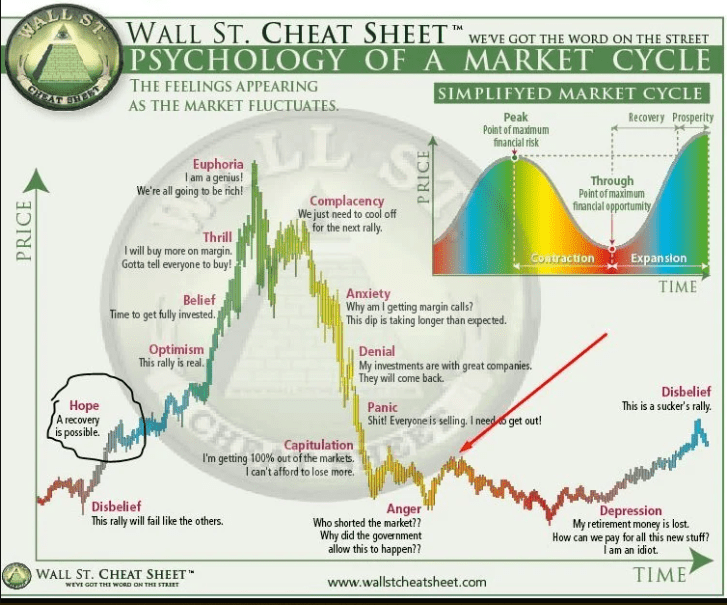
1. Accumulation phase – Skepticism & Apathy
. In this phase, most investors have withdrawn. The media reports negatively, prices are stagnant, and there is no hype. Smart money quietly accumulates. This is when persuasion becomes difficult—but also rewarding.
General view: "Perhaps it's dead."
2. Bull phase – From optimism to euphoria
As prices recover, initial optimistic sentiment returns. Stories like AI, DeFi, or NFTs ignite momentum. At the peak of euphoria, people chase rising prices, ignoring fundamentals and feeling invincible.
General sentiment: "This time is different."
3. Distribution Phase – Complacency & Denial.
Smart money pulls back while retail investors continue to buy. Prices oscillate sideways or hit lower peaks. Investors tell themselves this is a "healthy correction". But inside, the momentum is fading.
General view: "It's just consolidating before the next leg."
4. Downtrend phase – Fear & Capitulation
When the sell-off begins, panic will dominate. Leverage diminishes, media turns pessimistic, and most portfolios lose value. This is when many completely withdraw from the market — just before accumulation quietly begins again.
General view: "I will never touch cryptocurrency again."
By observing the sentiment of communities, search trends, and levels of interaction on social media, we can assess our position in the emotional cycle, even when prices are unclear.
How to know which stage you are in
No one can predict when a cycle will turn. But by tracking a combination of indicators, you can identify which phase you are in and adjust your strategy accordingly.
1. Consider price structure
Accumulation: Long sideways range, low volume
Uptrend: Higher highs, higher lows, increasing volume
Distribution: Range oscillation after a strong upward move
Downtrend: Lower highs, strong corrections
The sample chart often provides the first clues.
2. Social sentiment analysis
Is cryptocurrency trending on X or YouTube?
Are influencers overly optimistic or silent?
Are new wallet prices rising or stable?
During the accumulation phase, the sentiment is quite subdued. In the distribution phase, the sentiment is strong and overly confident. Tools like LunarCrush or Santiment can provide real-time insights here.
3. Monitor on-chain activity
Are whales buying or selling?
Is stablecoin flow increasing?
Is user activity increasing?
On-chain behavior often changes before price moves. When smart money moves, it is noteworthy to be cautious.
4. Comparison with historical cycles
Each cycle has similar emotional and price rhythms. Comparing our current position with past market structures (like the 2017 or 2020 cycle) can provide directional clues—even if the timing isn’t perfect.
5. Macroeconomic conditions and news flow
Cryptocurrency cycles do not operate in isolation. Interest rate cuts, ETF approvals, technological breakthroughs - these factors can alter the pace of the cycle or trigger a completely new one.
Identifying the phase is not a matter of accuracy but probability. The goal is not to pinpoint the exact peak or trough, but to position based on more grounded patterns rather than emotional guessing.
Cryptocurrency cycles compared to traditional market cycles
Although cryptocurrency and traditional markets both move in cycles, their speed, volatility, and structure are significantly different. Understanding these differences helps investors set more realistic expectations.
1. Speed and volatility:
Cryptocurrency cycles occur faster. Traditional market cycles can last 7–10 years, but a complete cryptocurrency cycle — from bear to bull — usually lasts only 3–4 years. Cryptocurrency price volatility is also more extreme, with Bitcoin or altcoins often witnessing declines of over 80% and increases by tenfold.
2. Fundamentals versus Sentiment
Traditional markets rely more on fundamental factors like earnings, interest rates, or GDP. Cryptocurrency is heavily influenced by sentiment, with news, social media, and developments (like AI, DePIN, or NFTs) affecting prices much more than cash flow or revenue models.
3. Regulatory impacts:
Regulation in traditional finance provides a certain level of stability to the market. In the cryptocurrency space, the regulatory landscape is still evolving. Announcements from the SEC, ETF approvals, or sudden crackdowns often become key catalysts, impacting cycles.
4. Liquidity and participants:
Retail dominates the cryptocurrency market, while institutions still dominate traditional markets. This retail-centric nature means the cryptocurrency cycle can quickly become overheated — especially during phases driven by hype.
Despite similarities, cryptocurrency cycles are reflexive and more intense. Being prepared for rapid changes is essential.
How to position oneself in each phase
Adjusting your investment strategy to align with each phase of the cryptocurrency cycle can significantly improve outcomes and minimize emotionally driven decision-making.
1. Accumulation phase
This is the season for silent investors. Market sentiment is low, prices are stable, and most investors have left.
Strategy: Invest using dollar-cost averaging (DCA) into highly reliable assets. Focus on research, build a watchlist, and do not expect quick profits.
2. Uptrend (Bull market)
Momentum returns and retail capital flows in. The stories drive the momentum
speculative price increases. Strategy: Capture strong trends but manage risk. Take profits at each stage and avoid investing in late-stage altcoins.
3. Distribution phase:
The market shows excitement, but momentum weakens. Whale activity increases, and news becomes overly optimistic.
Strategy: Gradually scale in. Shift to stablecoins or defensive positions. Observe divergences between price and sentiment.
4. Downtrend (Bear market)
Prices decline steadily, and pessimistic sentiment dominates. Trading volumes drop, and many projects go bankrupt.
Strategy: Avoid over-trading. Reassess your portfolio. Focus on learning, security, and accumulating as the market calms down.
A dynamic strategy tied to the phase you are experiencing will always outperform static investing.
Conclusion: Follow the cryptocurrency cycle with discipline
The cryptocurrency market will continue to cycle — that's the nature of emerging, high-growth assets. The issue is not about predicting peaks or troughs but about capturing the rhythm of each stage.
Discipline, pattern recognition, and emotional control are more important than perfect timing. Tools like on-chain analysis, market sentiment tracking tools, and macro indicators can help, but ultimately, your behavior in each phase will determine the outcome.
Think of each cycle as a learning curve. Surviving the downturn phases will prepare you for the next breakout.