


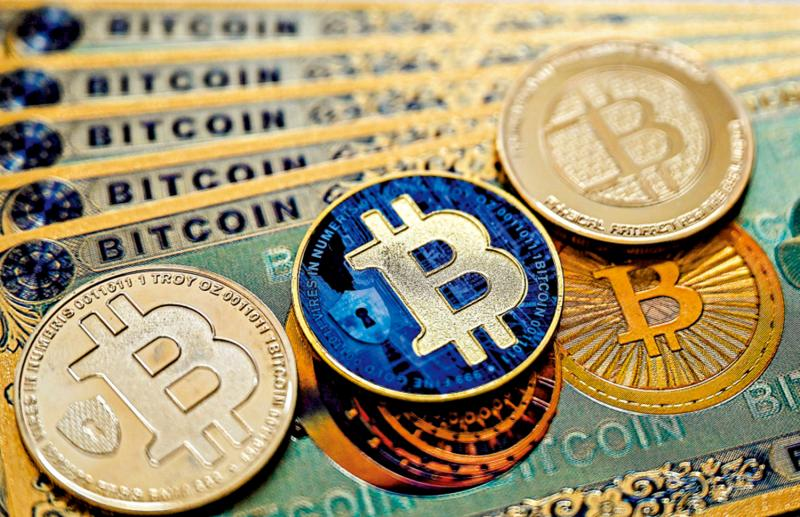
Summary: The world's first Bitcoin was created by the mysterious Satoshi Nakamoto on January 3, 2009, through mining the genesis block, earning a reward of 50 BTC from the system. This Bitcoin cannot be spent, remains permanently at the founding address, and the block embeds a headline from The Times, symbolizing a critique of the traditional financial system and marking the beginning of the cryptocurrency era.
Cryptocurrency aggregation group, gathering strategies from many well-known bloggers to help you win a step ahead!
Many people may only be interested in the price of Bitcoin (BTC), but tracing back, how was the world's first Bitcoin produced? The production of the world's first Bitcoin was a meticulously designed technical process, and it was also an event full of mystery. When it comes to Bitcoin, you may have heard of terms like 'mining', 'blockchain', 'hash function', 'elliptic curve cryptography', 'Merkle tree', and 'asymmetric encryption algorithm', which all sound complicated, but very few people know that all of this started on an ordinary weekend in 2009.
In simple terms, the world's first bitcoin was generated by its founder 'Satoshi Nakamoto' through 'mining'; it is part of the Bitcoin Genesis Block and cannot be spent.
The story begins with a mysterious figure: Satoshi Nakamoto. No one knows his true identity; he may be a person or a team, but it was he who wrote the underlying code for Bitcoin, building this brand new 'currency' system. In 2008, the world had not yet emerged from the shadow of the financial crisis, and news of banks needing bailouts and currency devaluation was everywhere. Satoshi Nakamoto published a paper online proposing a bold idea: could a 'currency that no one controls' be created? It does not rely on banks, nor is it controlled by the government; everyone can transfer money directly to each other, achieving true 'peer-to-peer payment settlement'. This idea is the prototype of Bitcoin.
On January 3, 2009, the third day of the New Year holiday, Satoshi Nakamoto did something that changed the world — he typed a string of code on his small computer server located in Helsinki, Finland, and 'mined' the first 'block' of Bitcoin, which later became known as the 'Genesis Block', meaning 'the ancestor of all blocks'.
In this Genesis Block, the secret of the first bitcoin is hidden. According to the rules written by Satoshi Nakamoto himself, for each new block mined, the Bitcoin system rewards the miner with a certain number of bitcoins, with the rule being '50 bitcoins per block'. Therefore, when the Genesis Block was successfully generated, 50 bitcoins were automatically born, which are the earliest bitcoins in the world, directly entering Satoshi Nakamoto's address.
Interestingly, Satoshi Nakamoto also left a sentence in the Genesis Block — 'The Times 03/Jan/2009 Chancellor on brink of second bailout for banks', which translates to 'On January 3, 2009, the British Chancellor was on the brink of a second bailout for banks'. This sentence is not casually written; it was exactly the headline of the day’s (The Times). He seemed to leave a 'timestamp', telling future generations: Bitcoin was born in an era that needed 'decentralized currency', and its emergence was an attempt at a different possibility.
1. Technical Aspect: Mining of the Genesis Block
Genesis Block (Block#0): On January 3, 2009, Satoshi Nakamoto created the first block of the Bitcoin network on a small server in Helsinki, Finland, referred to as the 'Genesis Block'. This block is the starting point of the Bitcoin blockchain, with all subsequent blocks directly or indirectly connected to it.
'Mined' rather than 'Manufactured': Bitcoin is not 'manufactured' like printing money, but 'mined' through proof of work. Satoshi Nakamoto ran the original Bitcoin client software, becoming the first 'miner', solving the first complex cryptographic problem with the computer's computing power, thus earning a system reward of 50 bitcoins.
Special Coinbase Transaction: The Genesis Block includes a special transaction known as the 'Coinbase transaction'. This transaction has no sender, only a receiver, and it created 50 BTC out of nothing, sending them to Satoshi Nakamoto's address. This marks the birth of the first (batch of) bitcoin in the world.
2. An Unspendable Reward
There is a very crucial detail: the 50 bitcoins in the Genesis Block cannot be spent.
This is due to a special handling in the code. Typically, a Coinbase transaction in a block requires confirmation by 100 blocks before it can be spent. However, the Genesis Block is the first block, and its transaction format differs slightly from subsequent blocks, causing later Bitcoin network clients to be unable to recognize and verify this transaction.
Thus, these 50 BTC remain forever in that address (address: 1A1zP1eP5QGefi2DMPTfTL5SLmv7DivfNa), anyone can see them, but no one can move them. This is like an eternal monument, marking the birth of the Bitcoin network.
3. Symbolic Meaning Behind It: The Times Front Page
Satoshi Nakamoto left a permanent message in the Coinbase transaction of the Genesis Block, encoded as: '*The Times 03/Jan/2009 Chancellor on brink of second bailout for banks*'.
This message is the headline from the (The Times) front page on that day in the UK.
Its significance is profound:
Timestamp proof: it irrefutably proves that this block was created on or after January 3, 2009, and not before that date. This is a clever timestamp.
The original intention of Bitcoin's birth: it clearly reveals Satoshi Nakamoto's philosophical and political motivation for creating Bitcoin — distrust of the traditional centralized financial system. When banks needed government bailouts to survive, Satoshi Nakamoto introduced a decentralized, peer-to-peer electronic cash system that does not rely on any financial institutions. This can be seen as a silent protest against the traditional financial system and a revolutionary alternative.

Summary
Features
Description
Time of Generation
January 3, 2009
Method of Generation
Reward for mining the Genesis Block (Block#0) by 'Satoshi Nakamoto'
Reward quantity 50 BTC special status cannot be spent, permanently stored in the cultural significance of the Genesis Block
The headline from the (The Times) front page included in the block emphasizes Bitcoin's mission as an alternative to the traditional financial system.
Some may ask, was it hard to mine those 50 bitcoins back then? It was completely different from now. Today, mining Bitcoin requires specialized 'mining machines', as the price of Bitcoin has reached 110,000 USD each, greatly increasing the cost of computation. But in 2009, Satoshi Nakamoto only used a regular computer to accomplish this. At that time, no one else was participating in Bitcoin 'mining', and he was the only one operating in the entire network, so there was no need to compete with others, making it very easy to obtain the first reward. What’s more special is that these 50 bitcoins have never been spent to this day. They quietly lie in Satoshi Nakamoto's address, like a symbol: they represent the starting point of Bitcoin and embody Satoshi Nakamoto's original vision for this decentralized system.
Since then, more and more people have started to join Bitcoin 'mining', with blocks being generated one after another, and the Bitcoin network gradually expanding. To this day, when digital currency is mentioned, the first thing that comes to mind is still Bitcoin, and all of this began in that winter of 2009 when Satoshi Nakamoto mined the first bitcoin.
Sometimes it’s fascinating to think: an invisible, intangible 'digital coin' began from one person's computer and gradually influenced the entire world's financial landscape. The time and sentence hidden in the Genesis Block have also become the most special 'birth certificate' of the cryptocurrency era. Thus, the creation of the world's first bitcoin is not just a technical event, but a culturally and historically significant event, marking the beginning of the blockchain and cryptocurrency era.
