


Altcoin Season, often abbreviated as Altseason, is a period in the cryptocurrency market when altcoins outperform Bitcoin. This is one of the most exciting phases of the cryptocurrency market, marked by explosive growth, new stories, and the enthusiastic interest of retail investors. During this time, investor attention shifts away from Bitcoin and focuses on smaller market cap tokens, bringing higher risks—and higher potential rewards.
The term "altcoin" refers to any cryptocurrency that is not Bitcoin. This includes Ethereum, Solana, Chainlink, meme coins, RWA tokens, AI coins, and many others. In a typical Altcoin Season, many of these tokens soar 100%, even 1000% or more, sometimes within just a few weeks.
The Altcoin Season is also a time of mass experimentation, where new narratives and technologies gain attention. In previous cycles, we have witnessed the rise of DeFi, NFTs, Layer 2, Layer 1, etc. These themes often take center stage during the Altcoin Season, helping investors discover pioneers before mainstream trends begin.
But before we get too excited about "going all in", here's a sad truth: the Altcoin Season doesn't last forever. It often follows a predictable path, with capital flowing from Bitcoin to Ethereum, then to large-cap altcoins, and finally to mid-cap and low-cap tokens. As retail investor FOMO peaks and fundamentals no longer justify price volatility, a correction usually occurs.
So, why is understanding the Altcoin Season important? Because timing is everything in cryptocurrency. Knowing when the Altcoin Season is approaching and which coins are likely to benefit can help you maximize profits and avoid unnecessary risks.
Origins and History of Altcoin Seasons
To better understand the concept of Altcoin Season, let's look back at previous cycles. History does not repeat itself, but it often rhymes, especially in the cryptocurrency space.
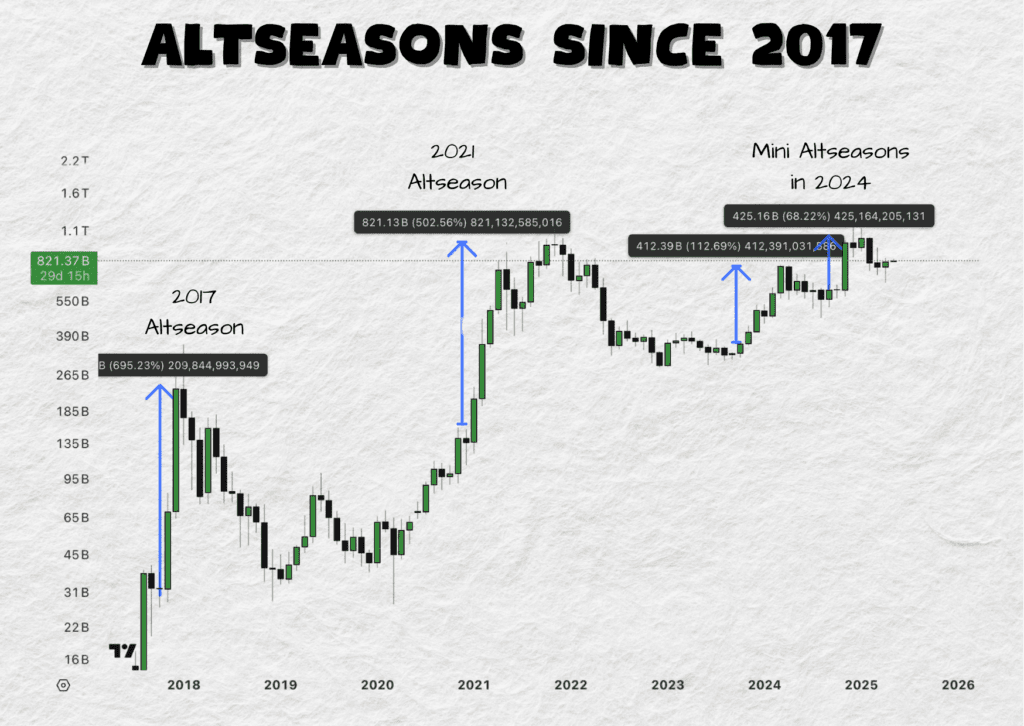
The 2017 Altseason Recap
The first widely recognized Altcoin Season occurred in late 2017, just before Bitcoin hit its all-time high of $20,000. During this period, hundreds of altcoins surged in price, led by Ethereum, Ripple (XRP), and Litecoin. Projects like IOTA, Cardano, and NEO also recorded significant growth.
Back then, the narrative was simple: "Bitcoin is old technology, altcoins are the future." This belief drove a speculative boom in initial coin offerings (ICOs), many of which were backed by Ethereum's smart contract capabilities. It was a "wild west" era—high returns for some, but a disaster for those who didn't exit in time.
By early 2018, the bubble burst. Bitcoin crashed, and altcoins depreciated even more severely. Most lost over 90% of their value, and many coins never recovered.
The 2021 Altseason Recap
The next big Altcoin Season occurs from early to mid-2021. This time, the market is more mature. Ethereum leads again, but this time with participation from a range of top competitors like Solana, Avalanche, and Fantom.
Models like DeFi, NFTs, and the metaverse are major drivers. Tokens like AAVE, UNI, SOL, SAND, and MANA have made historic strides. Meme coins also had their moment, with Dogecoin and Shiba Inu becoming household names during the peak of the retail frenzy.
The 2021 Altcoin Season was different from 2017 in one crucial way: the rise of native cryptocurrency platforms like Uniswap, Binance Smart Chain, and OpenSea. These platforms provided users with direct access to altcoins like never before.
However, the outcome remains similar. When Bitcoin and Ethereum reach new highs, altcoins quickly peak as well. When the market reverses, liquidity dries up, and most altcoins enter a prolonged downtrend.
Small Alt Seasons in Between
Not all Altseasons occur across the entire market. Sometimes, we see smaller Altseasons focused on specific narratives. AI tokens, real-world assets (RWA), DePIN, AI Agents, Layer 2, or even memecoins. These smaller waves can yield incredible profits, even in a broader sideways market. These waves occurred in Q1 2024 and Q4 2024 after Donald Trump's re-election. Trump's pro-crypto stance fueled growth in Q4 2024, while the growth around March 2024 was based on the approval of Bitcoin and Ethereum ETFs.
What Triggers the Altcoin Season?
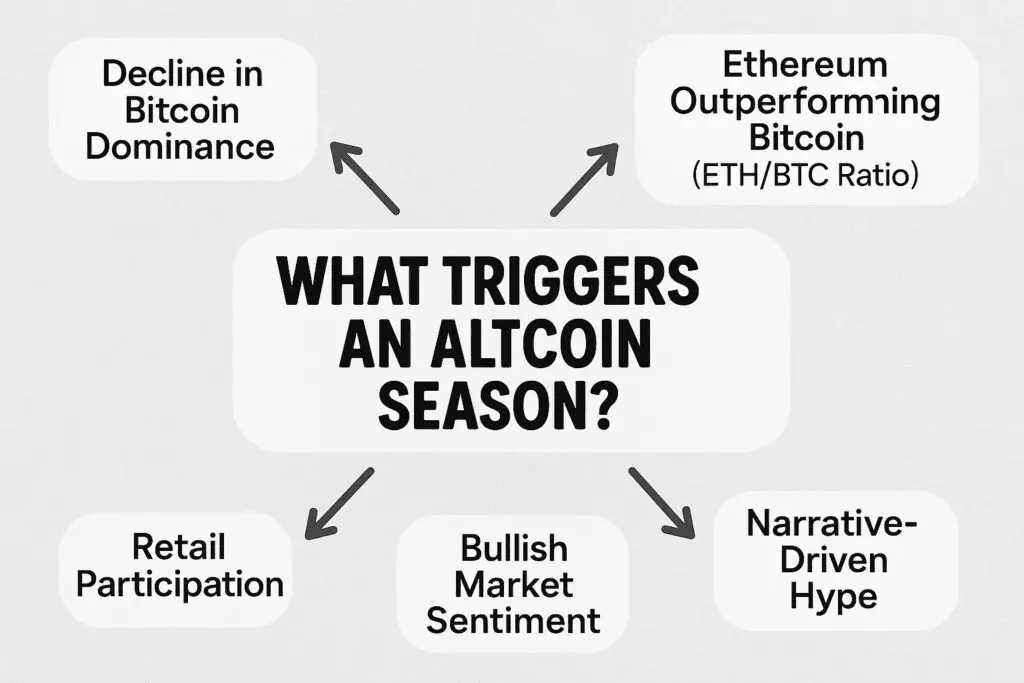
The Altcoin Season does not happen randomly. They are often the result of changes in liquidity, investor sentiment, and market structure. Let's analyze the key factors signaling an upcoming Altcoin Season.
1. The Decline in Bitcoin's Dominance
The most widely used metric to predict Altcoin Season is Bitcoin Dominance - the percentage of cryptocurrency market capitalization held by Bitcoin. When this dominance decreases, it usually indicates that capital is flowing into altcoins.
For example, in early 2021, Bitcoin Dominance fell from over 70% to about 40%, creating a capital influx into Ethereum and other altcoins. Viewing this chart is one of the simplest ways to assess whether the Altcoin Season is near.
📊 Tip: A drop below 50% in Bitcoin Dominance often occurs before significant price increases of Altcoins.
2. Ethereum Surpassing Bitcoin (ETH/BTC ratio)
Ethereum often leads the Altcoin Season. When the ETH/BTC ratio increases, it signals that investors prefer altcoins over Bitcoin. The strong performance of ETH usually boosts confidence in the altcoin market, opening up opportunities for low-cap tokens to rise in price.
This ratio acts as a bridge between Bitcoin and the broader altcoin market. As ETH strengthens, capital will flow into more speculative assets.
3. Hype Based on Narrative
Cryptocurrency thrives on narratives. Whether it’s DeFi in 2020, NFTs in 2021, or AI tokens in 2023, a compelling story can attract billions in capital. When a new trend captures attention, the initial altcoins in that narrative often experience explosive value increases.
Retail traders, influencers, and the cryptocurrency community on Twitter play a crucial role in the rapid spread of these narratives. Timing can yield huge profits.
4. Bullish Market Sentiment
The altcoin season usually requires a bullish context. This does not mean Bitcoin has to reach an all-time high—but it needs to be in an upward trend. When market confidence is high, investors are willing to take more risks, and altcoins benefit.
Conversely, when the market is bearish, capital flows will shift to safe-haven channels—or withdraw entirely. Altcoins are the most heavily impacted during downturns due to low liquidity and high volatility.
5. Participate in Retail
Perhaps the most critical trigger factor is the FOMO (Fear of Missing Out) sentiment of retail investors. Once the public starts hearing about huge profits and "life-changing sums" from altcoins, a wave of investment will flood in.
You will see:
Trending tokens on social media.
Increased search volume on Google.
Active trading on exchanges like Binance and Coinbase.
Retail investor participation often marks the middle to late stages of the Altcoin Season, when exponential growth occurs but risks are also high.
Key Metrics to Monitor During Altcoin Season
Tracking accurate metrics can help you navigate the Altcoin Season with more confidence. These tools do not guarantee profits, but they provide signals to help you make more informed decisions.
1. Bitcoin Dominance (BTC.D)
As mentioned earlier, Bitcoin Dominance is very important. When the Bitcoin Dominance chart decreases, it is a clear sign that money is flowing into altcoins. You can track this on platforms like TradingView or CoinMarketCap.
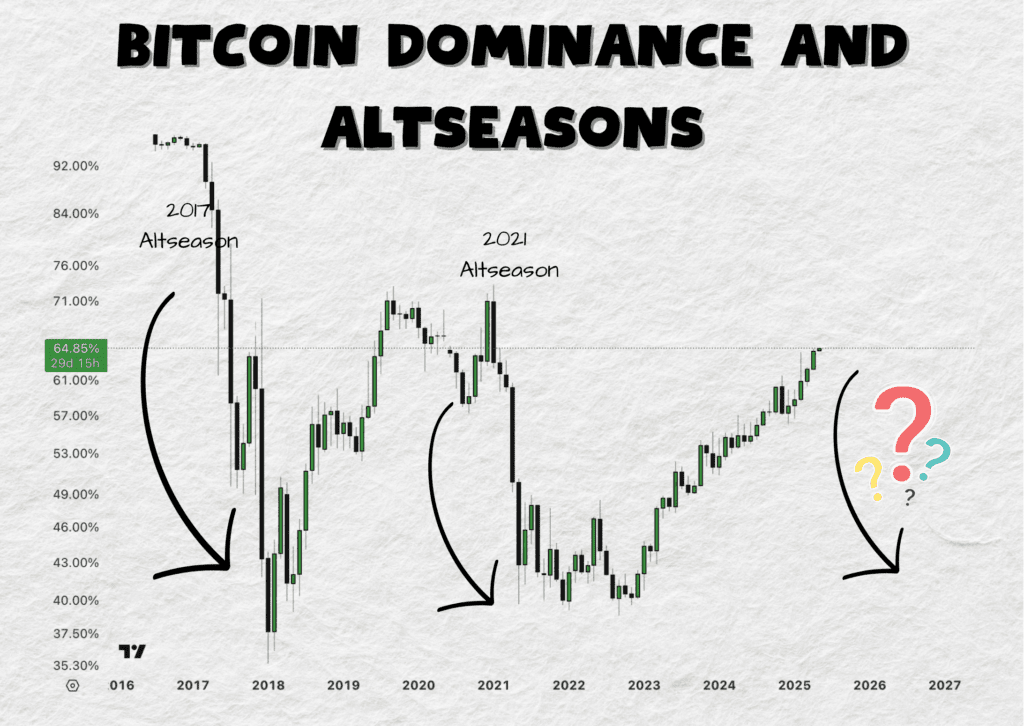
BTC.D price increases → Investors prefer Bitcoin.
BTC.D price decreases → Capital is flowing into altcoins.
During Altcoin Season, BTC dominance often drops sharply as altcoins perform better.
2. The ETH/BTC Ratio
This is another leading indicator. When the ETH/BTC pair rises, Ethereum is outperforming Bitcoin. Historically, this often occurs before broader altcoin price increases.
If ETH/BTC reaches higher levels, pay attention to smaller altcoins that will follow.
If ETH/BTC breaks important resistance levels, it is often a green light signal for Altseason.
3. Total Market Capitalization – Excluding Bitcoin (TOTAL2)
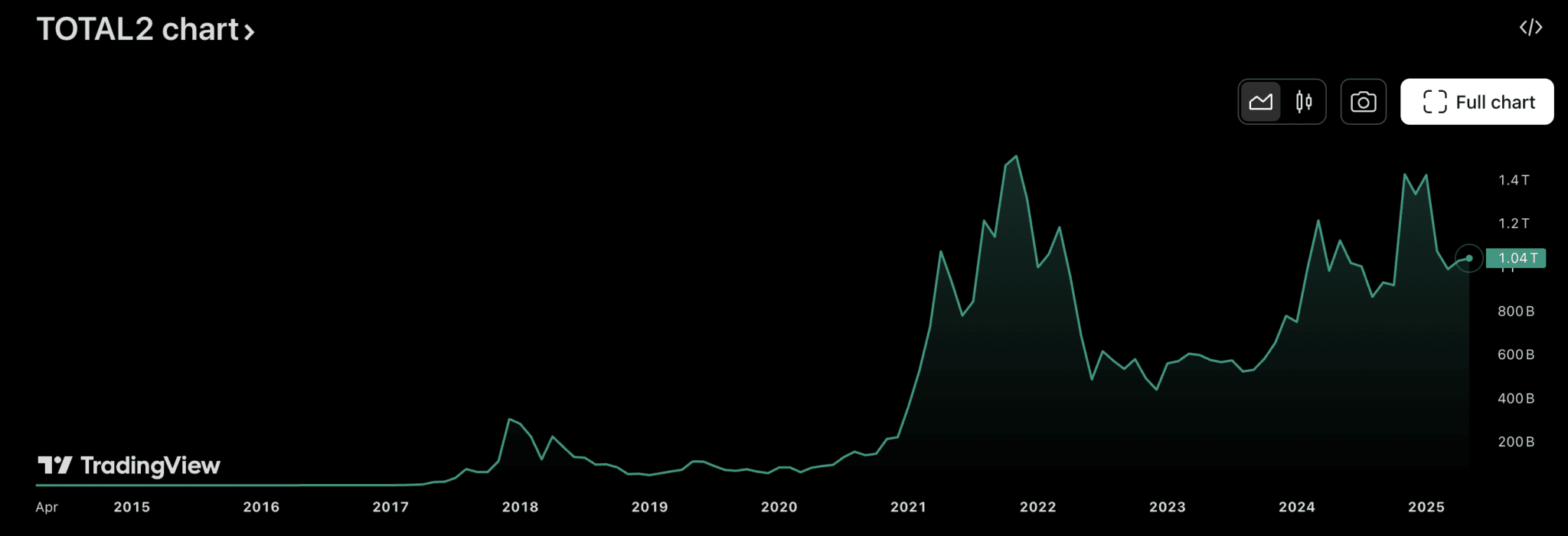
The TOTAL2 chart shows the market capitalization of all cryptocurrencies excluding Bitcoin. This is a powerful chart to monitor the overall strength of altcoins.
A breakout on this chart indicates that altcoins, in general, are regaining momentum. Watch for spikes in volume and reversals of key resistance levels as signals.
4. Social Sentiment Index
Altseason is driven by hype. Tools such as:
LunarCrush
Santiment
Crypto Twitter Trends
…can help you track narratives, mentions, and community engagement that are on the rise.
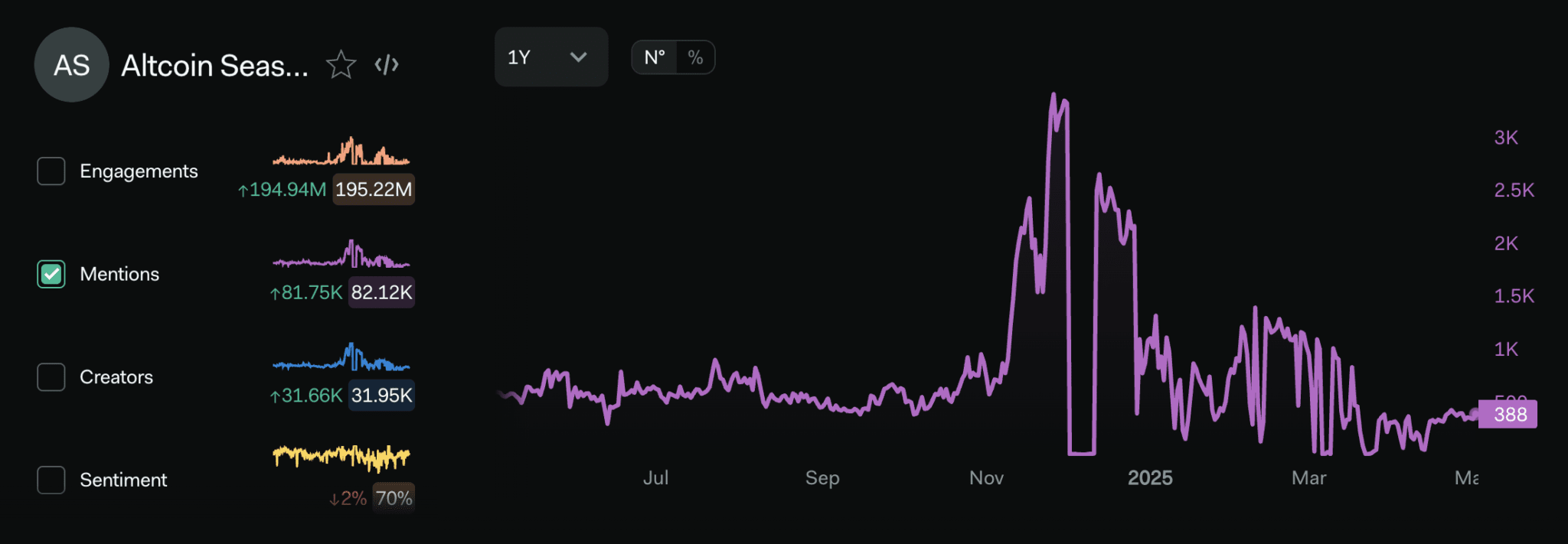
Increased trading volume on social media, especially for mid-cap and low-cap coins, is often a leading indicator of price volatility.
5. Inflows and Exchange Liquidity
Be aware:
Stablecoin inflows to exchanges are increasing (a sign of buying power).
Altcoin trading volume spikes.
Whales transferring funds from wallets to exchanges (potential sell signal).
These metrics help you assess whether smart money is flowing into or out of the market.
The Role of Ethereum in the Altcoin Season
Ethereum is not just a mere altcoin—it's the backbone of many Altseasons. From the ICO boom in 2017 to NFTs and DeFi in 2021, Ethereum has consistently led the charge.
Ethereum as a market benchmark
Most altcoins are built on the Ethereum platform. Therefore, when ETH rises in price, it will boost liquidity and confidence across the altcoin market. Consider ETH as the "king of altcoins". Its performance often dictates the overall trend of all other altcoins.
The ETH/BTC ratio is crucial here. When ETH starts to outperform Bitcoin:
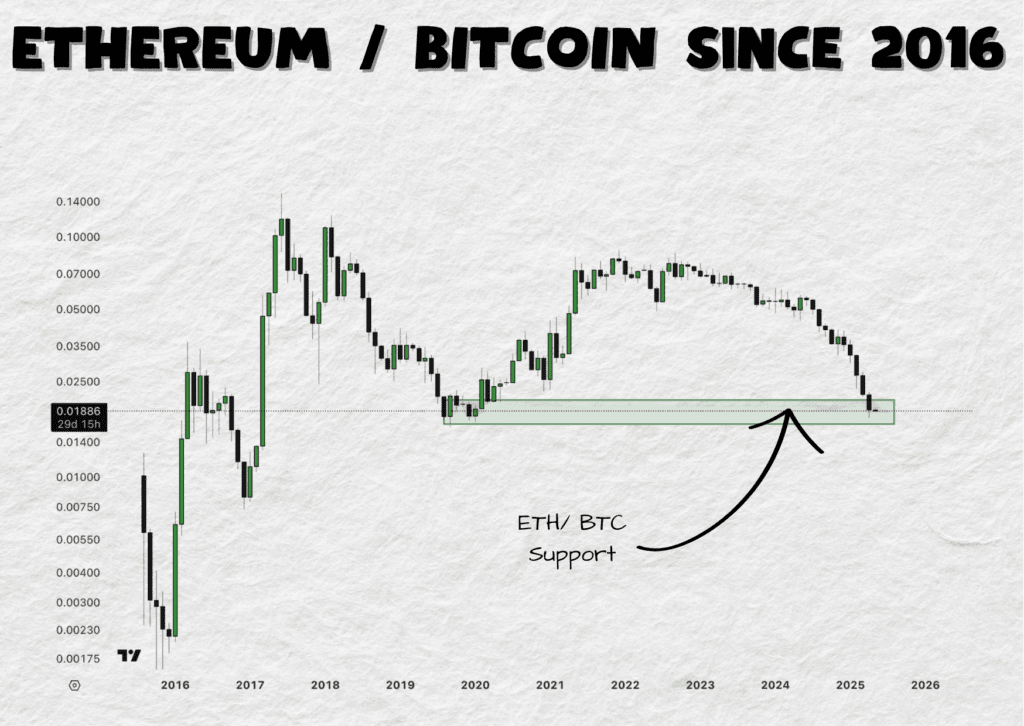
Confidence is rising.
Capital flows down the risk curve.
Altcoin trading volume surges.
Gas fees and network activity
Ethereum gas fees can be both a signal and a limit.
High gas fees = high demand and high usage.
Low fees during price increases = activities on the chain decrease (a warning sign may occur).
In previous Altseason, gas fees skyrocketed, indicating strong user activity on DeFi platforms, NFTs, and meme coin launches. Nowadays, Layer 2 platforms are helping to absorb this activity.
L2 Effect
The rise of Layer 2 solutions such as:
Arbitrum
Optimism
Base
zkSync
…made launching and trading altcoins cheaper and faster. These chains have opened a wave of new mini Altseason, especially for tokens native to these ecosystems.
In summary, Ethereum not only leads but also facilitates the Altseason.
Which altcoins perform best during the Altcoin Season?
Not all altcoins are created equal. Some outperform significantly, while others barely move. Understanding which altcoins are likely to surge during the Altcoin Season can improve your strategy.
1. Large-cap stocks
These are often the first altcoins to move after Bitcoin. They:
Provide more liquidity.
Have strong brand recognition.
Attract both institutional and individual capital.
If you’re risk-averse but still want to invest, these are often the safest altcoin choices during Altseason.
2. Mid-cap stocks with strong narratives
When large-cap companies move, money will shift to mid-cap companies from strong narratives like AI, RWA, DePIN, Agents, and Layer 1s.
The narrative of altcoins during the Altcoin Season
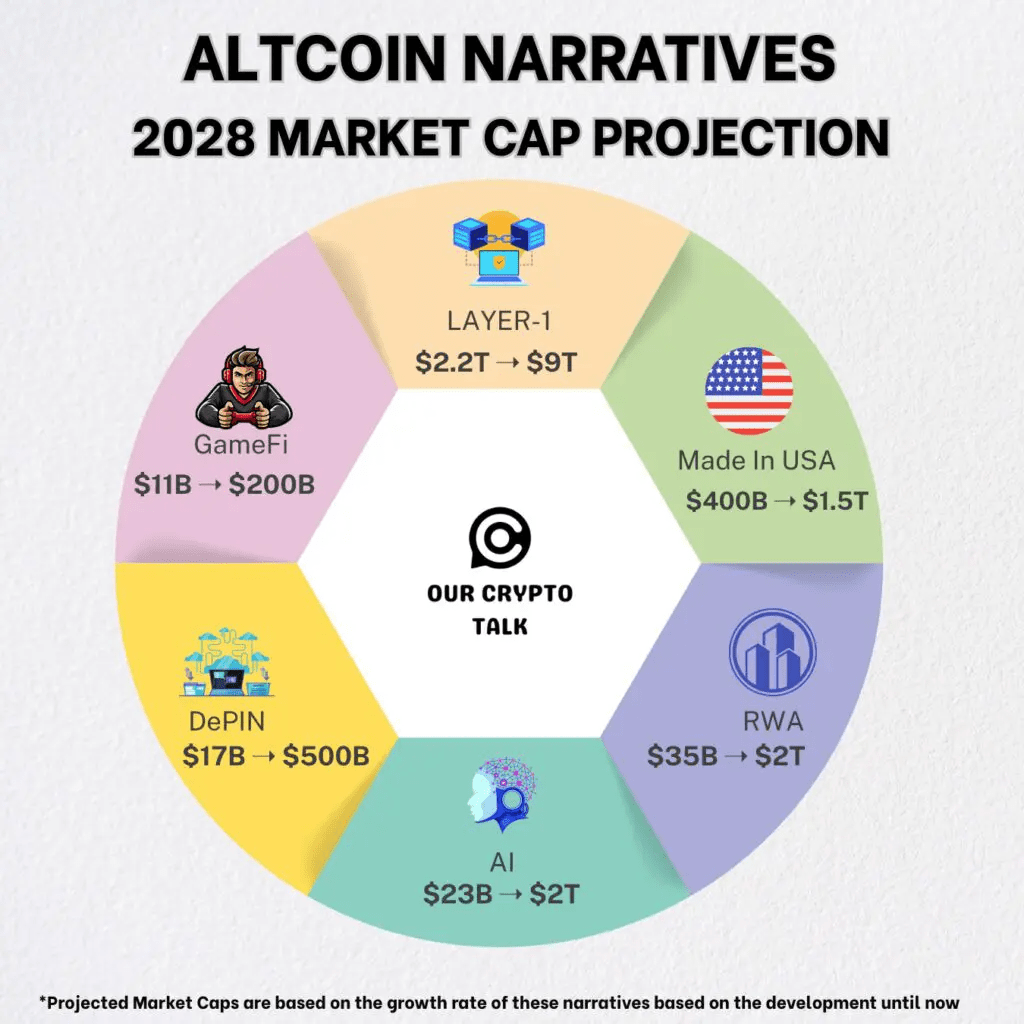
The narrative is key. Projects that align with trending themes often perform better.
🚀 Tip: Mid-cap companies with dynamic teams, strong tokenomics, and real user activity are often the best risk-reward options.
3. Low-Caps and Microcaps
These tokens will become lively in the late stages of Altseason. Profits of 10x–50x are entirely possible, but risks also soar. These tokens are often illiquid and extremely volatile.
Meme trends, tokens with low circulating supply, and new listings dominate here. Exercise caution as smart timing and tight risk management are essential.
4. Meme coins
Whether you believe it or not, meme coins are indeed the fuel for Altseason. They often outperform everything else due to:
Viral marketing
Low market capitalization
Great interest from retailers
DOGE and SHIB are prime examples, but each cycle produces new memes. Remember, they emerge very quickly—and collapse even faster.
5. Ecosystem-specific tokens
The replacement season often prioritizes specific ecosystems. For example:
2021: Avalanche, Solana, and BSC witnessed growth across the ecosystem.
2025: Base, Sui, Bittensor are gaining more attention
Monitoring the growth of TVL, new launches, and developer activity in each ecosystem can help you uncover the next breakthrough altcoin.
Timing of the Altcoin Season: Entry and Exit Strategies
Timing the Altseason can be very challenging. You should not enter too early and sit waiting for prices to go sideways. Entering too late can mean buying at the top. It's important to identify signals early and plan ahead.
Entry strategy
Your entries should be based on a combination of technical factors, sentiment, and market structure.
Check the Bitcoin Dominance chart for insights
Monitor ETH/BTC price increases
Observe total cryptocurrency market capitalization excluding Bitcoin rising
These signals often appear before major altcoins start to rise.
Additionally, monitor capital rotation. Bitcoin moves first, followed by Ethereum, then large-cap altcoins, and finally small-cap altcoins. This progression provides many participation opportunities, depending on your risk tolerance.
Dollar-cost averaging (DCA) is a safer method, especially in the early stages. Instead of trying to pick the exact bottom, you should spread your entries over time.
Exit strategy
The Altseason ends quickly. Many traders surf but fail to exit in time.
Set pre-defined profit targets. For example:
2x on large caps
5x on mid-caps
10x on small caps
Use trailing stop-loss orders once your trade is in profit. This order locks in profits while allowing for further price increases.
Don't just rely on price. Consider social media hype, extreme greed in sentiment indicators, and parabolic price volatility. These often mark tops.
If meme coin prices increase 50 times in just a few days and everyone on X is promoting an altcoin, it might be time to reduce risk.
Risks Associated with Altcoin Season
The Altcoin Season can be very exciting, but it is also fraught with risks. Many newcomers join for profits but end up losing. Let’s analyze the common pitfalls.
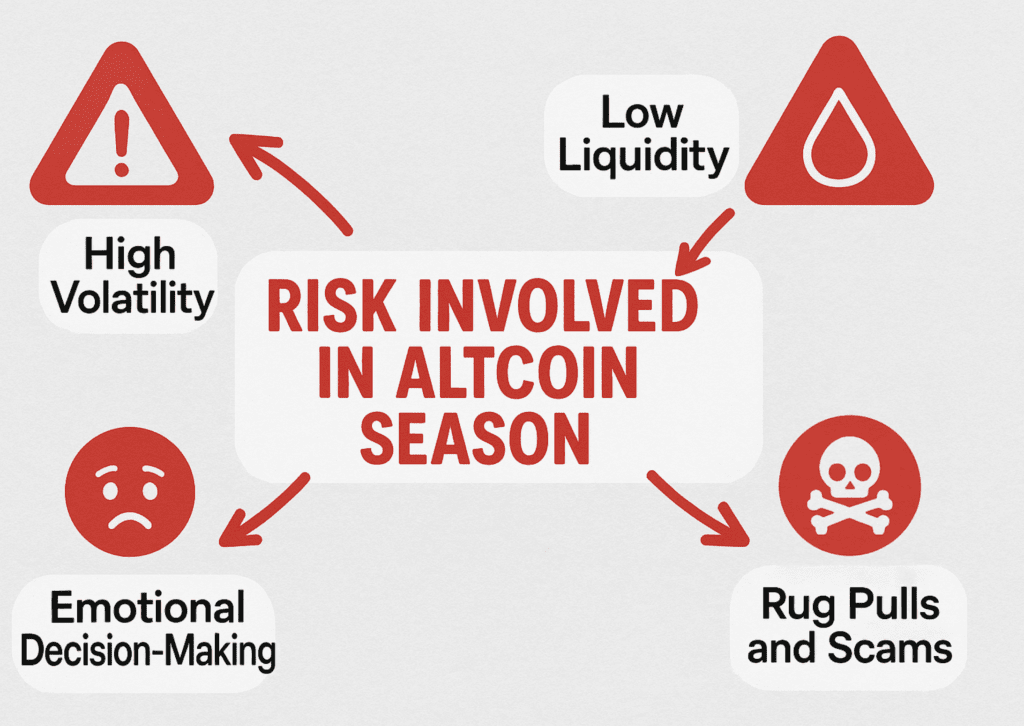
High volatility
Altcoins are much more volatile than Bitcoin. A token can rise 200% in a week and drop 70% in two days. If you are not prepared for such volatility, you will panic sell or overtrade.
Volatility can affect both ways. Always assess the level of risk you can tolerate before entering a trade.
Low liquidity
Some altcoins, especially small-cap coins, have low liquidity. This means that large buy or sell orders can cause significant price volatility. It also means you may not be able to exit your position at your expected price.
Avoid large capital investments in coins with poor order books or low daily trading volumes.
Rug pulls and scams
The Altseason brings a plethora of new tokens, many of which are very low value or even worthless. Scam projects and rug pulls are rampant. Teams may withdraw liquidity, sell tokens to the retail market, or disappear altogether.
Do your own research before investing. Check if the project has:
A clear use case
Transparent tokenomics
Teams and supporters can be verified
Smart contract audits
Even when prices are soaring, don’t overlook warning signs.
Emotion-driven decisions
The pace of the Altseason can lead to emotional trading. The fear of missing out drives people to chase rising prices. Panic causes them to sell at the bottom. Both behaviors lead to losses.
Set rules for yourself and stick to them. Have an entry and exit plan. Track your trades. Maintain an objective attitude.
Final Thoughts: Will There Be Another Altcoin Season?
History shows that the Altcoin Season is not a one-time event. It is a repeating pattern associated with cycles of hype, innovation, and capital rotation. However, each cycle has its unique characteristics, and past performance does not guarantee future results. Many believe that the excitement wave of the 2021 Altcoin Season will not repeat.
With new narratives like tokenizing real-world assets, restaking, DePIN, and zero-knowledge technology, there is no shortage of alternative coins ready to explode in the next wave.
However, several factors will shape the next Altseason:
Trends and Bitcoin dominance
The performance of Ethereum and L2 adoption
Macroeconomic conditions like interest rates and liquidity
Retail participation and regulatory clarity
The next Altcoin Season could come unexpectedly. That's why staying informed, practicing discipline, and preparing in advance will give you an edge.
Use metrics, research market behavior, and follow the narratives. And remember, preserving capital is as important as multiplying it.
Whether you are a seasoned trader or just starting, Altseason is one of the most exciting times in the cryptocurrency space. But only if you are prepared.
Conclusion
The Altcoin Season is one of the most explosive and unpredictable phases of the cryptocurrency cycle. It is when capital flows from Bitcoin to alternative cryptocurrencies, driving rapid growth across the market. However, while the profits can be substantial, so are the risks. Mastering timing, market signals, and capital rotation is essential for effective participation.
From tracking Bitcoin and ETH/BTC dominance to monitoring social sentiment and on-chain metrics, there are many ways to identify the onset of an Altseason. However, discipline is crucial. Without a plan, traders often make emotional decisions, chasing pumps or holding through significant downturns.
New narratives and technologies continue to drive speculation and opportunities. With developments in real-world assets, restaking, and DePIN infrastructure, the upcoming Altcoin Season may be very different from previous ones.
It’s important to approach the market with thorough preparation, not just wishful thinking. Diversify your portfolio, manage risk, and take profits along the way. While not every altcoin will grow, understanding the cycle structure can give you an advantage.
Whether you are in for short-term profits or long-term growth, the Altcoin Season offers opportunities to reshape your portfolio—but only for those ready to act when the time comes.