Today the market is fluctuating so much that I should have live-streamed for everyone, but I went to date instead. After all, I'm not getting any younger, and it's time to solve personal issues.
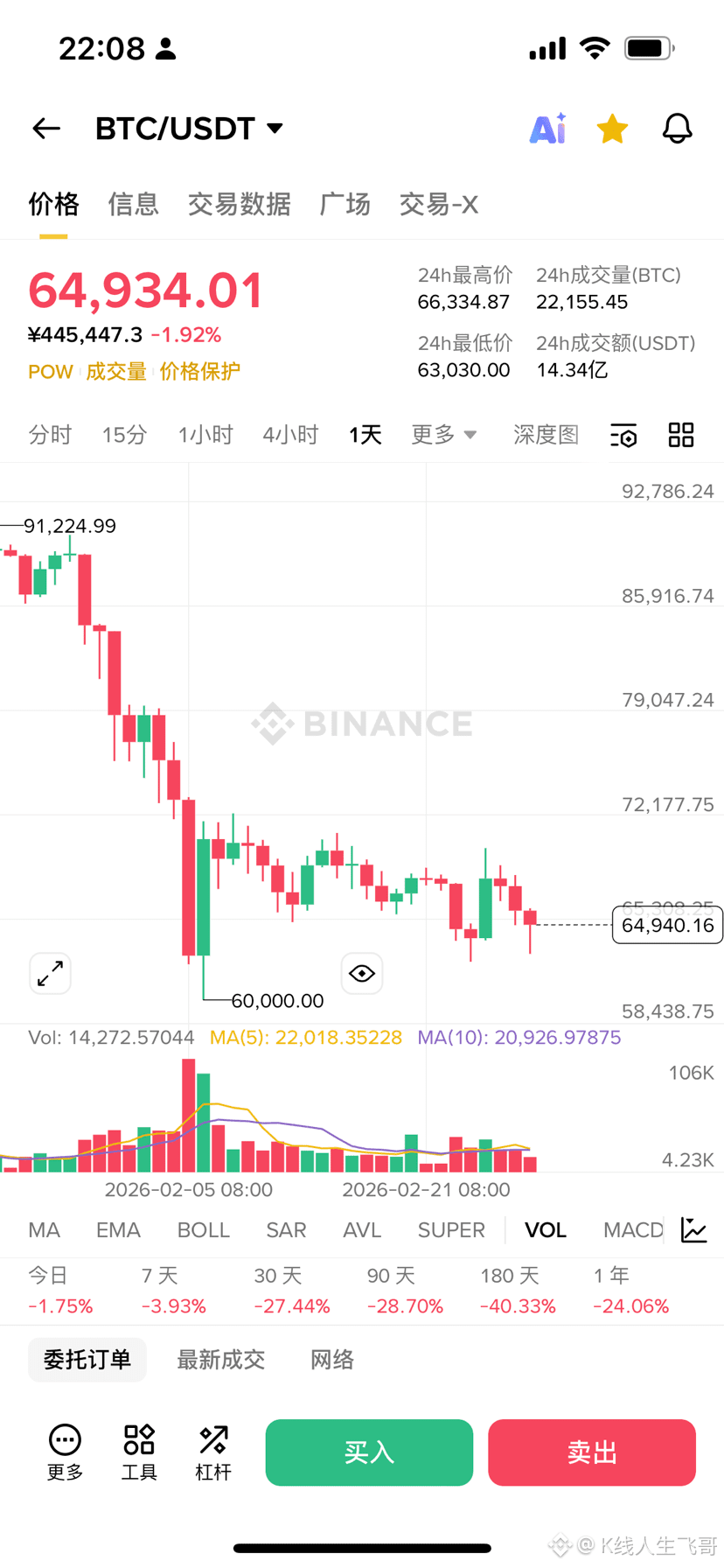
To put it simply, the current market is heavily influenced by news. We're just waiting to see if the US and Israel will start a second round of strikes against Iran. If they do, $BTC might fall below 60000. However, the influence of news cannot cause a trend decline, meaning that a significant trend decline like the previous BTC first wave drop from 126,000 to 80,000, and the second wave drop from 98,000 to 60,000, is unlikely to happen in the short term.
Regarding the 60,000 position, I personally still lean towards it being the bottom in the short term, and it's unlikely to effectively break below it. I have previously emphasized that 60,000 is a phase bottom, followed by entering into a downward consolidation range.
In the short term, the market may be affected by news and might dip to around 59,000 or 58,000, continuously triggering stop-loss orders, and then pull back to 60,000.
The so-called stop-loss hunting refers to targeting the stop-loss lines of many long or short contracts to execute spot trades. This leads to contracts being swept away, forcing stop-loss liquidations.
To put it simply, the current market is heavily influenced by news. We're just waiting to see if the US and Israel will start a second round of strikes against Iran. If they do, $BTC might fall below 60000. However, the influence of news cannot cause a trend decline, meaning that a significant trend decline like the previous BTC first wave drop from 126,000 to 80,000, and the second wave drop from 98,000 to 60,000, is unlikely to happen in the short term.
Regarding the 60,000 position, I personally still lean towards it being the bottom in the short term, and it's unlikely to effectively break below it. I have previously emphasized that 60,000 is a phase bottom, followed by entering into a downward consolidation range.
In the short term, the market may be affected by news and might dip to around 59,000 or 58,000, continuously triggering stop-loss orders, and then pull back to 60,000.
The so-called stop-loss hunting refers to targeting the stop-loss lines of many long or short contracts to execute spot trades. This leads to contracts being swept away, forcing stop-loss liquidations.