

ROBO is more like the infrastructure layer for AI Agents:
From a market perspective, ROBO is currently in an early stage, focusing not on short-term prices but on three things:
1️⃣ Are there real and actionable AI execution scenarios?
2️⃣ Is the token truly participating in the system's value cycle?
3️⃣ Can subsequent ecosystem projects continue to connect?
To be honest, there are so many AI concept tokens in the market lately that they are hard to count. Most just issue a token and claim they are doing AI, but no one can explain how.
Fabric Protocol is not an AI application but a decentralized infrastructure set up for physical robots.
For example, future robots will no longer just be mechanical arms in factories, but will be delivery robots, humanoid robots, and autonomous driving equipment that can run everywhere. These machines need to communicate with each other, need to pay for charging, and need to verify identities.
What ROBO does is this. It gives robots on-chain identities, allowing them to autonomously complete task assignments, settle costs, and even participate in network governance.
ROBO is essentially a project centered around AI + Web3 automation, with the core direction being to involve AI in on-chain execution, strategy scheduling, and data processing. It is not the traditional 'hype concept AI', but rather attempts to turn AI into an executable, collaborative, and composable on-chain role.
There is a concept called PoRW, robot proof of work. In simple terms, it means that robots complete labor in the real world, such as delivering several packages or working for many hours. After this data is verified, they can receive ROBO rewards. This is not just theoretical; it directly links tokens with labor in the physical economy.
There is also a detail that I care about. Fabric collaborates with robot manufacturers like UBTECH and AgiBot, and the OM1 operating system can run on robots from different brands. What does this mean? It means that ROBO is not just making empty promises; there are actually hardware manufacturers involved.
My view is that the next wave of AI narratives will not hype chatbots, but rather physical robots that can work and earn money. ROBO has already positioned itself in advance, and I think it deserves a closer look.
Recently, many friends have been asking about ROBO, so here is a simple outline of its logic in the form of task posts, which does not constitute any investment advice.
The upper layer can support transaction, strategy, and execution-type applications.
The middle layer is responsible for scheduling, permissions, and incentives.
The underlying layer completes resource allocation and ecological circulation through tokens.
This structure determines that its upper limit does not lie in a single application, but in whether the ecosystem can sustain itself.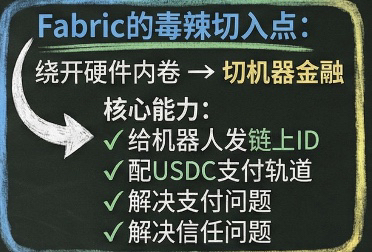
If we place ROBO within the current grand narrative of AI × Web3, it resembles a 'tool-like asset' rather than an emotional meme. The pace of such projects is usually not fast, but once the direction is clear, the elasticity is significant.
The last sentence:
If you don't understand it, don't touch it. If you can understand it but lack patience, also don't touch it.
The market is not lacking opportunities; what is lacking is whether you have chosen the right type that suits you.