


📌 Crypto Trading Strategy for Market Pullbacks: Buy the Dip or Stay Cautious?
📌 Follow our account @ZayedTech for the latest crypto news.
- The crypto market has always been known for its volatility. After periods of significant highs, sudden pullbacks often shake investor confidence and raise the question: should traders buy the dip, or is it safer to wait on the side-lines? This debate is as old as the market itself, but in 2025 it is more relevant than ever, as cryptocurrencies have become integrated into mainstream finance and trading activity is influenced by both retail and institutional players. Understanding how to approach pullbacks with a clear strategy can be the difference between growing your portfolio or falling victim to emotional decisions.
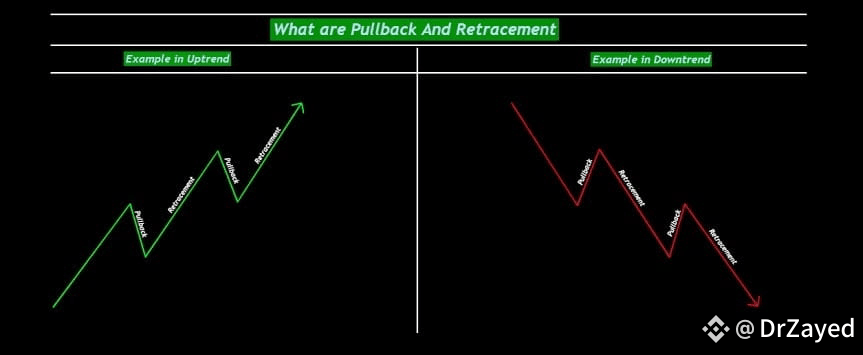
- Pullbacks are a natural part of any financial market, and in crypto, they tend to be sharper and more dramatic. After a strong rally, profit-taking by large holders, sudden changes in macroeconomic data, or unexpected regulatory headlines can trigger sharp declines. While many investors view these moments as buying opportunities, others see them as warning signs that deeper corrections may be on the horizon. To answer the question of whether to buy the dip or stay cautious, it is essential to analyses key market signals, consider proven trading strategies, and prioritize risk management.
- First, let’s explore why pullbacks occur. When prices rise too quickly, they often become overextended. Traders rely on technical indicators like the Relative Strength Index (RSI) or Moving Averages to determine whether an asset is overbought. Once overbought levels are reached, selling pressure increases, causing the market to cool down. In addition, broader economic conditions can influence crypto prices. For example, rising interest rates, inflation concerns, or geopolitical instability can cause capital to flow out of risk assets like crypto into safer investments. Pullbacks can therefore be both technical and macro-driven.
- For many long-term investors, the buy-the-dip strategy has been highly rewarding. Looking back at Bitcoin, Ethereum, and other leading cryptocurrencies, those who accumulated during downturns often saw significant gains when markets recovered. The psychology here is simple: corrections provide a chance to enter the market at a discount. However, it is crucial to distinguish between short-term pullbacks in a bull market and long-term reversals that signal the beginning of a bear market. Not all dips are equal, and blindly buying every decline can be risky.
- So how can traders decide whether a pullback is worth buying? Market signals offer valuable guidance. One key indicator is trading volume. If prices fall on low volume, it may suggest a temporary correction rather than a major trend reversal. On the other hand, a steep decline with high volume could signal stronger selling pressure that may last longer. Another useful tool is support and resistance levels. Traders often wait for the market to test key support zones. If the price bounces back from support with strong buying interest, it may be a good opportunity to buy the dip.
- Sentimental analysis also plays a big role. During euphoric phases, markets often overheat, and pullbacks are healthy corrections that reset valuations. During fear-driven selloffs, however, dips can deepen into prolonged downturns. Monitoring investor sentiment, funding rates in derivatives markets, and social media trends can provide insights into whether caution or aggression is appropriate.
- There are several trading strategies that investors can use during pullbacks. One common method is dollar-cost averaging, where traders gradually accumulate positions over time rather than going all-in during a dip. This reduces the risk of mistiming the market and helps smooth out volatility. Another approach is using limit orders at predetermined support levels. By placing buy orders slightly below current prices, traders can capture opportunities if the market briefly spikes lower before rebounding. Swing trading is another strategy, where traders attempt to capture profits by buying near support and selling near resistance within a pullback range.
- For more advanced traders, technical setups like Fibonacci retracement levels are used to identify likely reversal zones. A typical pullback in an uptrend might retrace 38 percent to 61 percent of the previous rally. These levels often act as zones where buying interest returns. Momentum indicators such as the RSI or MACD can also help confirm whether a dip is losing steam and ready to reverse. Combining multiple signals often increases the probability of making a successful trade.
- Despite the opportunities, it is important to emphasize risk management. No strategy is foolish proof, and crypto markets are notorious for unexpected moves. Traders should never risk more than they can afford to lose. Setting stop-loss orders to protect capital is essential. This ensures that if the market continues to fall, losses are limited. Position sizing is another critical element. Allocating too much capital into one trade can be dangerous, especially during uncertain times. Diversification across different assets can reduce overall risk exposure.

- Patience also plays a role in navigating pullbacks. Many traders rush to buy the first dip, only to see prices fall further. Waiting for confirmation signals, such as a rebound in trading volume or a clear bounce off support, can prevent premature entries. Sometimes the best strategy is to observe and preserve capital until the market shows clear signs of recovery.
- For long-term investors, the decision often comes down to conviction in the asset. If you believe in the fundamentals of Bitcoin, Ethereum, or other projects, then pullbacks can be opportunities to accumulate more at favourable prices. On the other hand, if an asset’s fundamentals are weak or if its price rise was purely speculative, staying cautious may be the wiser option.
- The debate between buying the dip or staying cautious also depends on time horizon. Short-term traders must react quickly to market signals, while long-term holders can withstand more volatility if they have confidence in the asset’s long-term growth. This difference in perspective explains why strategies vary so much across the crypto community.
- Another factor to consider is macroeconomic conditions. In a supportive environment with strong liquidity and investor appetite, pullbacks tend to be shallow and recover quickly. In contrast, during economic uncertainty, dips can evolve into prolonged bear markets. Keeping an eye on global financial news, central bank policies, and risk appetite in traditional markets can provide context for crypto moves.
- In 2025, institutional involvement in crypto added another layer of complexity. Large funds and corporate treasuries now influence market trends. When institutions reduce exposure, sales can accelerate. However, their re-entry during pullbacks can also trigger sharp rebounds. Understanding these flows can give retail traders an edge in anticipating market direction.
- It is also worth highlighting psychological discipline. Fear and greed drive much crypto trading, and emotional reactions during pullbacks often lead to poor decisions. Successful traders build rules and stick to them, whether it means taking small profits, cutting losses, or patiently waiting for setups. Emotional discipline often separates winners from losers in volatile markets.
- Ultimately, the choice between buying the dip and staying cautious does not have a one-size-fits-all answer. It depends on risk tolerance, investment goals, and market conditions. Both strategies can be valid if executed properly. The key is to approach pullbacks with a plan rather than reacting impulsively.
- In conclusion, market pullbacks in crypto are inevitable and can be both opportunities and risks. Buying the dip has historically rewarded patient investors, but caution is equally important when signals suggest deeper corrections. By combining technical analysis, sentiment insights, risk management, and patience, traders can navigate uncertain times more effectively. Whether you choose to buy or wait, the most important thing is to remain disciplined and prepared for multiple scenarios. In a market as dynamic as crypto, flexibility and strategy are the ultimate tools for survival and success.
#BinanceAlphaAlert #PPIShockwave $BTC

