

USDC’s usually stable price fell from $1 to $0.89, while Ethereum gas fees soared hours after the crypto bank’s collapse.

The cryptocurrency crisis reached a crescendo early Saturday as the collapse of Silicon Valley Bank (SVB) brought some of the industry’s core plumbing to a halt.
Stablecoin prices fluctuated wildly and gas fees soared as investors scrambled to move funds amid a cryptocurrency-related bank run hours after regulators shut down SVB, the second crypto bank to fail this week.
Treasury Secretary Janet Yellen later convened top financial regulators to discuss SVB’s collapse. Soon after, crypto markets fell into turmoil, suggesting that the more than year-long bear market had entered a darker phase.
It’s reminiscent of the 2008 global financial crisis, when bad news just kept coming. While in the case of cryptocurrencies, there’s a lack of a central bank like the Federal Reserve that could save the industry, the question remains: How will it end?
Circle Internet Financial’s USDC stablecoin has deviated significantly from its expected price of $1 — a distressing development for a product designed to allow investors to safely park their money. The USDC /USDT pair, which tracks Circle’s token versus the larger token issued by Tether, traded as low as $0.89 on the Kraken exchange at 03:49 UTC on Saturday — well below its all-time low amid market stress following the FTX collapse in November.
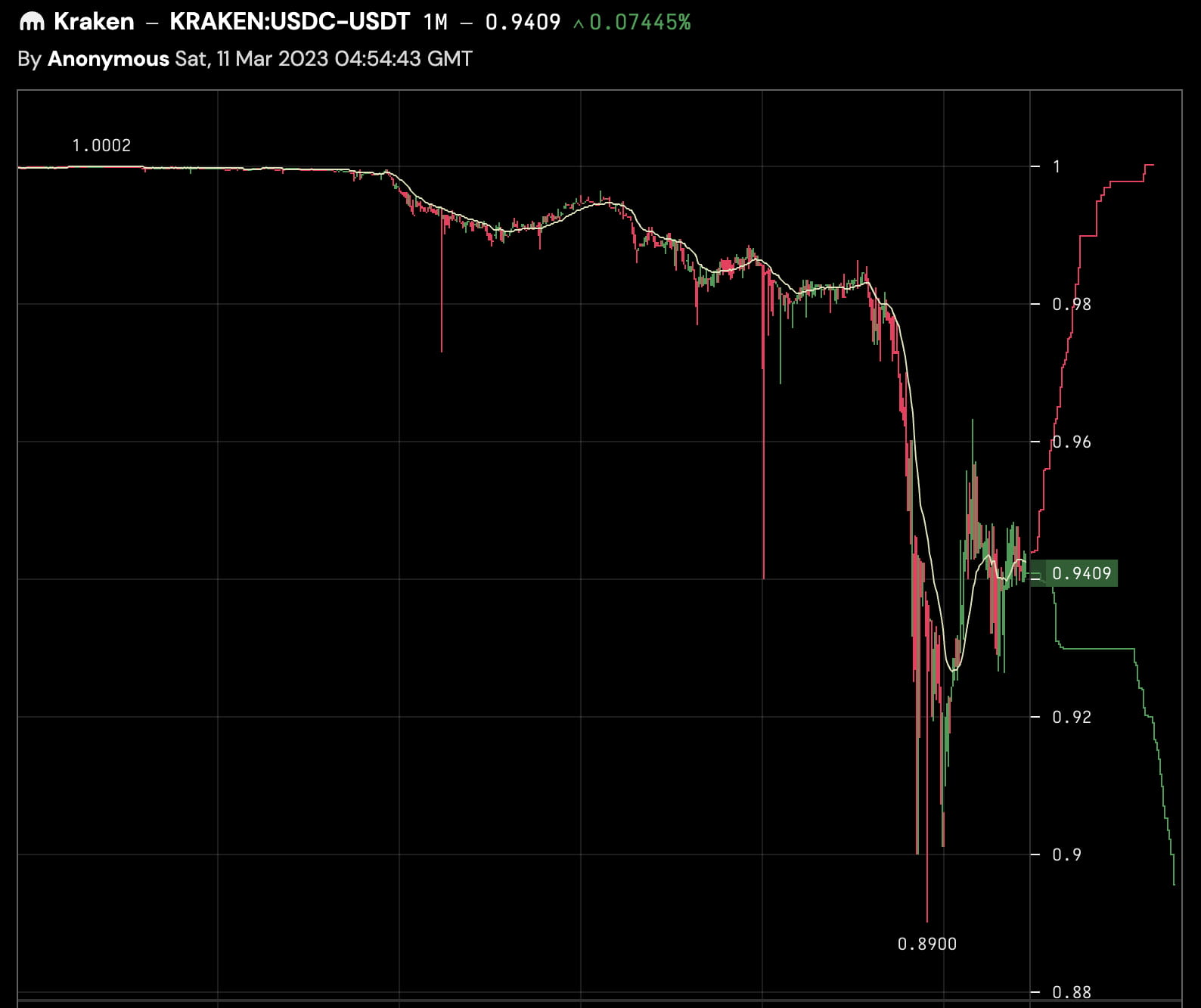
The financial services firm confirmed late Friday that about $3.3 billion of the reserves backing the world’s second-largest stablecoin are tied up in SVB.
Stablecoins derive their value from these reserves; if one is worth more than $43 billion — as USDC was early Friday — there should be about that much cash or cash-like fixed-income instruments stashed somewhere backing it. USDC’s market value has now fallen below $40 billion.
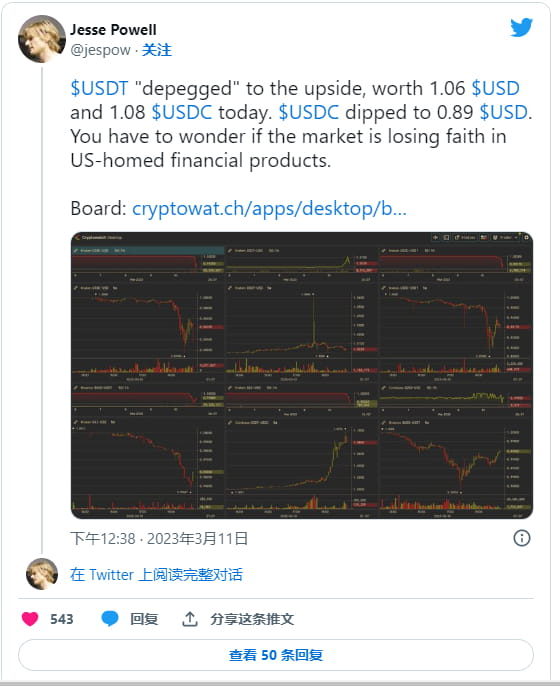
Meanwhile, USDT surged as high as $1.06 per dollar on Kraken, a level it has barely ever touched, as investors appeared to move funds out of USDC.
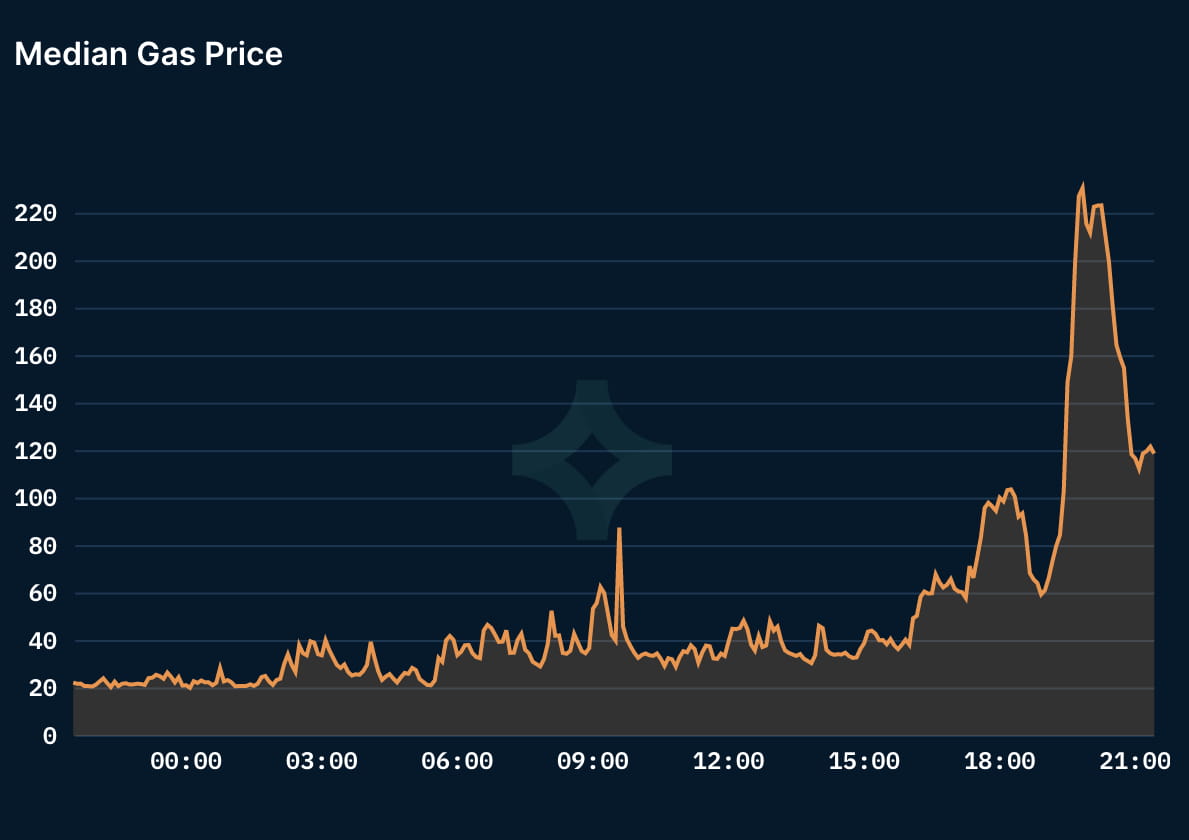
Gas fees, a measure of the cost of completing on-chain transactions, surged. For ethereum, the median gas fee jumped to about 231 gwei, according to Nansen.ai data, compared with a range of about 20 to 40 earlier on Friday.
Cryptocurrency was born in the aftermath of the 2008 crisis — and, for some, in response to it. Satoshi Nakamoto’s Bitcoin paper first emerged in a world where governments had just propped up the financial system by pumping money into it. Cryptocurrency lacks such a centralized authority. If SVB’s clients, including Circle and its USDC stablecoin, are forced to cut their funding, the impact is unclear.
So who, if anyone, would step in?
When Razer CEO Min-Liang Tan tweeted late Friday that Twitter should acquire SVB and turn it into a digital bank, billionaire Elon Musk tweeted back: "I'm open to the idea."
C3 Tip: The views, thoughts and opinions expressed here are the author's own and do not contain investment advice or recommendations. Every investment and transaction involves risk.