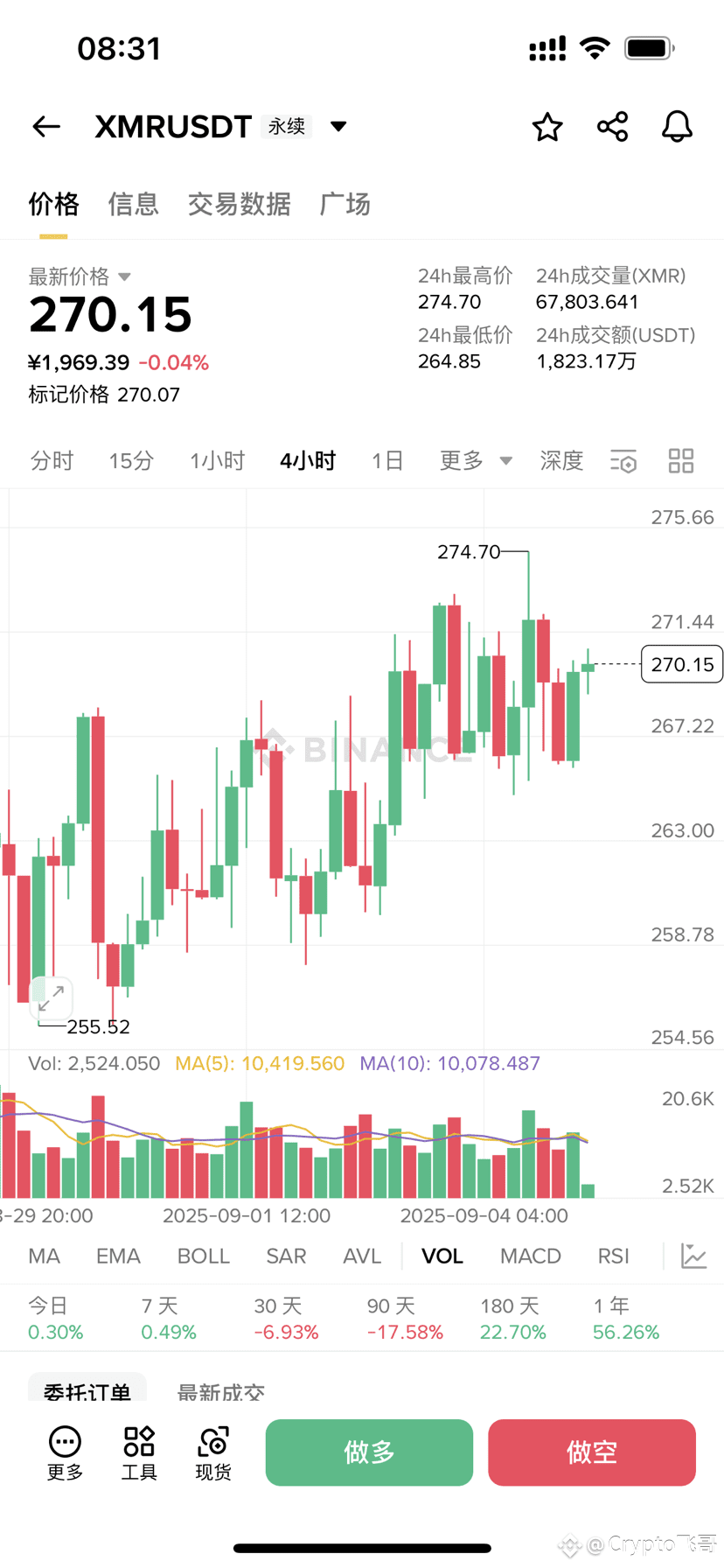

$XMR basically does not follow the market anymore, ever since it was delisted by major exchanges it has been on its own independent trend.
XMR has designed mechanisms like ring signatures, stealth addresses, and confidential transactions into its underlying protocol, not as "add-on features," but as part of its very essence. When you send a transaction with XMR, it is private by default, without needing to find third-party tools. Even if the blockchain is fully public, others cannot see how much you received or who you sent it to. Some may say that Monero has poor liquidity and is not as mainstream as BTC. True, that is a shortcoming. But when it comes to true privacy, mixers are at most a "cover-up," whereas Monero is the one that "solves the problem at its source." Therefore, I have always believed: mixers are a temporary compromise, while Monero is the true privacy currency.