


On most public chains, transaction fees can be quite 'volatile'. When the token price rises, the fees become expensive, and when the network is congested, the fees become even more expensive. Many people have had this experience: wanting to make a transfer, but seeing the Gas fee and being deterred. However, @Vanarchain chose a different approach—a fixed fee mechanism (Fixed Fees). So what exactly is fixed? Does it really not change?
How to understand the transaction fee calculated in 'USD'.
On ordinary public chains, transaction fees are calculated as Gas × token price. When the token price rises, the fees naturally increase.
#vanar 's idea is: first set the transaction fee as a 'USD price', and then convert it into the corresponding amount of tokens based on the current market price of $VANRY .
For example: a typical transfer fee ≈ 0.0005 USD, if VANRY rises in price, the system will automatically reduce the number of tokens needed to be paid; if VANRY drops, then a slightly higher number of tokens will be paid. The core goal is singular: to keep the 'USD' that users actually pay stable.
Two, why do this?
The reason is simple: to make blockchain services more like those in the real world. Imagine this:
If taxi fares changed daily due to 'driver attendance', would you still dare to take a taxi?
If takeaway prices fluctuated every minute, would you still want to order food?
What Vanar hopes to solve is this 'uncertainty', like this:
User costs are predictable and will not suddenly double due to a surge in token prices.
Developers can easily budget, and when building chain games, payment systems, or NFT platforms, they can clearly calculate the cost structure.
More suitable for large-scale applications, enterprises are more likely to accept a blockchain environment with a 'stable price'.
Three, who calculates the price? Is it safe?
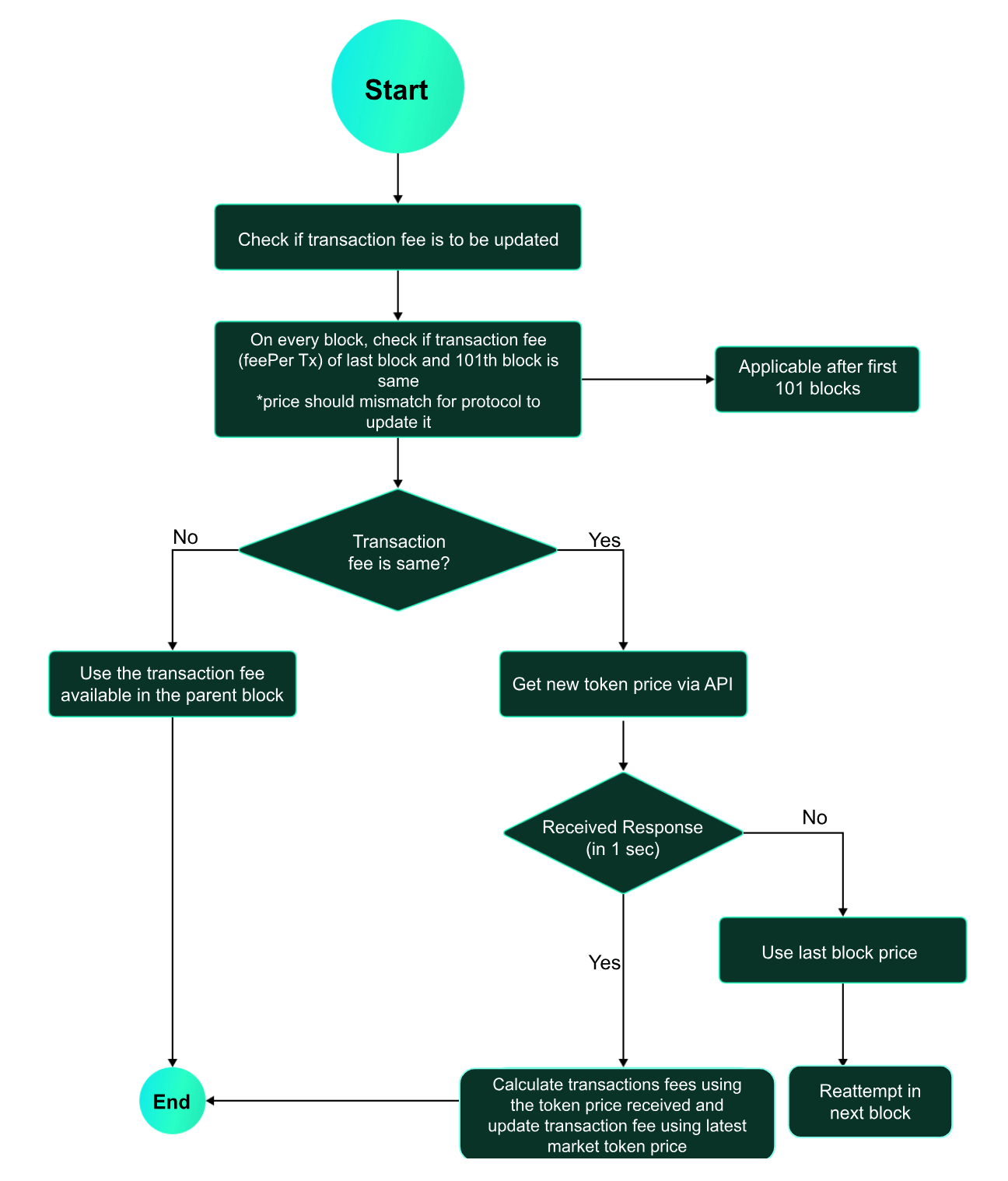
This involves a key role: Vanar Foundation, which will obtain VANRY prices from multiple on-chain and off-chain data sources, filter out anomalies, calculate a reasonable market price, and regularly update it on-chain. This price is not changed arbitrarily, but verified through multi-source data to avoid a single point of control.
The simple process can be understood as:
Data source → Cleaning and filtering → Calculating averages → Updating on-chain → Automatic fee adjustment
The entire process will be refreshed regularly (for example, updated every 5 minutes) to ensure that prices do not lag behind for long periods.
Four, will it be abused?
Many people worry: 'Since the transaction fees are so cheap, will it be attacked?', Vanar employs a tiered fee structure.
Small, simple transactions with extremely low fees
Complex, high-consumption transactions with higher fees
That is to say: ordinary users pay less, while behaviors that consume a lot of resources must incur higher costs. This ensures a low threshold and avoids abuse.
Five, how is it different from the Ethereum model?
Ethereum's fees are more like 'auction markets':
Network congestion → Gas surges
Token price rises → Cost rises
Vanar's fees are more like 'priced goods':
Stable in terms of USD value
Automatic conversion of price fluctuations
There are no absolute good or bad approaches, just different positioning. Vanar is more inclined towards: high-frequency, payments, gaming, AI applications, etc., which require stable costs.
Six, Vanar's values
Vanar does not simply want 'cheap', but rather aims to create a chain that is: cost controllable, price predictable, and closer to modern business logic. For ordinary users, the mechanisms may not seem overly complex, but you will feel one thing: fees will not be frightening due to market emotions.
Seven, summary
Vanar's fixed fee mechanism essentially prices in USD, settles in tokens, dynamically adjusts the conversion ratio, and keeps users' real costs stable. While many public chains are engaged in 'performance competition', Vanar seems more focused on 'experience optimization'. In the wildly fluctuating world of crypto, 'stability' itself is also a competitive edge.