

My dad was tricked into buying 4,000 Bitcoins in 2015, with the key stored on his Apple laptop. Later, he forgot the password after not checking it for a long time. He wanted to sell them during the last bull run but couldn't recover the key. This year, he found a tech expert to help him crack it, and he finally got it back.
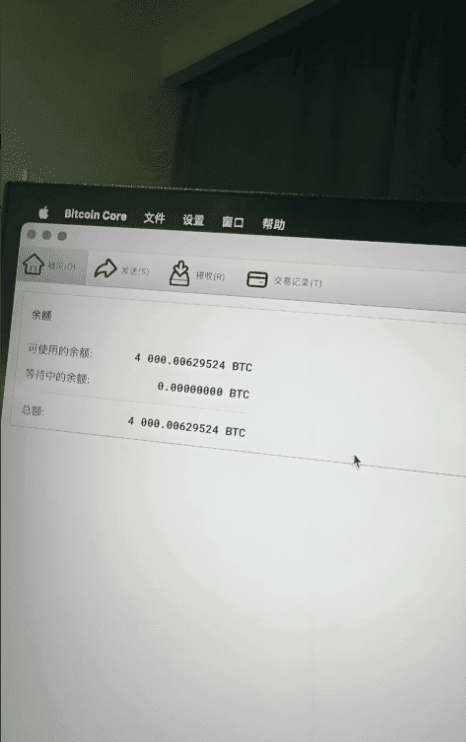
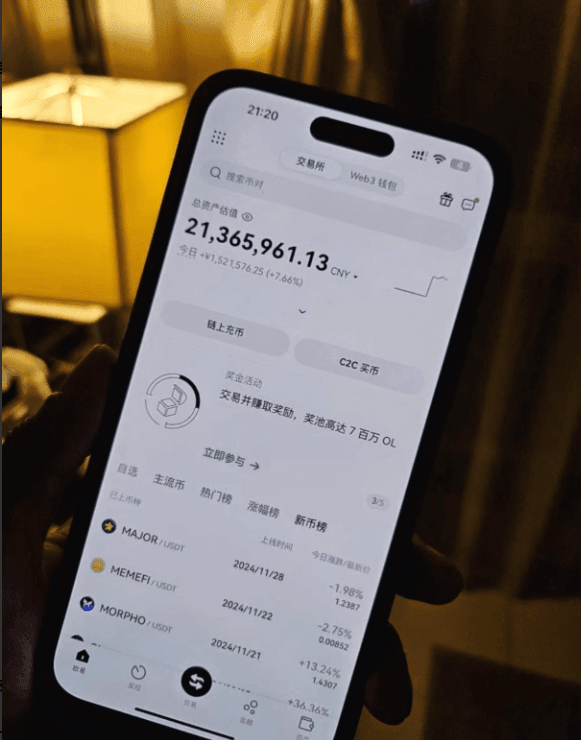
I will also share my journey in trading cryptocurrencies; I started as a small retail investor with 5,000 yuan and finally became a middle-class individual worth 25 million!
Today, I will share my insights from my journey with everyone.
The most important aspect of trading cryptocurrencies is money management; don’t invest all your money at once. I usually divide my capital into five parts and only use one part for each trade. This way, even if I incur losses, I won’t be overwhelmed. Additionally, I have set a rule for myself to withdraw immediately upon a 10% loss, regardless of market conditions. If I experience five consecutive losses of 10%, I would only have lost 50%, but if I make a profit, the returns will be much more. Even in a situation where I get trapped, I can maintain my composure.
Following the market trend is always the most reliable strategy. When the market is declining, don't think about bottom-fishing; that is simply unrealistic. During an uptrend, a pullback is the golden opportunity—buying low is much safer than trying to catch a falling knife.
When it comes to coin selection, you need a sharp eye. Try to avoid coins that have surged too quickly, whether they are mainstream or altcoins. Coins that rise too fast will likely experience a sharp pullback, making them easy to get trapped.
In terms of technical indicators, I use MACD the most. When the DIF line and DEA line cross below the zero axis and break through it, that’s a buying signal. Conversely, if they cross above the zero axis and move downward, it's time to reduce positions.
Regarding averaging down, don’t attempt it lightly! If you lose, don't average down; the more you average down, the more you lose, and you might end up with nothing. Remember, cut losses when in the red, and only average up when in the green.
Trading volume is also crucial. When the price breaks through at low levels, if the trading volume increases, it usually indicates a great opportunity.
The most crucial point is to follow the trend and seize the trend! Combined with the daily line, 30-day line, 84-day line, and 120-day line, when any line starts to turn upward, you will know how to operate.
Trading cryptocurrencies carries risks, but there are also significant opportunities.
Learn money management, trend analysis, and coin selection to succeed like I did and transform from a small retail investor to a middle-class individual.
Cryptocurrency Trading Technical Knowledge:
Share my experience
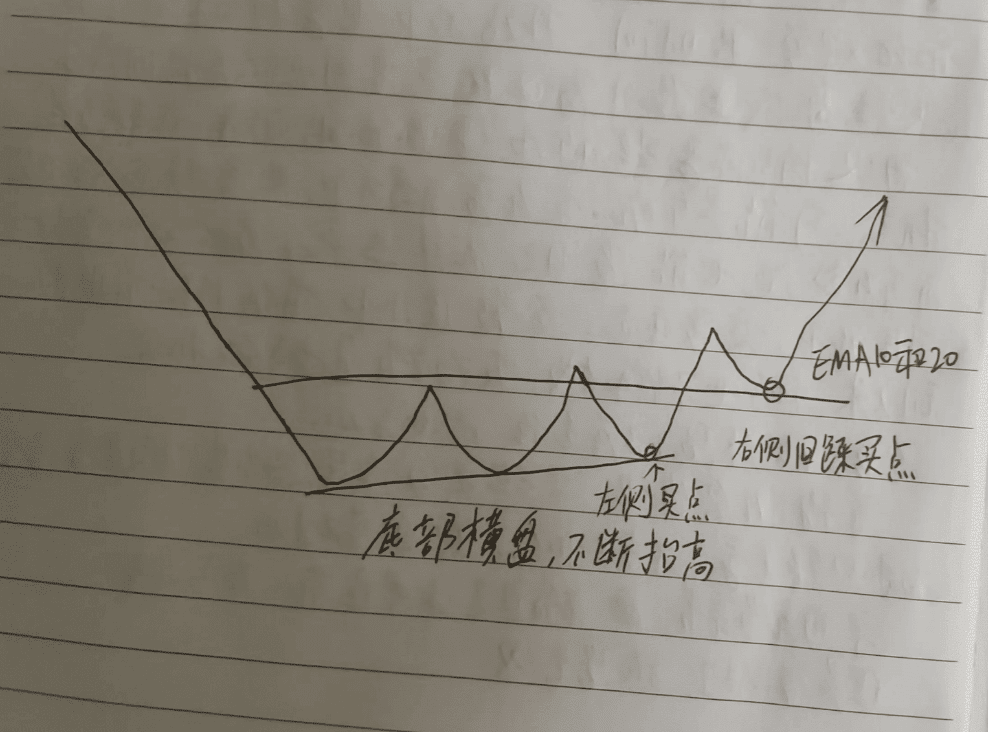
Look at the technical patterns. First, check the monthly and weekly charts. If they are clearly in a downtrend, don't rush to buy. If the weekly and monthly charts show sideways fluctuations, just observe. If the bottom continues to rise, even better, the buying time is very close. If it is an upward trend, find an opportunity to buy when the daily chart pulls back.
The second aspect is to look at daily chart patterns; do not buy in a downtrend. When the bottom keeps rising, choose to buy at the low points during fluctuations; this is called left-side buying. You may need to be patient, which can be quite taxing. If the daily chart breaks into an upward trend, find a breakout pullback or the daily line pulling back to EMA 10 or 20 to buy; this is the right-side buying point.
The third aspect is to observe short cycles of 4 hours and 1 hour; buying points occur when there’s a pullback to the EMA 10 or 20.
Weekly, daily, 4-hour, and 1-hour charts—from large cycles to medium and small cycles. The main chart uses EMA 5-10-20-60.
If you plan to trade cryptocurrencies long-term but don’t understand the technology and haven’t found effective trading tips, you might try this super simple 'foolproof' strategy. Even if you are a novice, you can easily get started, with a success rate of up to 80%. Whether buying or selling, just follow the steps.
First, you need to pick coins that are rising or at least stable; directly pass on those that are falling or in a clear downward trend.
Next, divide your money into three parts. When the coin price crosses above the 5-day moving average, cautiously buy one-third. When it crosses the 15-day moving average, buy another third. If it breaks above the 30-day moving average, buy the remaining third. This step must be strictly followed; don’t slack off.
Then, if the price drops after crossing the 5-day moving average but doesn’t break below it, hold steady. If it breaks below, sell quickly.
Similarly, if the price crosses above the 15-day moving average but lacks strength to continue, hold as long as it doesn’t break below. If it does, sell one-third; if the portion bought at the 5-day moving average is still holding, continue to keep it. If the price crosses above the 30-day moving average and then drops, follow the same rules—sell when instructed.
Conversely, when selling, do it the same way. If the price is high and breaks below the 5-day moving average, sell one-third. If it doesn’t continue to drop, hold the remaining 60%. However, if it breaks below the 5-day, 15-day, and 30-day moving averages, sell everything without hesitation.
This foolproof strategy is simple, but the key is to adhere to the rules. After buying, establish clear buying and selling rules. Only by strictly following these rules can you make money!
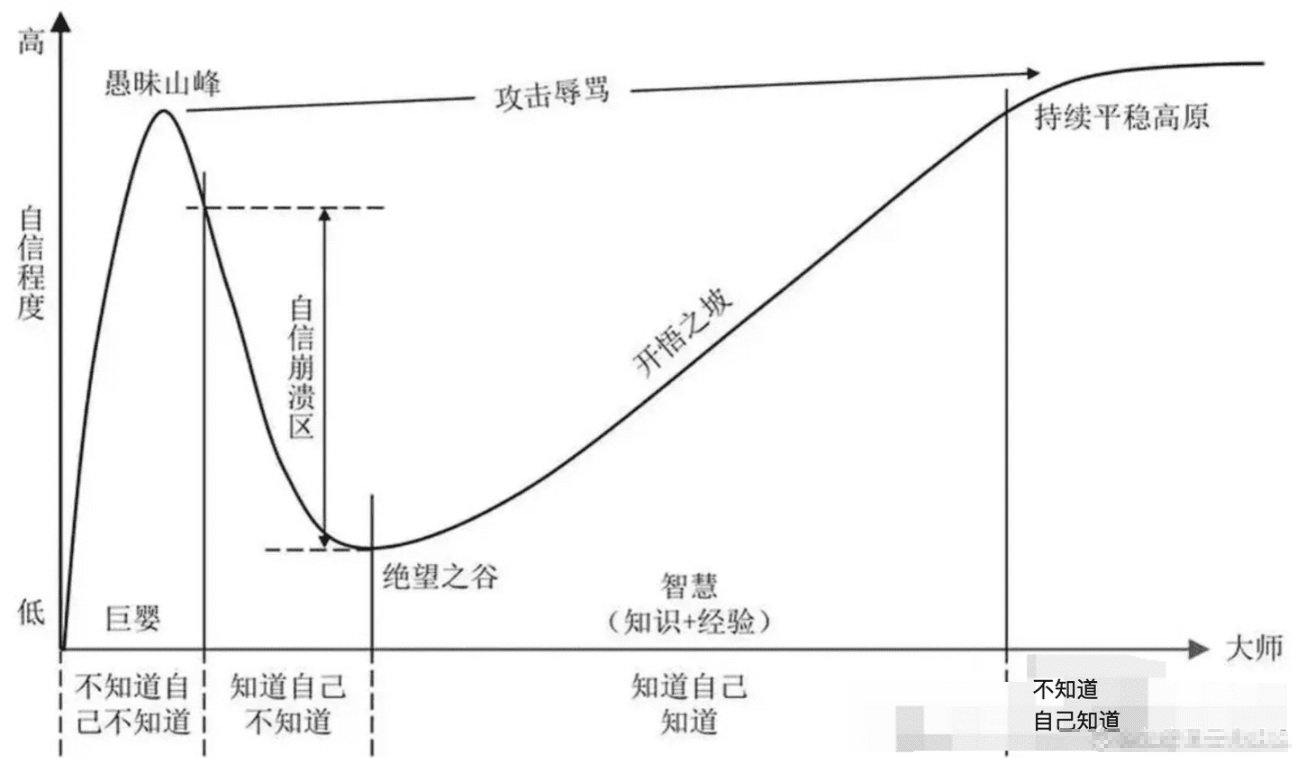
The Dunning-Kruger effect I refer to as the law of cognitive fluctuation; indeed, trading cryptocurrencies also goes through such a process:
Confidence -- improvement -- zeroing out -- rebuilding confidence -- enhancing cognition -- stable output of high cognition
When you reach the last two stages of cognition, you can try to go all in because human energy and lifespan are limited; the economic cycles one can experience in a lifetime are even more limited. Being overly conservative, dormant, and waiting may seem stable but can miss phenomenal opportunities to rise above one's class. Hence, those who haven't zeroed out should quickly do so (it doesn't necessarily mean wealth zeroing out; what's important is zeroing out and rebuilding the ideological mindset).
Once you return, seizing one or two opportunities can elevate your class. After experiencing a class leap once, subsequent paths to replicate success are not many; missing out means missing out. Being bold enough to go all in is a confidence in one’s cognition. Let’s meet at the peak.
Introduction to Cryptocurrency Contracts, Guidelines for Beginners in Cryptocurrency Trading:
First, we need to know that beginners often consult a lot of materials to understand the cryptocurrency contract model before investing, and may even open an account to test the waters. After a few operations, they feel they are not suited for this market because they lack many details and skills.
Secondly, cryptocurrency contract operation skills also require stop-loss and take-profit controls. Setting stop-loss and take-profit is not only necessary for beginners but also for experienced cryptocurrency investors, as cryptocurrency involves investment and finance. Since there are gains and losses in investment, and individual circumstances differ, the acceptable loss varies; setting a stop-loss should be based on the investor's situation.
The cryptocurrency market is favored and pursued by many investment enthusiasts for its high profitability and excitement. However, for newcomers, how much money is needed to engage in cryptocurrency contract trading?
(1) Many investors initially invest a certain amount not because they have little money, but for safety considerations, gradually increasing their investment as they observe the situation until they reach a suitable capital ratio.
(2) A widely accepted saying in the financial industry is that the capital invested in contracts should not exceed 20% of the total investment assets. This means if someone plans to invest 1 million, the amount used for contract trading should not exceed 200,000.
Can contracts make money? Important experiences for contract trading!
Experience One: Reasonably control your position size. Only by reasonably controlling your position can you have a stable chance of profit; otherwise, your account will only fail. Generally, invest 20% of your funds in the market. If your account has only $50,000, and the margin per contract is $1,500, then the standard position size for each trade should be 6-7 contracts, regardless of whether it's long or short.
In favorable market conditions, when entering positions has potential profits, you can gradually increase your position, but don’t exceed 40%. Conversely, if you are in a losing position, never increase your position against the market unless you have ample funds to support it.
Experience Two: Set stop-losses before entering the market. Generally, 50-100 points are advisable, or below support points and above resistance points. Not setting a stop-loss means that every trade you make could lead to account depletion.
Experience Three: Recognize the nature of the market; avoid guessing the top.
Many investors are used to looking at daily charts, weekly charts, and making short-term trades, treating BTC's long-term volatility trend as short-term operations, while treating BTC's short-term fluctuations as long-term. Ignoring the differences between short-term and long-term trading is incorrect; if this continues, losses will grow larger over time.
Through the above analysis, we understand what skills beginners need to master in cryptocurrency contract operations; the above skills are just part of it. Also, when choosing a platform, one should select a legitimate platform, etc.

Insights on Entering the Cryptocurrency Market:
Learn these few mantras, and you can easily make 100 times profit in the cryptocurrency market!
Share some trading insights: When prices break through key lines, don't miss short-term opportunities. Explanation: Once the price breaks an important support or resistance level, there may be a short-term trading opportunity. Don't hesitate; seize it quickly. After a big rise, don't rush to buy at a high.
Explanation: After a significant price increase, there is often a pullback; at this moment, don't be anxious to chase high prices; stay calm.
If the price rises without an increase in volume, the main force may be deceiving you. Explanation: If the price goes up but the trading volume hasn't changed significantly, it could be that the main force is trying to trick retail investors; keep your eyes open.
Don't panic when there is a sudden drop with low volume; if the drop is gradual with increasing volume, withdraw quickly. Explanation: When the price drops sharply but the trading volume is low, don't rush; if the price drops slowly and the trading volume increases, then it’s time to retreat.
When the main rise accelerates, it may be approaching the top. Explanation: When the price rises rapidly, it may be nearing the peak; be alert for top signals and prepare accordingly.
Don't chase high prices when buying; wait for a pullback to act. Explanation: When buying cryptocurrency, don't wait until the prices have risen significantly before buying, as that poses too much risk. It's best to wait for a pullback when the price is relatively reasonable before buying.
Both daily and weekly charts must be examined; the direction of the main force is key. Explanation: When analyzing price trends, don’t only look at the daily chart; also consider the weekly chart or even longer-term charts to better grasp the main force's direction and market trends.
Don't panic over small ups and downs; be cautious during a significant rise. Explanation: When prices fluctuate slightly, there’s no need for excessive worry; however, if prices rise significantly for an extended period, then you need to be cautious and not let market enthusiasm cloud your judgment.
When prices hit new lows with decreasing volume, it may be a bottom: when trading volume begins to rise and prices start to increase, it's a good time to enter. Explanation: If the price reaches a new low with decreasing volume, it might be at a bottom position; when trading volume starts to increase and prices rise, that’s a good time to enter.
There are many ways to make money in the cryptocurrency market; here are nine common methods:
Trading cryptocurrencies: making profits by buying and selling cryptocurrencies.
Hoarding valuable coins: holding promising coins long-term while waiting for their value to rise.
Exchange arbitrage (IEO): taking advantage of exchange promotions or new coin issuance opportunities for arbitrage.
Participating in airdrops: joining a project's airdrop activities to obtain free tokens and waiting for their appreciation.
DeFi mining: earning mining rewards by participating in decentralized finance projects.
Physical miner mining: purchasing physical miners to mine for rewards.
GameFi gold farming: earning in-game currency or tokens by participating in gaming finance projects.
Participate in the primary market: directly participate in the project's private placement or crowdfunding phase to obtain low-priced tokens. Early project donations: support early projects through donations to acquire project tokens or rights.
There are many paths to Rome; there are numerous ways to make money in the cryptocurrency market. The key is to find a method that suits you and stick with it. I hope these mantras and methods help you adapt to the cryptocurrency life faster and find your own way to profit.
Investment and finance are becoming choices for more and more people, with the cryptocurrency market attracting much attention as a new investment method. Although the cryptocurrency market is full of opportunities, high risks follow closely.
For beginners, blind trading and relying on rumors often lead to losses. Trading cryptocurrencies requires technical support, with the candlestick chart being an important technical indicator, its patterns containing rich information.
1. Basics of Candlesticks
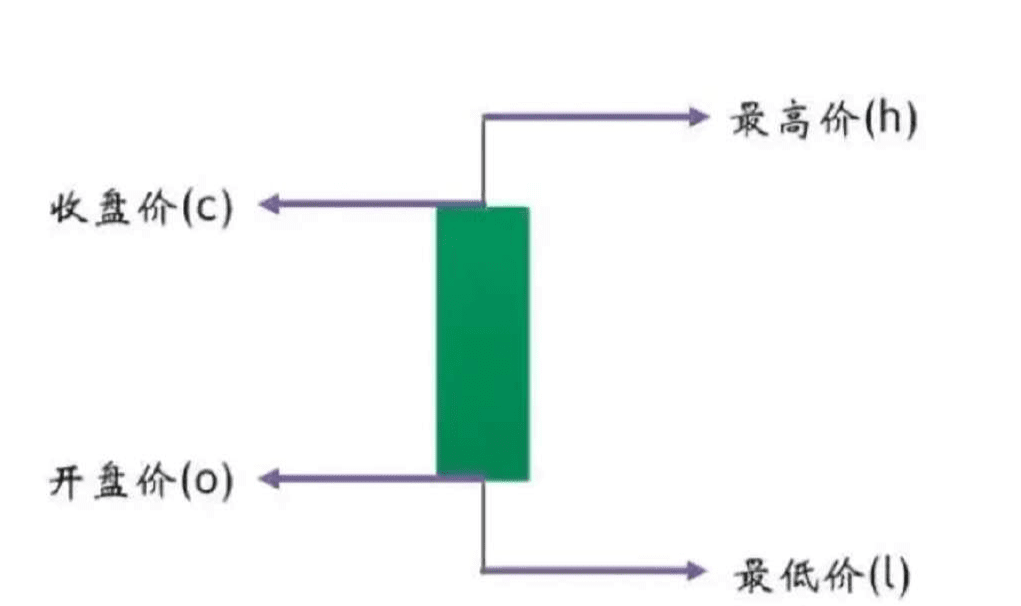
1. The origin and significance of the candlestick chart.
The candlestick chart, also known as the K-line chart, originated during Japan's Tokugawa shogunate. Initially, it was used by Japanese rice market merchants to record market trends and price fluctuations.
Due to its unique representation method, the candlestick chart was later widely used in capital markets, becoming an important tool for investors to analyze market trends.
2. Structure and Drawing of Candlesticks
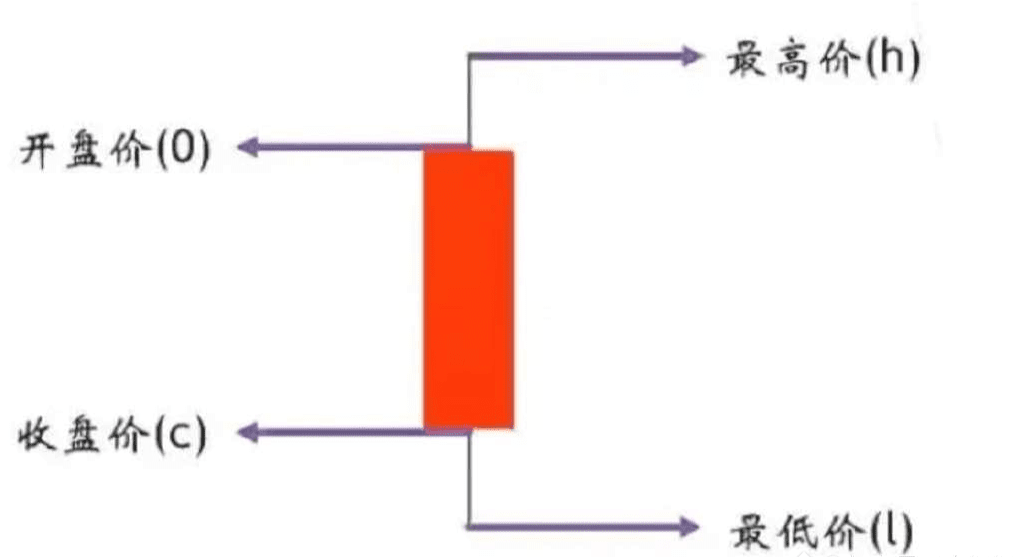
Candlesticks are drawn based on the opening price, highest price, lowest price, and closing price for each analysis cycle. Structurally, a candlestick can be divided into the upper shadow, lower shadow, and middle body, each part containing rich market information.
3. How to learn to read cryptocurrency trading candlestick charts?
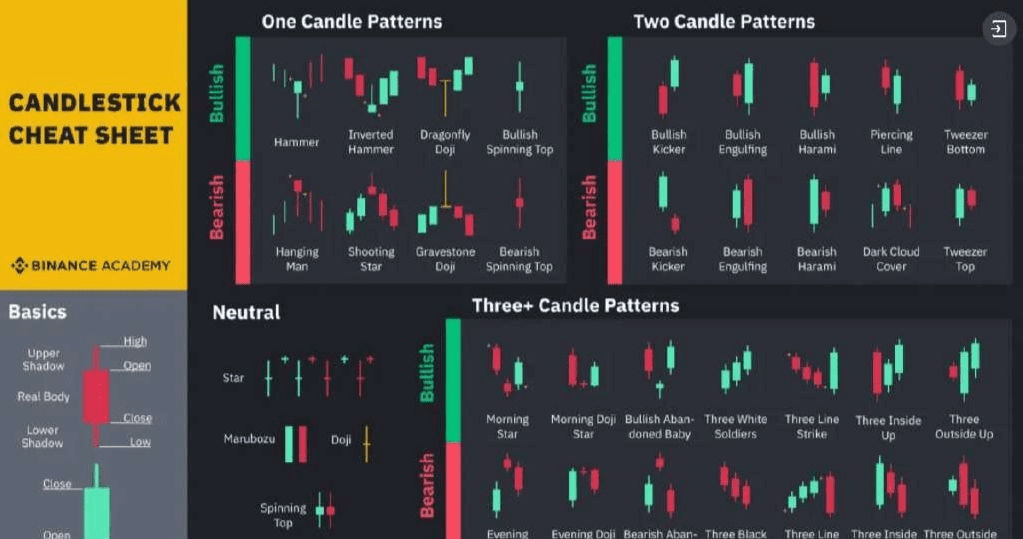
Colors of the candlesticks in the cryptocurrency market.
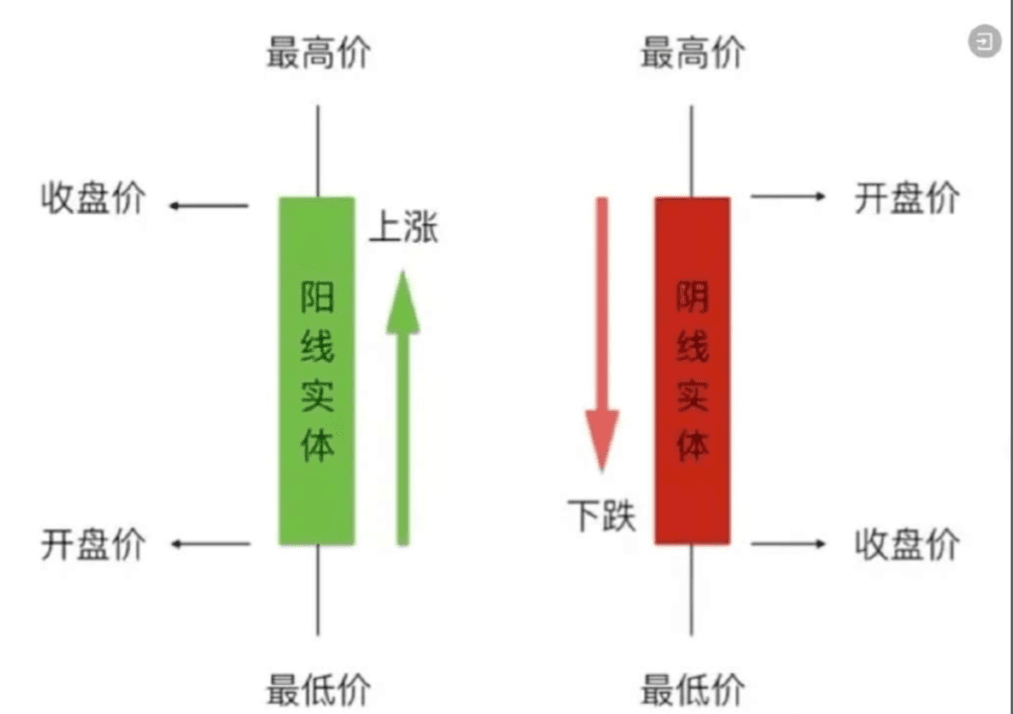
In the cryptocurrency market, green usually represents bullish candles, indicating that the closing price is higher than the opening price; red represents bearish candles, indicating that the closing price is lower than the opening price. Through different colored candlesticks, we can intuitively understand the market's rise and fall.
What use is the candlestick chart to me?
The candlestick chart, as an important tool for cryptocurrency trading, helps you formulate more precise investment strategies. It can reveal market trends and guide you in selecting the best times to buy and sell.
For those who adhere to the belief of hoarding coins, understanding the candlestick chart is equally crucial. In the trading interfaces of major exchanges, the candlestick chart occupies a central position. If you don’t understand the candlestick chart, you may feel somewhat embarrassed in the cryptocurrency market.
Thus, mastering the analytical skills of candlestick charts is an essential skill for anyone looking to thrive in the cryptocurrency space. Whether for short-term trading or long-term holding, the candlestick chart is an indispensable ally.
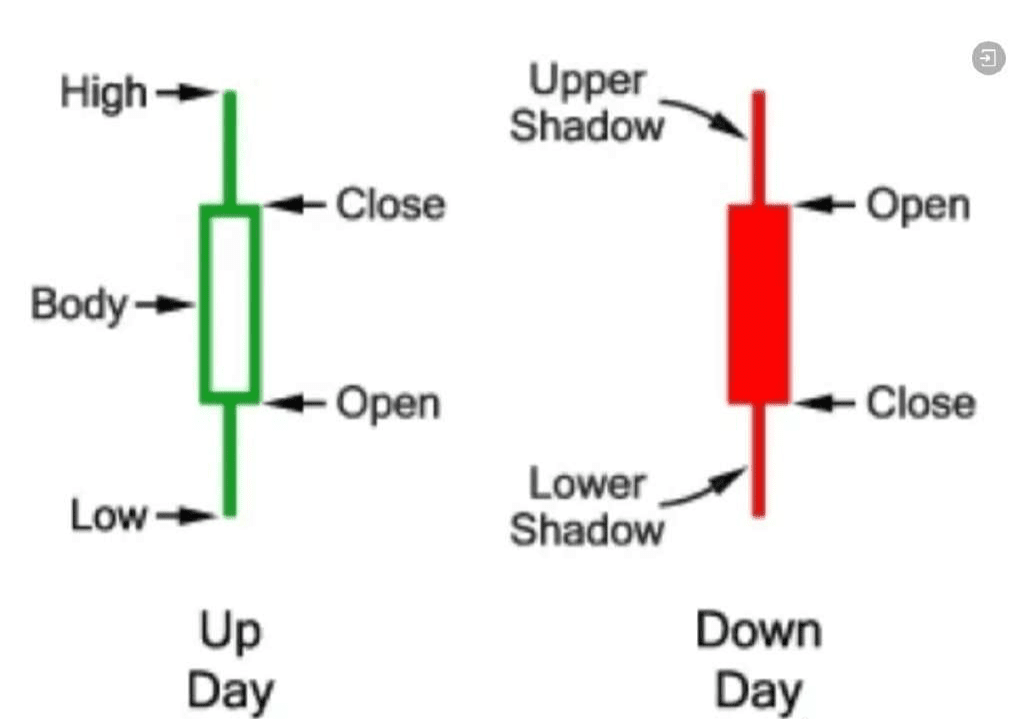
What key information can you get from the candlestick chart?
The candlestick chart allows you to grasp the price trends in a specific period clearly, including opening, closing, highest, and lowest prices.
It is also an intuitive record of the battle between bulls and bears, showcasing the fierce competition in the market.
Grasp the candlestick chart, understand the market pulse, and help you make wiser investment decisions!
4. Basics of Candlesticks
a. Composition of the Candlestick Chart
The candlestick chart mainly consists of bullish and bearish candles.
Each candlestick reflects four key prices: highest, lowest, opening, and closing prices.
️ The opening and closing prices form a 'rectangular body', connecting the highest and lowest prices, forming a complete candlestick.
b. Bullish and Bearish Candles
Core of the candlestick chart: bullish and bearish candles.
Green represents a bullish candle, indicating strong buying power.
Red represents a bearish candle, indicating strong selling power.
Taking the daily chart as an example: more bullish candles indicate stronger buying power; more bearish candles indicate stronger selling power.
c. Secrets of Moving Averages
The colorful lines in the candlestick chart represent moving averages.
White, yellow, purple... each color represents a moving average of different periods.
5-day, 10-day, 90-day... moving average settings are flexible, capturing the market pulse.
5. Patterns of Cryptocurrency Candlestick Charts
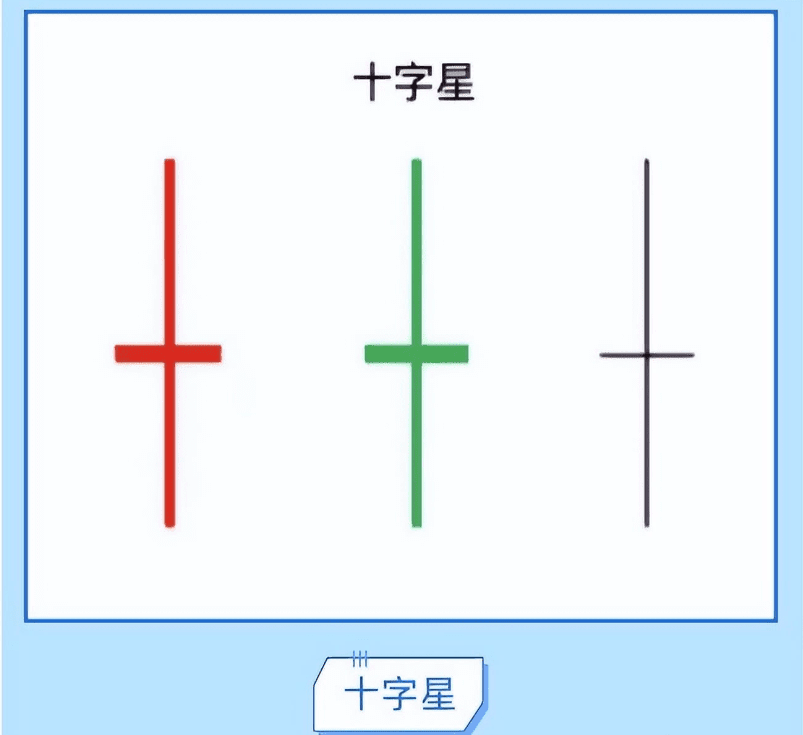
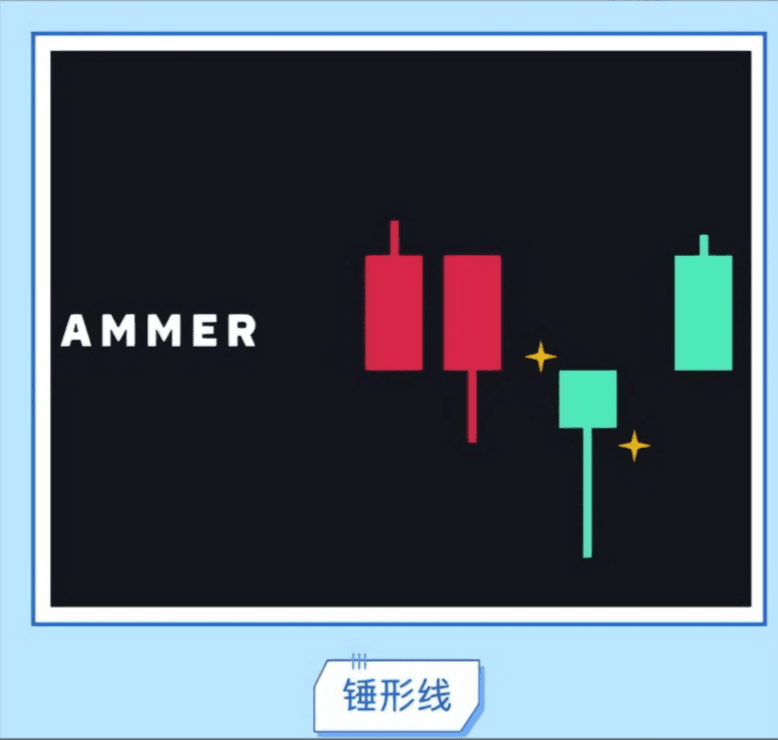
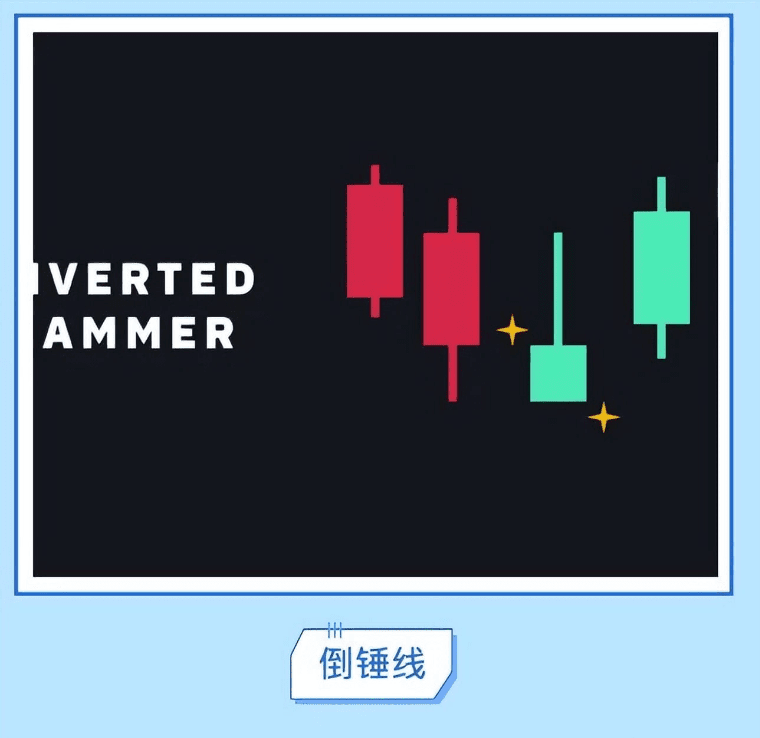
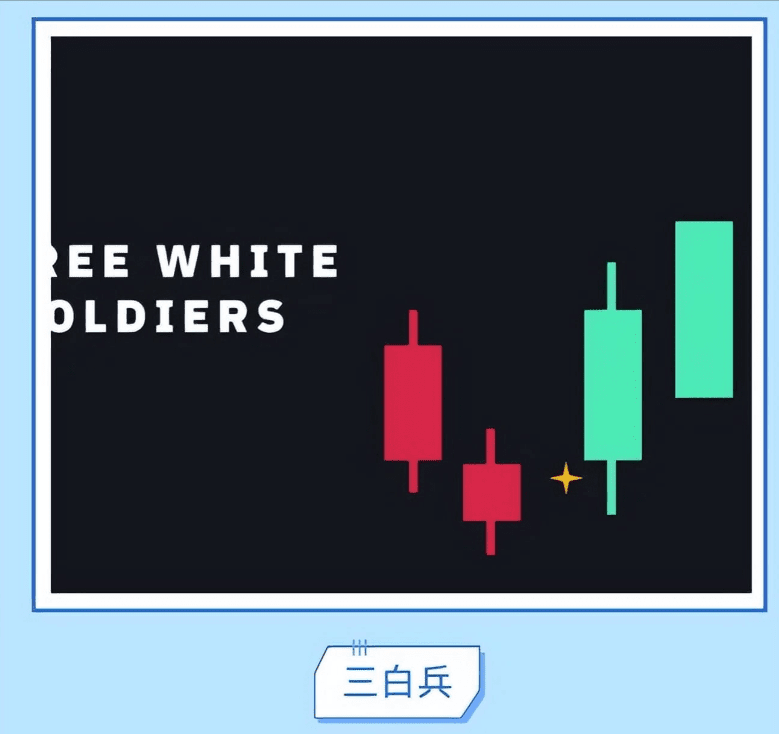
Based on different candlestick chart patterns, we can categorize them into several major types:
Reversal patterns, consolidation patterns, trend patterns, special patterns.
These patterns are not isolated; they are often used in conjunction with other technical indicators like trading volume and moving averages to provide a more comprehensive and accurate market analysis. It's important to note that while candlestick patterns can provide useful information, they are not absolute tools for predicting market trends; investors should consider multiple factors when making decisions.
What information does the candlestick chart contain?
Opening price: the price at the opening of the current time unit (for example, the opening price for each hour is the starting price for that hour).
Closing price: the price at the closing of the current time unit (for example, the closing price for each hour is the ending price for that hour).
Bullish candle: when the closing price is higher than the opening price, the body is green, indicating a price increase, known as a bullish candle.
Bearish candle: when the closing price is lower than the opening price, the body is red, indicating a price decrease, known as a bearish candle.
Note: Since trading in the cryptocurrency market occurs 24/7, when the time unit is days, the opening price for the day is the closing price of the previous day. Additionally, different exchanges have different anchoring times; for instance, Huobi typically uses midnight 00:00 as the opening/closing time, while OKEX and others may use 08:00.
Highest price: the price at the highest point of the candlestick chart. When the lowest price is reached,
Lowest price: the price at the lowest point of the candlestick chart.
Each candlestick represents four key prices for the day: highest price, lowest price, opening price, and closing price. The section between the opening and closing prices is drawn as a 'rectangular body', and the highest and lowest prices are connected to form the candlestick.
Trading cryptocurrencies requires a model, discipline, and mindset; all are essential. Understanding them takes time, and the longer you engage, the deeper your understanding becomes.
At first, it sounds like useless general wisdom; once you realize it, you find that these six words embody the true essence of winning in cryptocurrency trading!
Remember these eight iron rules! Each word is significant!
1. Blindly entering the market will lead to death! Charging in without understanding only means giving away money.
2. Going all in with large positions will surely lead to death! Putting all eggs in one basket means if it drops, you'll lose everything.
3. Not setting stop-losses will certainly lead to death! Not acknowledging losses will only lead to greater losses.
4. Being insatiable will lead to death! Once you earn, wanting to earn more will ultimately lead to giving it all back.
5. Frequent trading will lead to death! Fidgeting and making unnecessary transactions will exhaust your fees.
6. Chasing highs and cutting losses will lead to death! Following others in panic will lead to mistakes; following others in greed will lead to losses; this is the behavior of retail investors.
7. Not adhering to discipline will certainly lead to death! If the agreed strategy falters with every rise and fall, it will throw you off balance.
8. Fantasizing about getting rich quickly will lead to certain death! The cryptocurrency market is not a casino; getting rich overnight is a dream—stop dreaming!

Personal summary of cryptocurrency investment skills.
1. Eat fish from the middle segment; leave the heads and tails for others.
2. Not setting stop-losses in trading cryptocurrencies will certainly lead to significant losses.
3. Beginners look at price, experienced traders look at volume, and experts observe trends.
4. Buy familiar coins to avoid suffering; buy at the bottom, remain still as a mountain.
5. Buying relies on confidence, holding requires patience, and selling depends on determination.
6. Opportunities arise from drops; cash is king.
7. The mindset of trading cryptocurrencies is first, strategy second, and technical skills only come in third.
8. Trends usually emerge in despair, develop in hesitation, and conclude in madness.
9. Greed is the enemy of profits; greed and fear are major investment taboos.
10. If long-term is gold and short-term is silver, then swing trading is diamond.
11. When others are fearful, we should be greedy; when others are greedy, we should be fearful.
12. Luck and hesitation: Luck is the culprit that increases risk, while hesitation may lead to missed opportunities.
13. Never go all in at any time; this helps maintain a calm mindset and allows you to attack when possible and defend when necessary.
14. Frequent operations will definitely lead to losses; indecision will slowly bleed you out.
15. There are no absolutely accurate indicators, only retail investors with partial understanding; indicators are useful for those who know how to use them, but harmful for others.
Giving a rose brings fragrance to the hand. Thank you for your likes, follows, and shares! Wishing everyone financial freedom by 2025! Playing in the cryptocurrency market is essentially a battle between retail investors and whales. If you lack insider information and first-hand data, you will only be cut! If you want to strategize together and reap the rewards from the whales, feel free to follow me. Welcome like-minded individuals in the cryptocurrency space to discuss together~ The secret techniques have been shared; whether you can make a name for yourself in the arena depends on your efforts.