

In the last lesson, we traveled through the history of currency together, understanding that the birth of Bitcoin was to solve the crisis of 'trust' collapse in the traditional financial world. You now know that Bitcoin is like 'digital gold'.
But here's the problem: If blockchain technology can only be used to create a type of 'gold', it would be too unfortunate.
Imagine if humans invented the internet but only used it to send emails, we wouldn't have Taobao, Douyin, and WeChat today.
Geniuses think this way too. After Bitcoin, a grander idea was born, which is Ethereum—a 'world computer' with ambitious goals. At the same time, to make this world run more smoothly, the 'dollar' in the crypto world—stablecoins also emerged.
Today, we will get to know these two 'king-level' roles in the crypto world that you must know, besides Bitcoin.
1. Ethereum (ETH): 💻 'World computer' and its 'vending machine'
If Bitcoin is a 'global calculator' with a very specific function of bookkeeping and transferring money.
So, Ethereum is like a 'global smartphone' with its own operating system, where developers from all over the world can develop and run apps.
The core magic of this 'global smartphone' is called 'Smart Contract'.
Don't be scared by the name; its principle is like a 'vending machine':
Rules are set in stone: The vending machine sets the rule 'put in 10 bucks, and a cola will drop'.
Automatic execution: If you put in 10 bucks (meet the condition), a cola will definitely drop (execution result).
No intervention: The whole process does not require a vendor's involvement; the machine will complete it automatically.
Smart contracts work this way: they write various complex rules into code, and once deployed on Ethereum, they will automatically execute accurately and continuously like a vending machine, 24 hours a day.
🤖 It is precisely because of the 'Smart Contract' vending machine that developers have created a prosperous ecosystem on Ethereum, such as:
DeFi (Decentralized Finance): Lending platforms and exchanges that do not require banks.
NFT (Non-fungible Token): Unique digital artworks, game items, and identity proof.
Chain games (GameFi): Games where assets truly belong to you, and you can earn money while playing.
💡 Remember in one sentence: Bitcoin is 'money', while Ethereum is a platform that allows money to 'automatically generate money and automate tasks'.
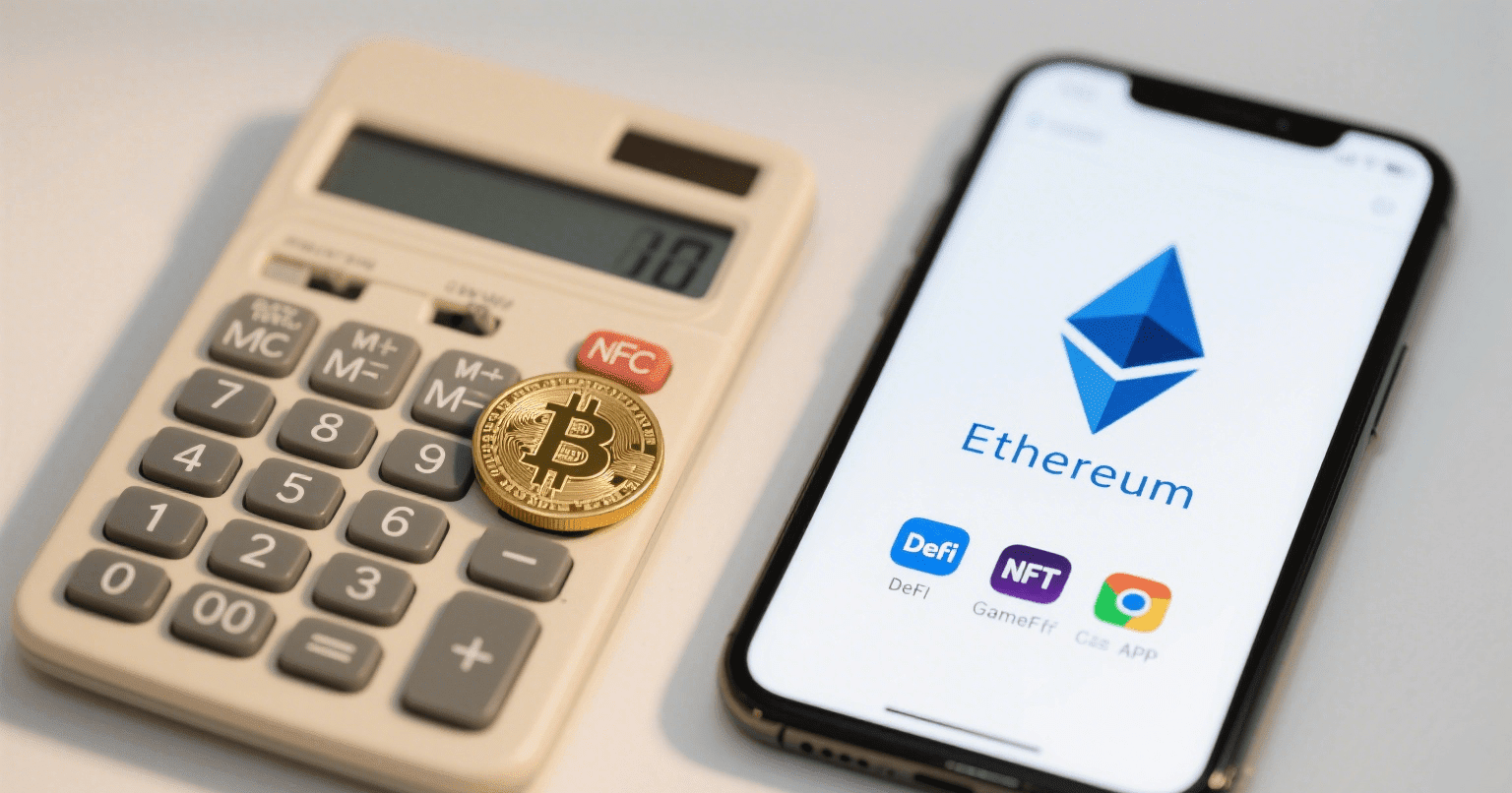
2. Stablecoins (Stablecoin): 🏦 'Crypto dollar', your safe haven
When you enter the crypto world, the first thing you need to adapt to is the extreme volatility of prices. Today assets may double, and tomorrow they might be halved, which deters many newcomers.
So, is there a 'safe island' where we can temporarily dock to preserve our funds when the market is stormy?
Yes, it is stablecoins (Stablecoin).
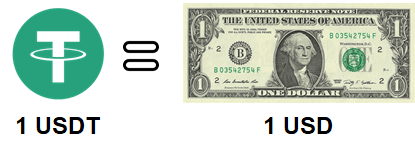
As the name suggests, the core value of stablecoins is 'stability'. Its price is pegged 1:1 to the fiat currency (usually USD) in the real world.
1 USDT (a stablecoin) ≈ 1 dollar
How does it maintain stability?
The most mainstream way is 'fiat currency collateral'. For every USDT issued on the blockchain, the company issuing the stablecoin (like Tether) deposits 1 dollar in its bank account as a reserve to ensure price stability.
Two types of stablecoins you must know:
USDT (Tether): The largest and most widely circulated stablecoin by market capitalization, is the 'hard currency' for transactions in the crypto world.
USDC (USD Coin): Issued by well-known institutions like Coinbase, known for compliance and transparency, regarded as a 'safer' choice.
The core function of stablecoins:
Hedging tool: When you sense that the market may decline, you can immediately exchange your Bitcoin or Ethereum for USDT to avoid the risk of price drop.
Trading medium: It is the most important 'trading pair' in exchanges, using USDT to buy other hundreds to thousands of cryptocurrencies is the most convenient way.
📖 Summary:
Today, we understood Ethereum as the 'world computer' and stablecoins as the 'crypto dollar'; together, they form the cornerstone of a prosperous ecosystem in the crypto world.
✅ Course Task:
Open your commonly used market software or website (like CoinMarketCap), search for ETH, USDT, and USDC, and check their market capitalization rankings and prices today. Feel their important position in the market.
🤔 Think:
Besides Ethereum and stablecoins mentioned today, what other interesting cryptocurrencies have you heard of? Or which concept (like DeFi, NFT) are you most interested in?
Feel free to share your thoughts and questions in the comments below, and let's communicate!
🚀 Next lesson preview:
Having understood these core currencies, you must be more curious: What mysterious power makes their prices soar at times and plunge at others? In the next lesson, we will uncover the secrets behind (the price fluctuations of cryptocurrencies: understanding emotions and cycles).
👉 Tip: Click on my avatar to follow my Binance Square account@星辰Bit to receive updates as soon as possible!
Click to view: Previous basic teachings and selected article contents