

1. The cryptocurrency landscape before BounceBit appeared
To understand why BounceBit ($BB ) was born and why it became one of the important pieces of the BTCFi trend, we need to look back at the crypto market context from 2020 to now.
Bitcoin: from being seen only as 'digital gold', BTC gradually became an asset of interest to organizations. However, the biggest drawback is that it is rarely used in DeFi. BTC holders generally only have two options: keep it in a cold wallet or deposit it on a CEX.
DeFi: thriving on Ethereum, a series of protocols like Uniswap, Aave, Compound, Curve... have emerged, creating a vibrant decentralized financial ecosystem. But BTC – the largest currency in the market – has almost stood outside the game.
Gap: BTC accounts for the largest market cap but does not create a 'liquidity flow' for DeFi. This is the gap that many projects want to address, from wBTC (wrapped Bitcoin), renBTC, to tBTC. However, those versions all have limitations: reliance on third parties, lack of decentralization, or liquidity issues.
As the BTCFi trend began to emerge in 2023–2024, the demand for a solution that could leverage the immense liquidity of BTC while ensuring a safe and transparent DeFi experience became urgent. That was when BounceBit appeared.
---
2. The initial idea of BounceBit
BounceBit was born from the realization:
BTC has a market cap of over 1 trillion USD, but most are 'sleeping' outside the DeFi ecosystem.
BTC users need a safe bridge to participate in staking, lending, yield farming... without losing ownership.
Organizations (CeFi) want to tap into new profit sources from BTC, but need a transparent infrastructure, audited, and trusted by the community.
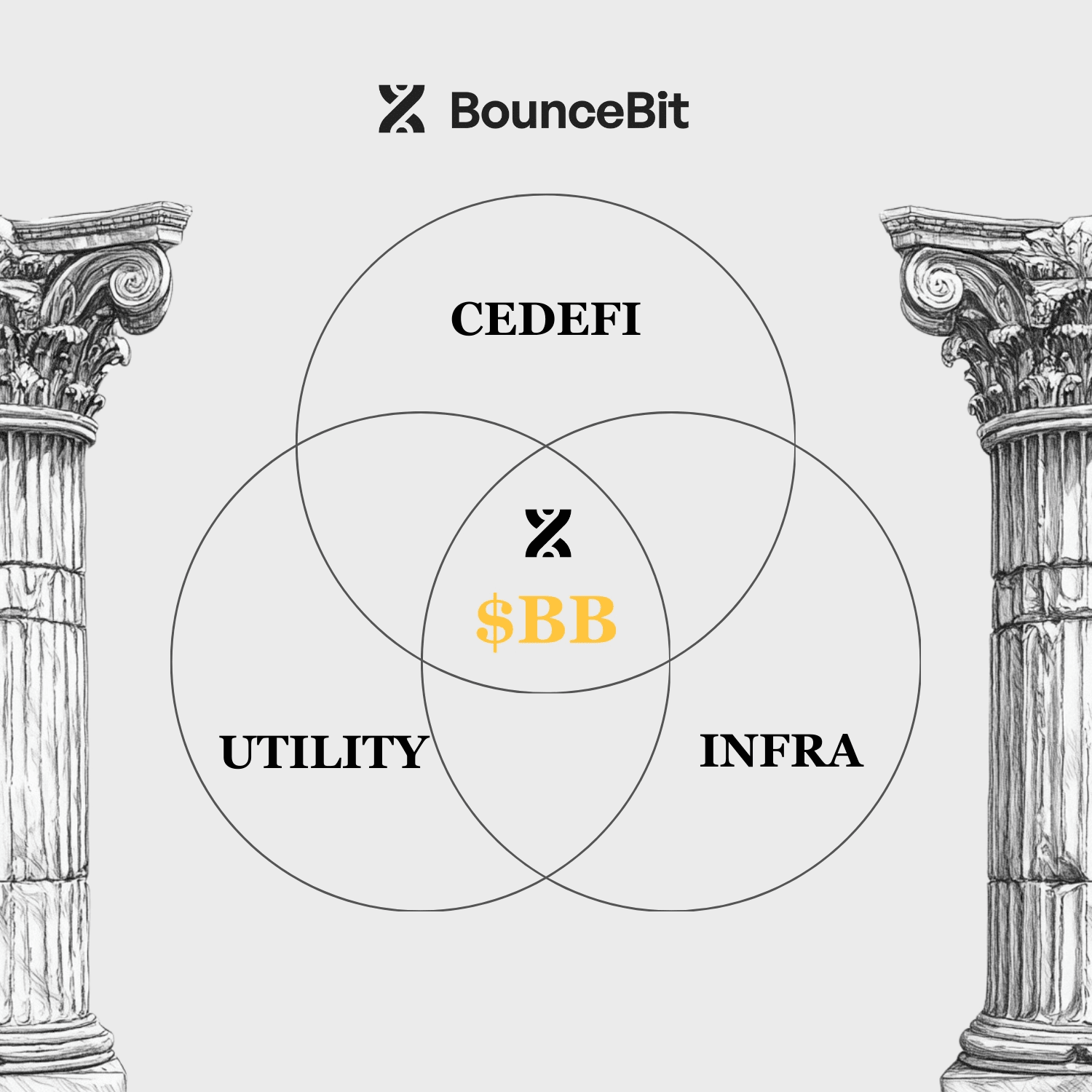
Therefore, BounceBit is not just a blockchain or a DeFi platform. It is designed as a bridge between CeFi and DeFi, where:
BTC holders can stake, lend, and participate in liquidity pools.
Organizations can operate validators, provide services, ensuring liquidity sources.
All activities are implemented on-chain, with audits and transparent mechanisms.
What is special about BounceBit is its BTC-native philosophy: instead of 'wrapping BTC' into ERC-20 like wBTC, it creates a model that combines CeFi staking with DeFi infrastructure, helping BTC to 'live' in both worlds.
---
3. The people behind BounceBit
BounceBit is developed by a team with a strong background in both CeFi and DeFi. Some highlights:
Founding team: coming from renowned exchanges and blockchain projects, with experience in building financial products and on-chain infrastructure.
Strategic investors: BounceBit quickly attracted the interest of many large funds, including names that have previously supported successful Layer 1/Layer 2 projects. This backing is not just capital, but also partnerships, liquidity, and community development experience.
Validator & partner network: instead of launching empty-handed, BounceBit called on many professional validators, CeFi organizations, and staking services to participate right from the start, ensuring liquidity and security for the network.
---
4. Launch event and initial milestones
Testnet phase: BounceBit launched its testnet for the community to test BTC staking and participate in on-chain activities. This attracted tens of thousands of participants, creating an initial FOMO effect.
Mainnet launch: when the mainnet officially launched, BounceBit already had a validator system, a bridge for BTC, and some basic DeFi products (staking, lending, liquidity pool).
Token BB: created as a utility and governance tool, while creating incentives for users to participate in the ecosystem.
Immediately after its launch, BounceBit quickly became the focal point of the BTCFi trend, being compared to projects like Babylon, Stacks, or Restaking solutions for BTC.
---
5. BounceBit in the BTCFi flow
To visualize more clearly, BounceBit can be placed in the overall picture:
Stacks: focused on expanding smart contracts for BTC.
Babylon: focused on Proof-of-Stake security based on BTC.
BounceBit: choosing the CeFi + DeFi hybrid path, turning BTC into an asset that is both stakable and liquid in DeFi.
This distinction helps BounceBit not to 'collide' directly but to complement the BTCFi ecosystem, opening up many collaboration opportunities.
---
6. Long-term vision from day one
From the very beginning, BounceBit declared its goal:
Bringing the immense liquidity of BTC into DeFi.
Building a bridge infrastructure between CeFi – DeFi, ensuring both safety and attractive returns.
Creating a separate ecosystem: not just staking or lending, but also DeFi protocols, derivatives, stablecoins, and even cross-chain collaborations.
Unlike many projects that emerged to 'ride the trend', BounceBit shows that they have a clear roadmap, backed by organizations and the community. This explains why, in just the first few months, BounceBit attracted hundreds of millions of USD in TVL.
---
7. Conclusion: Why is BounceBit drawing attention?
BounceBit is not the first project to try to bring BTC into DeFi, but it is one of the few projects that combines CeFi staking + DeFi liquidity in a way that is both safe and attractive.
It appeared at the right time when the market was thirsty for BTCFi solutions.
It has a strong team, reputable investors, and an enthusiastic community.
It goes in the direction of bridging CeFi – DeFi, rather than just copying the old model.
This historical context laid the foundation for the rapid development of BounceBit, making it one of the most notable BTCFi projects from late 2023 to now.
