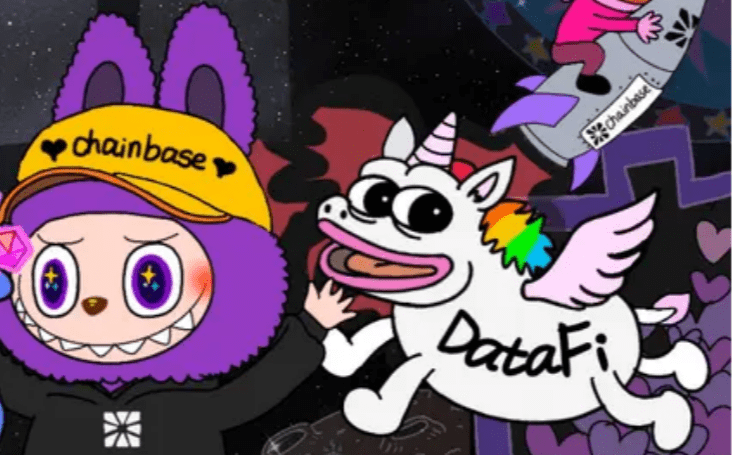

As a long-time observer of the intersection of blockchain and AI, I am particularly interested in this project because it is not just a technical blueprint, but more like a 'data revolution' marching plan.

🤖 From Aquamarine Phase to Mainnet Launch
Currently, Chainbase is in the Aquamarine phase, but the next step is a significant milestone: the mainnet launch. This means it will transition from a testing environment to a fully operational blockchain network. For a project positioned as 'AI-specific data infrastructure,' this step represents moving from theory to reality, from vision to practice.
What is even more exciting is that with the launch of the mainnet, plans will introduce dedicated AI agents for different industry applications, along with a set of smart blockchain interaction AI toolkits. In other words, future developers won't just access data on-chain; they'll be able to call on AI to help them process, understand, and even automate operations. Doesn't that sound a bit like 'a supermarket of data comes with an AI assistant'?
⭐ Data Zones and Scalability
Another interesting design is the Data Zones. I understand this as subnetworks, where each Manuscript can operate within its dedicated domain, avoiding congestion while supporting more specialized processing. This reminds me of the concept of modular blockchains, but here, its core is 'data' and 'AI-driven processing capability.' For the AI field that requires large-scale data flows, such scalability is almost a necessity.
🚀 The process of decentralized governance
Of course, any blockchain project that cannot discuss governance and decentralization can hardly call itself 'Web3.' Chainbase's approach is to have the foundation serve as interim leadership to ensure effective resource allocation in the early stages. Subsequently, as the network matures, control will gradually be handed over to the community, ultimately transforming into a DAO-driven fully autonomous network.
As an author, I feel this process is akin to 'parents gradually letting go to allow their children to become independent.' Providing guidance during critical growth periods, but ultimately allowing the community to take responsibility, aligns with the spirit of decentralization.
🌕 Breaking the barriers of AI development
What excites me the most is not just building technical infrastructure but fostering a knowledge-based economy. Through C tokens, data providers, developers, and AI experts can monetize their professional skills and receive fair compensation.
In other words, in the past, only large institutions could maneuver AI, but in the future, small teams and even individual developers can participate in complex AI development through Chainbase's network. This is like saying: 'AI is no longer just a game for the giants; everyone can participate.'
👉 Conclusion: Author's Observations
Looking at the roadmap, what I see is not just a curve of technical upgrades, but an evolution from data fragments → super data networks → decentralized governance → knowledge-based economy. If the mainnet launches successfully, and the community can truly take over governance, decentralization will no longer be just a slogan but an infrastructure experienced in everyday applications.
As you read this, are you also wondering: will future AI tools one day be built on networks like Chainbase? If that day does come, perhaps we are witnessing the starting point of history.
This is where the intersection of various elements occurs.