

On the day when Bitcoin 15 years ago cost $1,
Let's consider whether it can fall to this price again?)
Every time Bitcoin loses tens of percent and the market is hit by a wave of liquidations, the same question arises: can the world's leading and most expensive cryptocurrency not just fall, but crash to a symbolic $1? In its 17 years of existence, Bitcoin has experienced drops of more than 70%, 80%, and even 93%, gone through complete bear cycles, exchange crashes, and regulatory assaults — and still remained in the game. Moreover, with each passing year, it is increasingly embedded in traditional finance through institutional investors, funds, and public companies. So, in reality, the question is somewhat different: what exactly is keeping Bitcoin from zero — and what set of events could truly push the price into the zone of a few dollars and below.
Bearish cycles: how Bitcoin has survived declines before👇
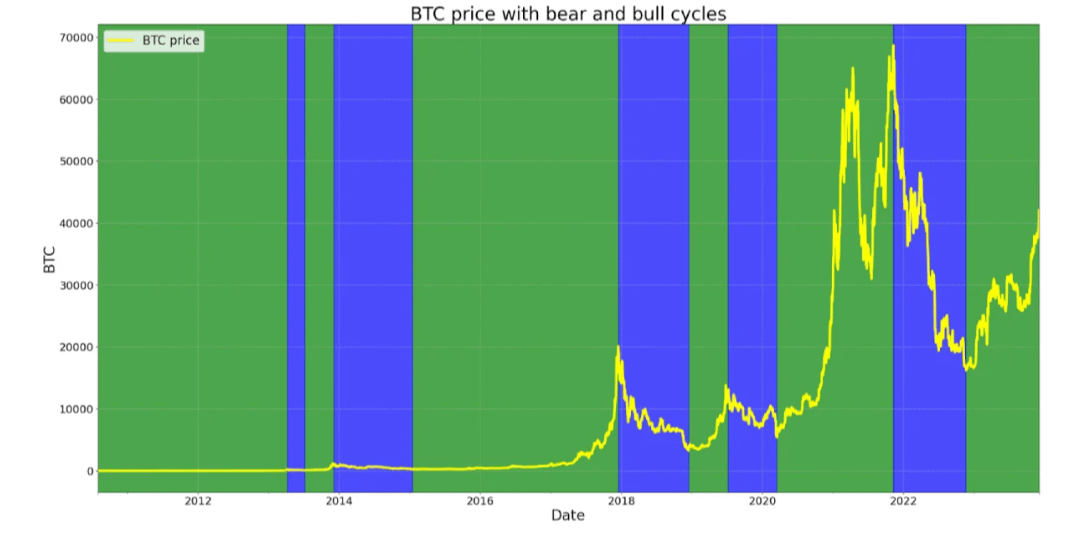
If you look at history, Bitcoin has gone through what would have been the end for most assets more than once. After every major cycle, one scenario repeated: the price plummets, panic spreads through the market, someone goes bankrupt, headlines about failure and ultimate defeat emerge. This is clearly visible in major bearish phases when Bitcoin lost 80−90% and more from its peak to its bottom. Key episodes from the past looked like this.👇
2011: from ~$32 to ~$2 (-93%)
2013−2015: from ~$1,163 to ~$150-$170 (approximately -85%)
2017−2018: from ~$19,800 to ~$3,200 (-84%)
2021−2022: from ~$69,000 to ~$15,500 (about -77%)
But when mentioning them, it is important to distinguish between two things: the value of BTC and the very ability of Bitcoin to exist. In the mentioned periods, the market lost liquidity and trust, but the system itself did not require rescue or a restart — it was functioning. This is the fundamental difference between Bitcoin and most traditional assets.
Moreover, each bearish cycle in the crypto market effectively cleansed the ecosystem: weak projects left the market, excessive leverage disappeared, exchanges and intermediaries went bankrupt, but the foundational layer remained. After that, Bitcoin returned each time in a different form — with a broader audience, new infrastructure, and deeper integration into the financial system.
What keeps the price of Bitcoin afloat🤖🛑
The price of Bitcoin relies not only on faith but also on a combination of several fundamental factors that have only intensified over the years. The first and fundamental factor is the strictly limited supply. Bitcoin has a predetermined maximum number of coins — 21 million, and a larger portion of them has already been mined. This limit cannot be expanded by a regulator's decision or an emissions committee. Additionally, an increasing portion of coins becomes unavailable over time due to lost keys and forgotten wallets, so the real supply on the market gradually contracts. This is what distinguishes BTC from fiat currencies, gold, silver, or oil.
🛑The second factor is the network effect, which has become decisive over the years. The more people, companies, and institutions hold or use BTC, the harder it becomes to displace it.
🛑The third factor is institutional capital, which fundamentally differs from retail speculation.
🛑The fourth element is the security of the network, which is measured by hash rate (the total computational power of miners).
🛑And finally, the main factor — the behavior of long-term holders. A significant portion of Bitcoins is in the hands of those who bought them much cheaper than current levels and have no motivation to sell during every downturn. For these participants, BTC is not a speculative bet, but a strategic asset. This group forms the market's 'hard bottom': when the price falls, supply quickly shrinks, as not everyone is willing to sell.
Real risks: what could hit BTC and the network🚨
Although over 17 years Bitcoin has proven itself to be a resilient decentralized network, this does not negate scenarios in which it could suffer a serious blow. It is important to distinguish between two types of risks. Part of them affects price, liquidity, and market access. The other relates to the resilience of the protocol, i.e., whether Bitcoin remains a decentralized and immutable system.
Risks that impact price and liquidity
The most paradoxical of them is related to large corporate owners and investment structures.
👉A similar risk arises from significant accumulations of BTC by states and other institutional owners. On one hand, these reserves support the price since the coins do not move, and supply in the market is lower. On the other hand, concentration creates systemic vulnerability. If for political, fiscal, or financial reasons large holders start selling en masse, the market may not withstand the volume. Bitcoin's liquidity is relatively thin on the scale of global finance, and a sharp spike in supply can lead to a rapid price drop. This is the scenario that international financial institutions are wary of.
Why $1 for Bitcoin is (for now) not a market scenario?
Ultimately, only one group of risks can question the very existence of Bitcoin — technological and protocol threats that would mean the loss of the network's key properties. These scenarios can be considered existential, although they currently remain long-term and unlikely.
All other risks primarily concern price, liquidity, and market access. But even here, the real danger arises only when several shocks occur simultaneously: problems in crypto infrastructure, regulatory limitations, and mass sell-offs by institutional, corporate, and other large holders. Under such circumstances, price declines accelerate not due to a reassessment of the asset's value, but through a chain reaction where sales trigger new sales. This scenario is not fantastical, as each of these factors has already manifested in the past. At the same time, their complete and synchronous coincidence is atypical for the market and has a low probability.
Analytical studies converge on one point: none of these factors alone can destroy Bitcoin. One country cannot stop the network with a ban, a single hack or bankruptcy does not halt the protocol, and even the deepest bearish phases do not lead to the system's shutdown. History confirms this in practice: after every major crash, the network continued to operate, and the market recovered, albeit with significant losses for many participants.
At the same time, even a hypothetical scenario in which Bitcoin truly costs $1 would rather mean not a collapse of the system but a loss of the speculative layer. The paradox is that without this layer, Bitcoin could finally become what it was created to be: a digital alternative to the banking system, where rules are dictated by code and mathematics, not by people in suits. However, the market always lives in fear and greed, so Bitcoin will continue to remain volatile and speculative.
Thank you for your attention)
